What This Document Is
This document presents detailed worked solutions for the first homework assignment in EE 518: Mathematics and Tools For Financial Engineering, offered at the University of Southern California. It’s a comprehensive guide intended to clarify the application of theoretical concepts to practical problem-solving within the course’s scope. The material focuses on foundational mathematical principles relevant to financial modeling and engineering.
Why This Document Matters
This resource is invaluable for students enrolled in EE 518 who are seeking to solidify their understanding of the course material. It’s particularly helpful when you’re reviewing challenging problems, identifying areas where your approach differs from the established solutions, and reinforcing your grasp of key mathematical techniques. Use this guide after attempting the homework problems independently – it’s designed to be a learning aid, not a shortcut. It’s also beneficial for students preparing for quizzes or exams covering similar topics.
Common Limitations or Challenges
This solution set does *not* provide step-by-step explanations of how to arrive at the answers. It presents completed solutions, requiring you to already have a foundational understanding of the concepts and methods taught in the course. It won’t substitute for attending lectures, reading the textbook, or actively participating in class. Furthermore, it focuses *solely* on the specific problems presented in Homework One and doesn’t offer broader coverage of the subject matter.
What This Document Provides
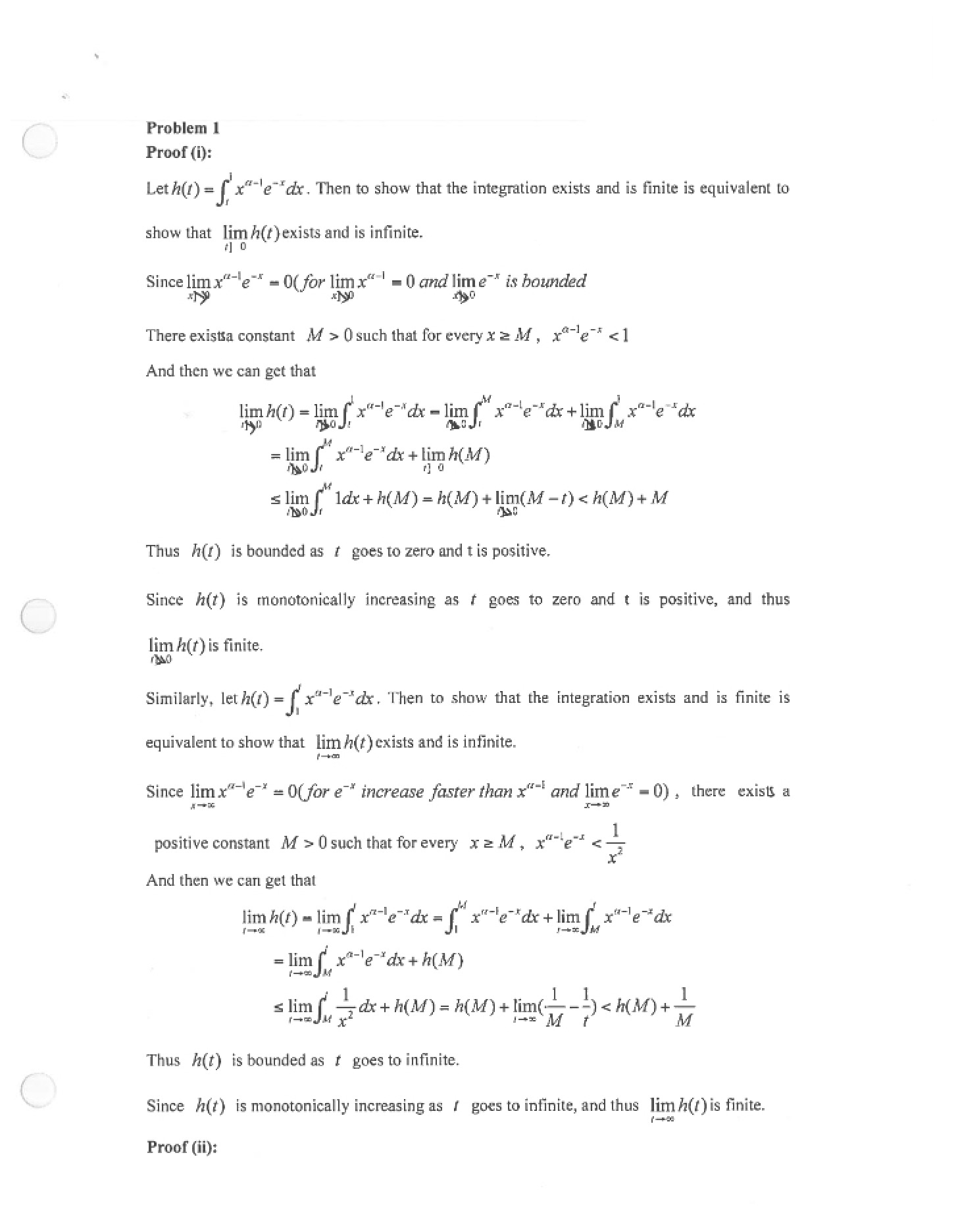
* Detailed solutions addressing a range of problems related to set theory and proof techniques.
* Applications of mathematical induction to prove statements about sequences and sets.
* Exploration of concepts related to limits and convergence of sequences.
* Analysis of mathematical properties of defined functions.
* Illustrative examples demonstrating the application of theoretical concepts to specific problem scenarios.
* Worked examples relating to counterexamples and convergence analysis.