What This Document Is
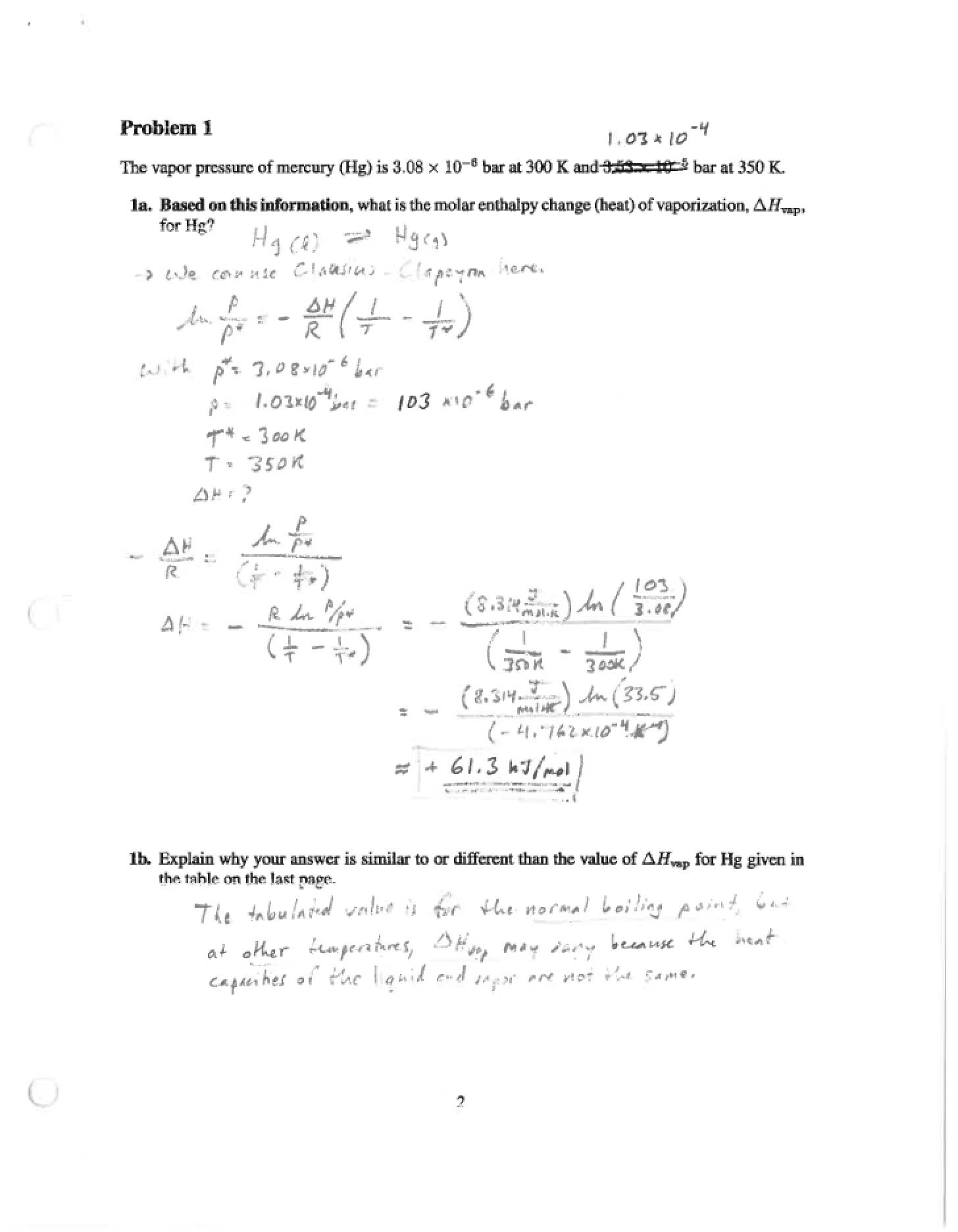
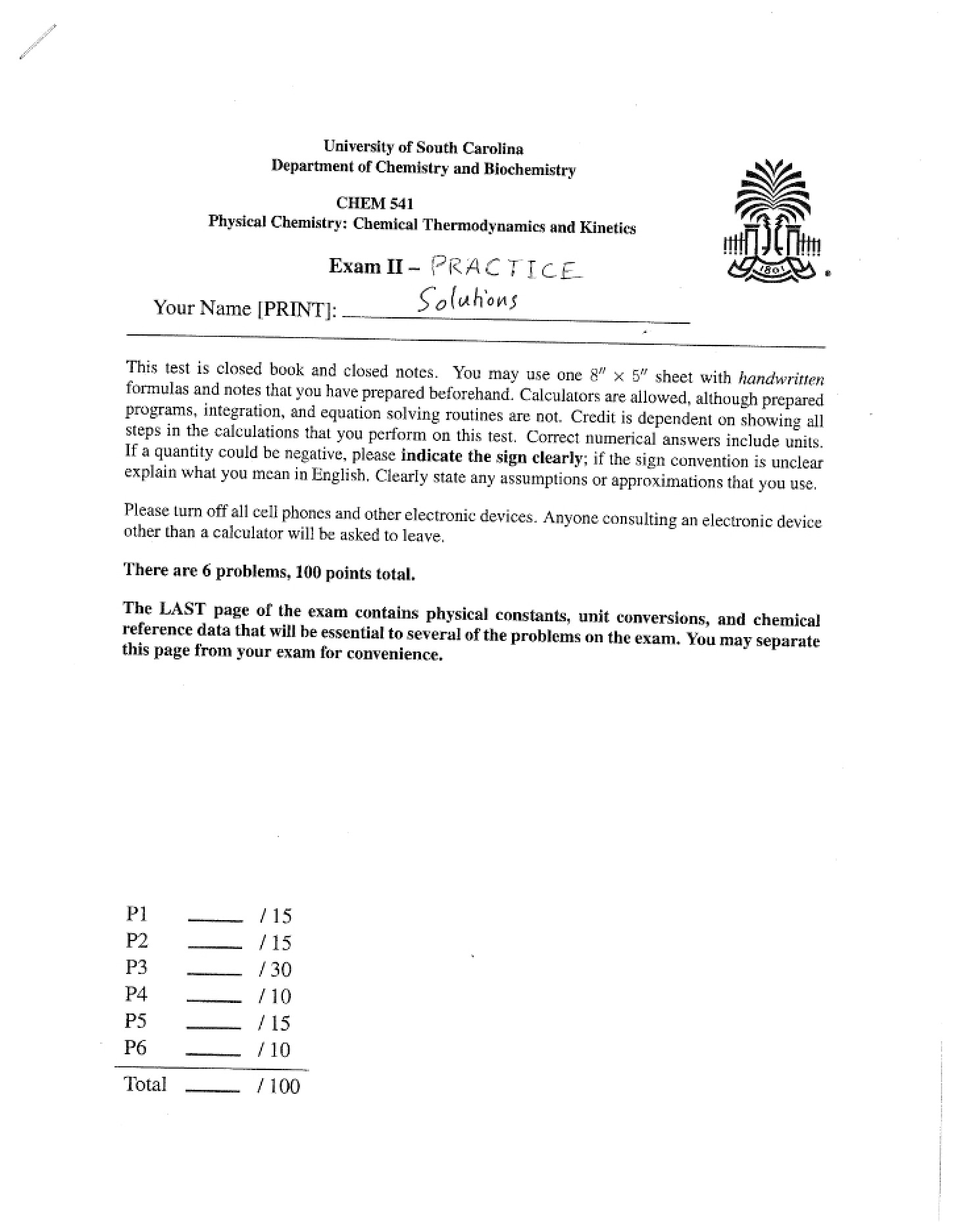
This document contains worked solutions for Exam II of CHEM 541, Physical Chemistry, offered at the University of South Carolina in Fall 2016. It’s a comprehensive resource designed to aid in understanding the application of physical chemistry principles to solve complex problems. The exam focuses on chemical thermodynamics and kinetics, building upon concepts related to energy, entropy, and reaction rates. It’s intended for students who have completed coursework covering these topics and are seeking to review their understanding through detailed problem-solving examples.
Why This Document Matters
This resource is invaluable for students preparing for exams in physical chemistry, particularly those covering thermodynamics and kinetics. It’s most beneficial *after* attempting the original exam questions independently. Reviewing detailed solutions can illuminate areas where understanding is incomplete or where calculation errors were made. It’s also helpful for students seeking to reinforce their grasp of core concepts by observing how they are applied in a rigorous exam setting. Students who struggle with applying theoretical knowledge to quantitative problems will find this particularly useful.
Common Limitations or Challenges
This document provides solutions to a specific exam from a specific course. It does *not* offer a comprehensive review of all physical chemistry concepts. It assumes a foundational understanding of the material covered in the course. Furthermore, it does not include explanations of the underlying theory; it focuses solely on the step-by-step resolution of the exam problems. It will not substitute for attending lectures, completing assigned homework, or actively engaging with course materials.
What This Document Provides
* Complete solutions to six problems from the CHEM 541 Exam II.
* Detailed calculations demonstrating the application of thermodynamic and kinetic principles.
* Problem sets covering topics such as isothermal compressibility, heat engine efficiency, and entropy changes during phase transitions.
* Worked examples involving the application of heat capacities and the analysis of chemical reactions.
* A reference section containing physical constants, unit conversions, and chemical data used within the exam problems.
* Clear indication of point values associated with each problem, reflecting the exam’s weighting scheme.