What This Document Is
This study guide provides detailed worked solutions to a problem set for International Trade (ECON 450) at the University of Southern California. It focuses on applying theoretical concepts to practical exercises, building a deeper understanding of trade models and their implications. The material centers around core principles explored in a specific chapter of the course textbook, likely dealing with production possibilities, opportunity costs, and factor price determination. It’s designed to reinforce learning through a step-by-step approach to problem-solving.
Why This Document Matters
This resource is invaluable for students enrolled in ECON 450 who are seeking to solidify their grasp of international trade theory. It’s particularly helpful when you’re struggling to apply concepts learned in lectures or the textbook to quantitative problems. Use this guide *after* attempting the problem set independently – it’s best used to check your work, identify areas where your understanding needs strengthening, and learn alternative approaches to arriving at correct conclusions. It’s also a useful tool for exam preparation, allowing you to practice applying these concepts in a structured manner.
Common Limitations or Challenges
This guide focuses *specifically* on the solutions to Problem Set 4. It does not offer a comprehensive review of all international trade concepts covered in the course. It assumes you have already engaged with the assigned readings and lecture materials. Furthermore, while the solutions demonstrate the *process* of problem-solving, it won’t replace the need for you to develop your own analytical skills and understanding of the underlying economic principles. It does not provide new problems or alternative examples beyond those originally assigned.
What This Document Provides
* Detailed explanations relating to resource constraints and production possibilities frontiers.
* Analysis of how factor prices (wages and rental rates of capital) are determined in competitive markets.
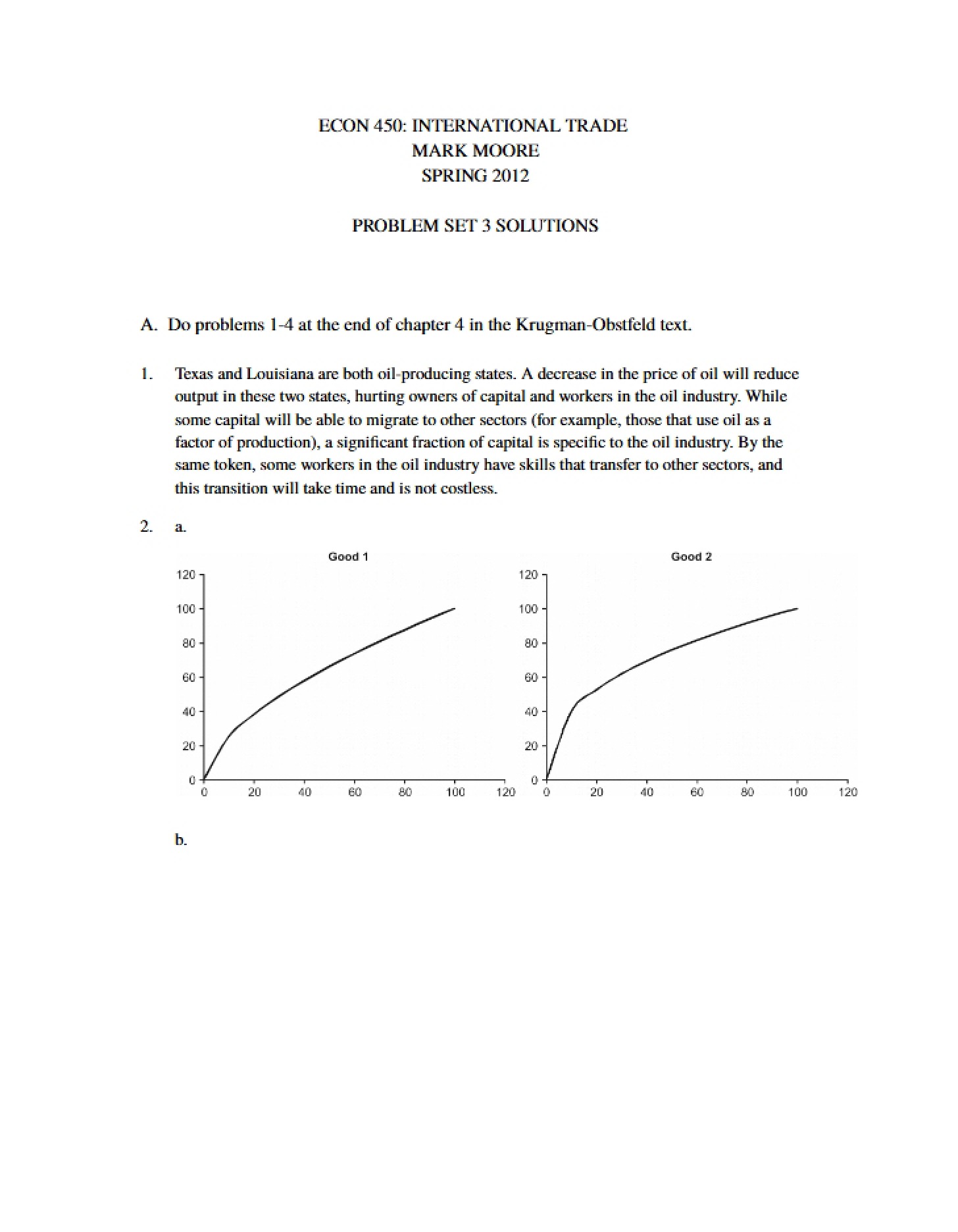
* Illustrations of how changes in resource endowments (like capital stock) impact production possibilities.
* Exploration of the relationship between relative prices and optimal production decisions.
* A structured approach to solving problems involving opportunity costs and specialization.