What This Document Is
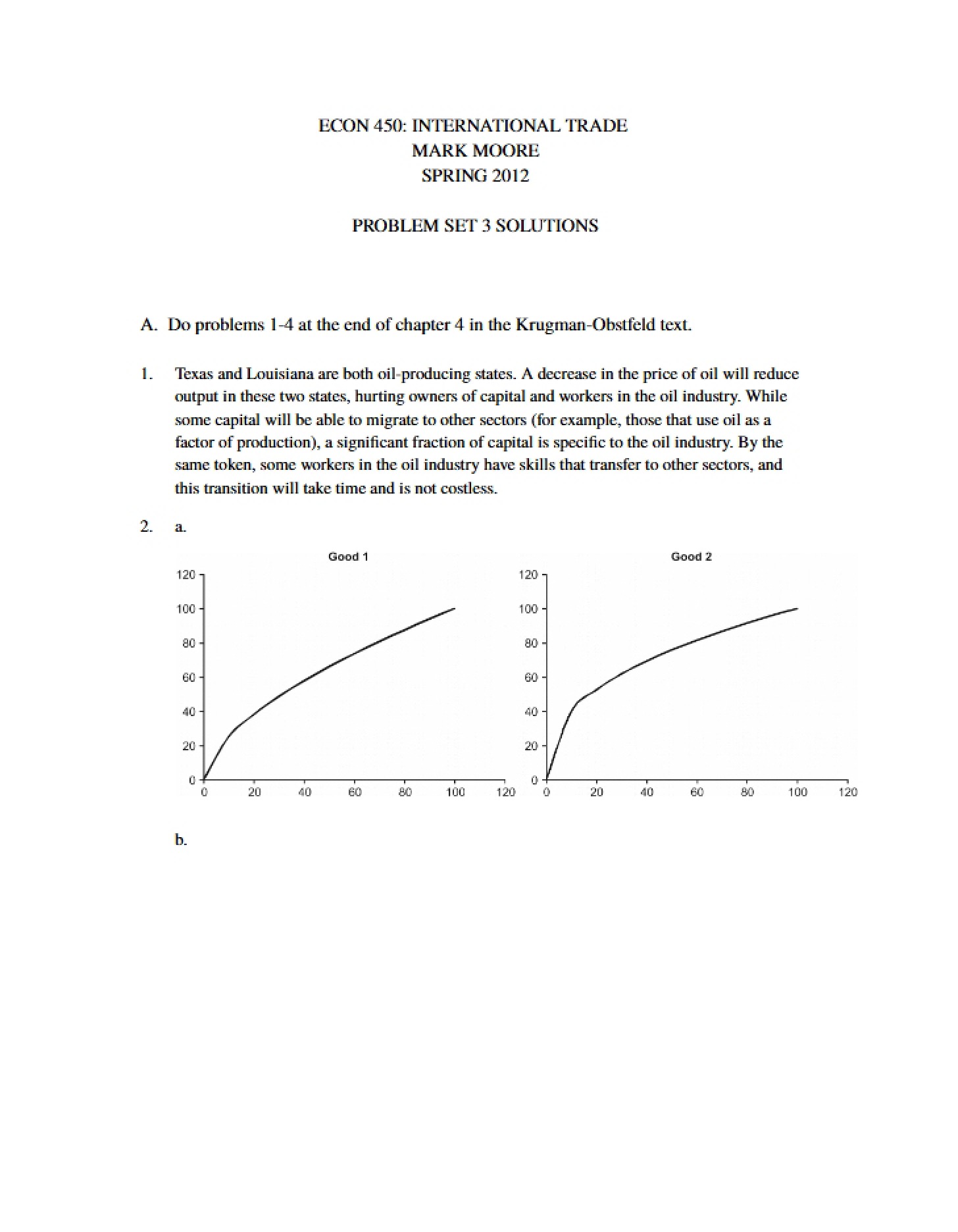
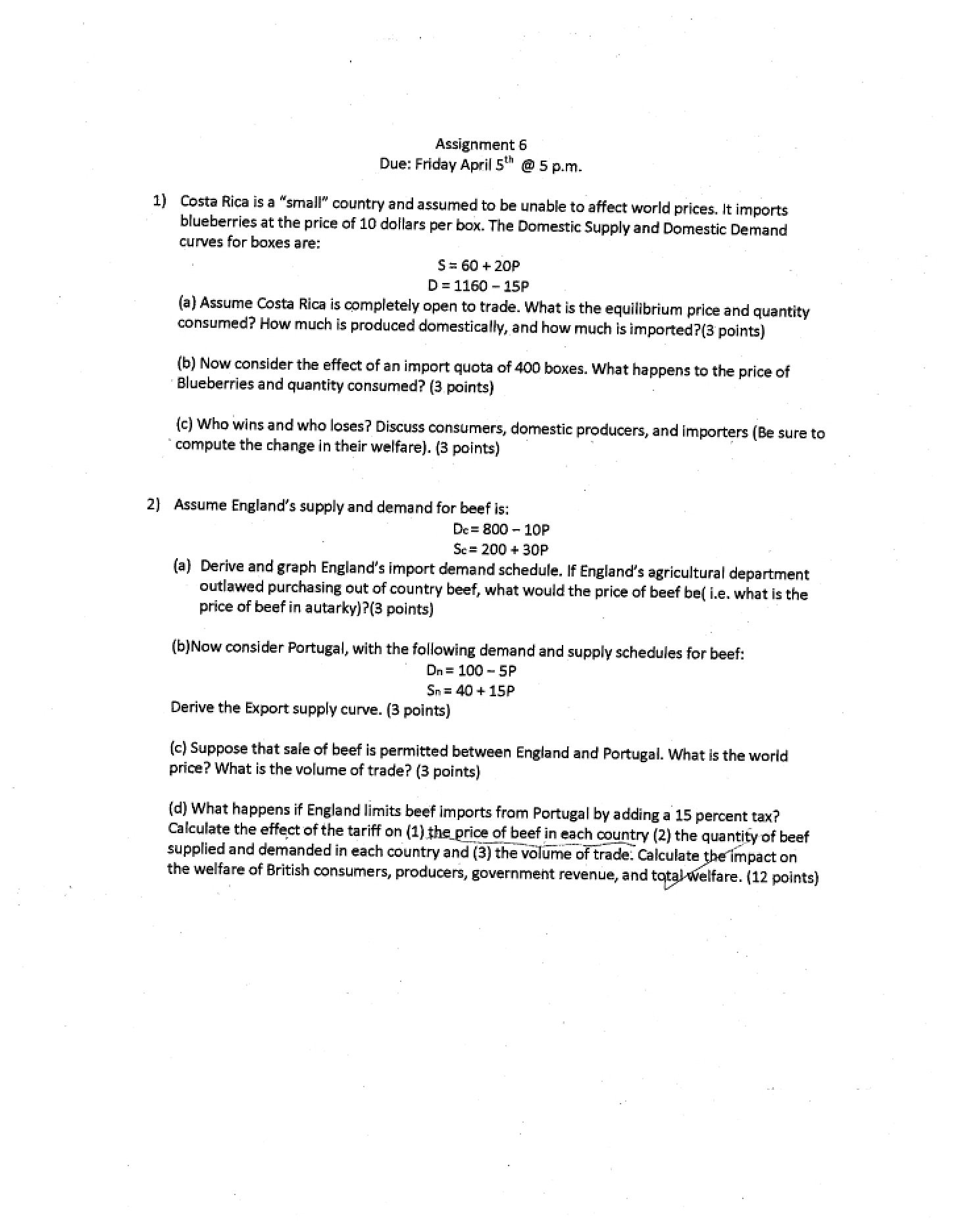
This document provides detailed worked solutions for Problem Set 1 of Economics 450: International Trade, offered at the University of Southern California. It focuses on applying core concepts from Chapter 2 of the course material to a series of analytical questions. The material centers around foundational principles in international trade theory, exploring the factors that influence trade patterns between nations. It delves into the theoretical underpinnings of why countries trade with each other, and how economic size and geographical factors play a role.
Why This Document Matters
This resource is invaluable for students enrolled in, or studying similar material to, USC’s Economics 450. It’s particularly helpful when you’re looking to solidify your understanding of the concepts presented in Chapter 2 and assess your ability to apply them to problem-solving. Use this study guide after attempting the problem set independently – reviewing these solutions can illuminate common pitfalls and demonstrate effective approaches to tackling complex trade-related scenarios. It’s ideal for exam preparation and reinforcing key principles before moving on to more advanced topics.
Common Limitations or Challenges
This document focuses *solely* on the solutions to Problem Set 1. It does not include explanations of the original problem set questions themselves, nor does it offer a comprehensive re-teaching of the chapter’s core concepts. It assumes you have already engaged with the course readings and attempted the problems. Furthermore, it doesn’t provide alternative solution methods – it presents one approach to each problem. Access to the full document is required to view the detailed workings and explanations.
What This Document Provides
* Detailed responses to each question within Problem Set 1.
* Application of the gravity model to analyze trade relationships.
* Illustrative examples relating to real-world trade scenarios (e.g., Australia, Canada, Mexico, Brazil, East Asia).
* Analysis of how changes in economic factors (like world income) impact trade volumes.
* Discussion of the relationship between economic growth, trade composition, and import patterns.