What This Document Is
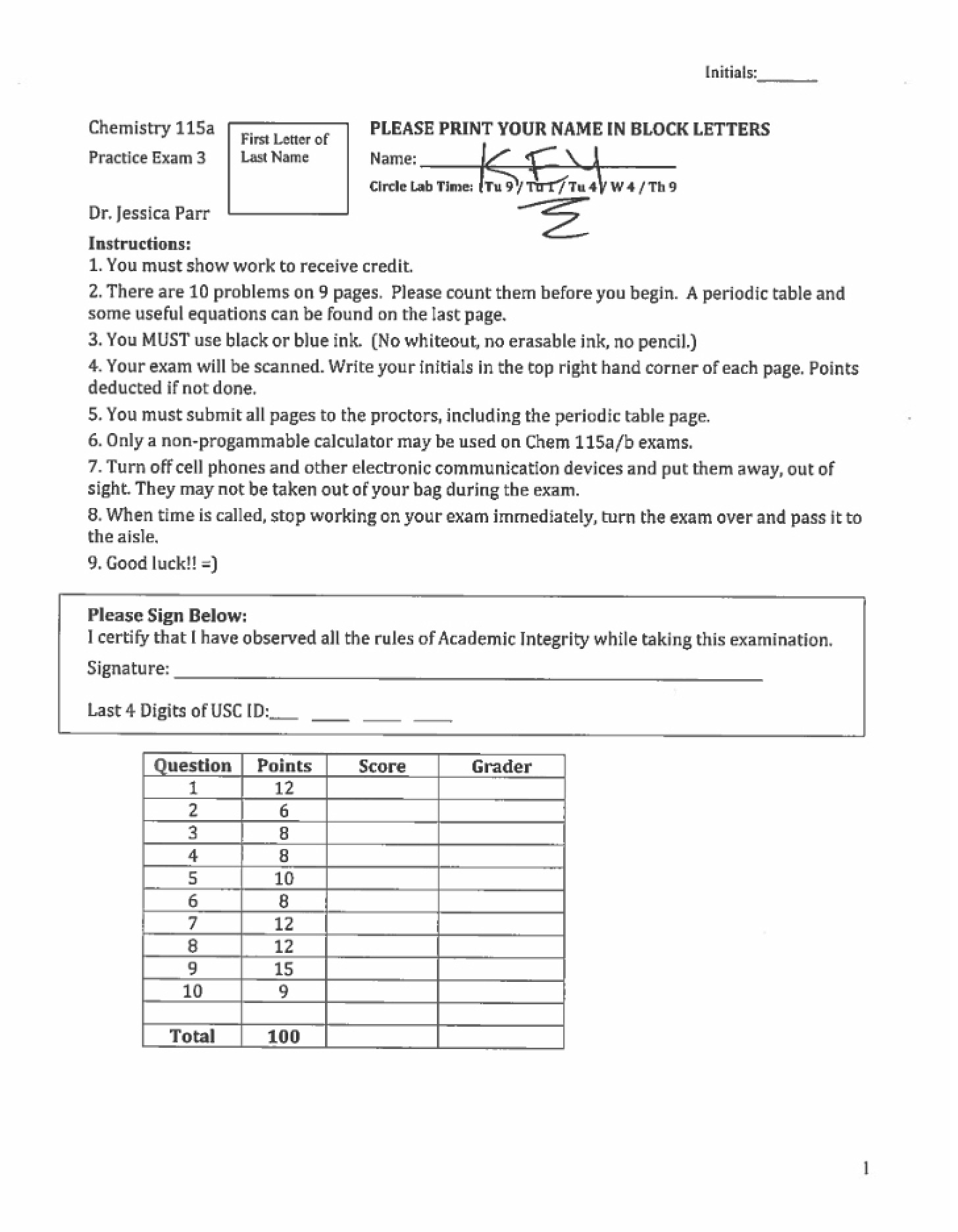
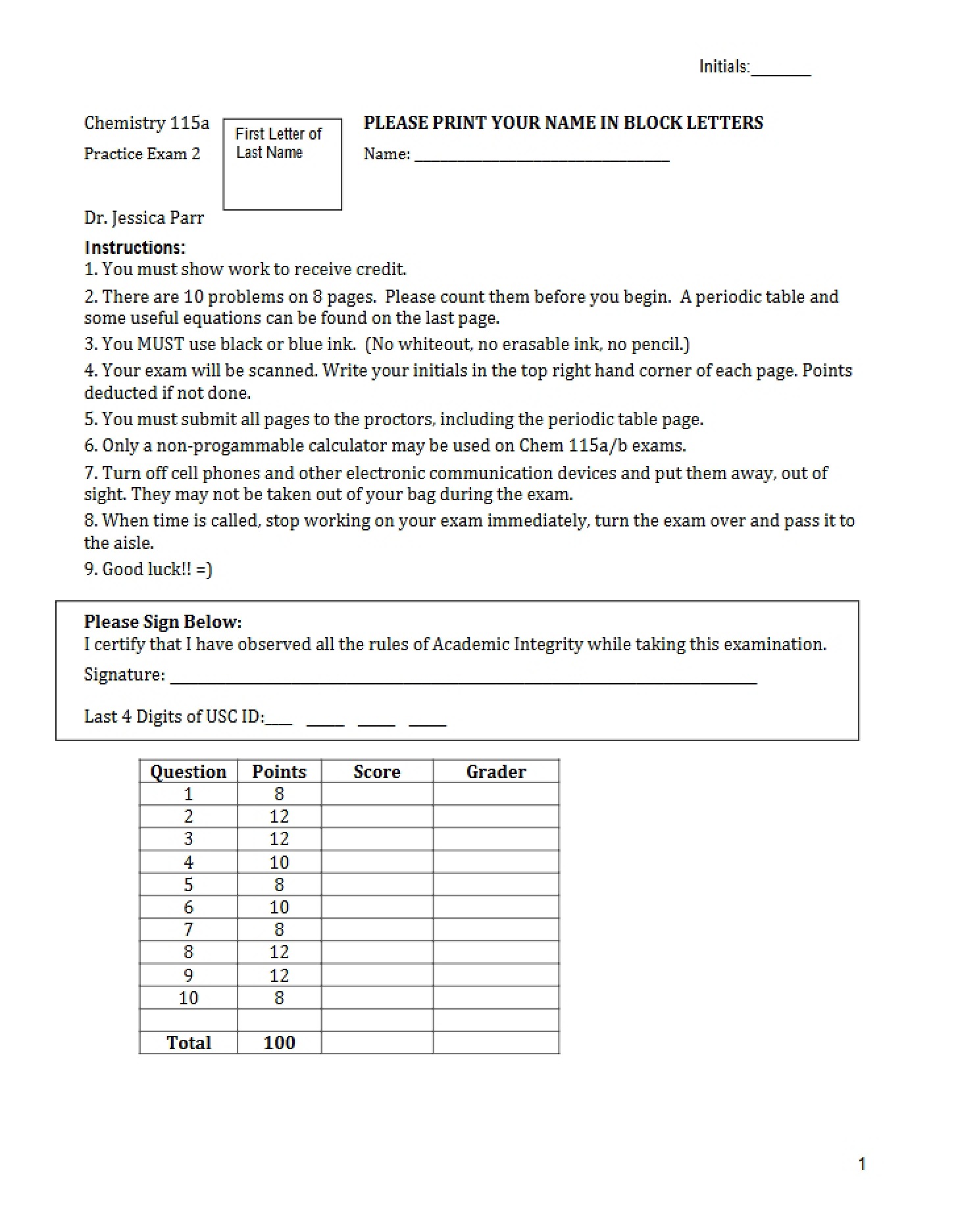
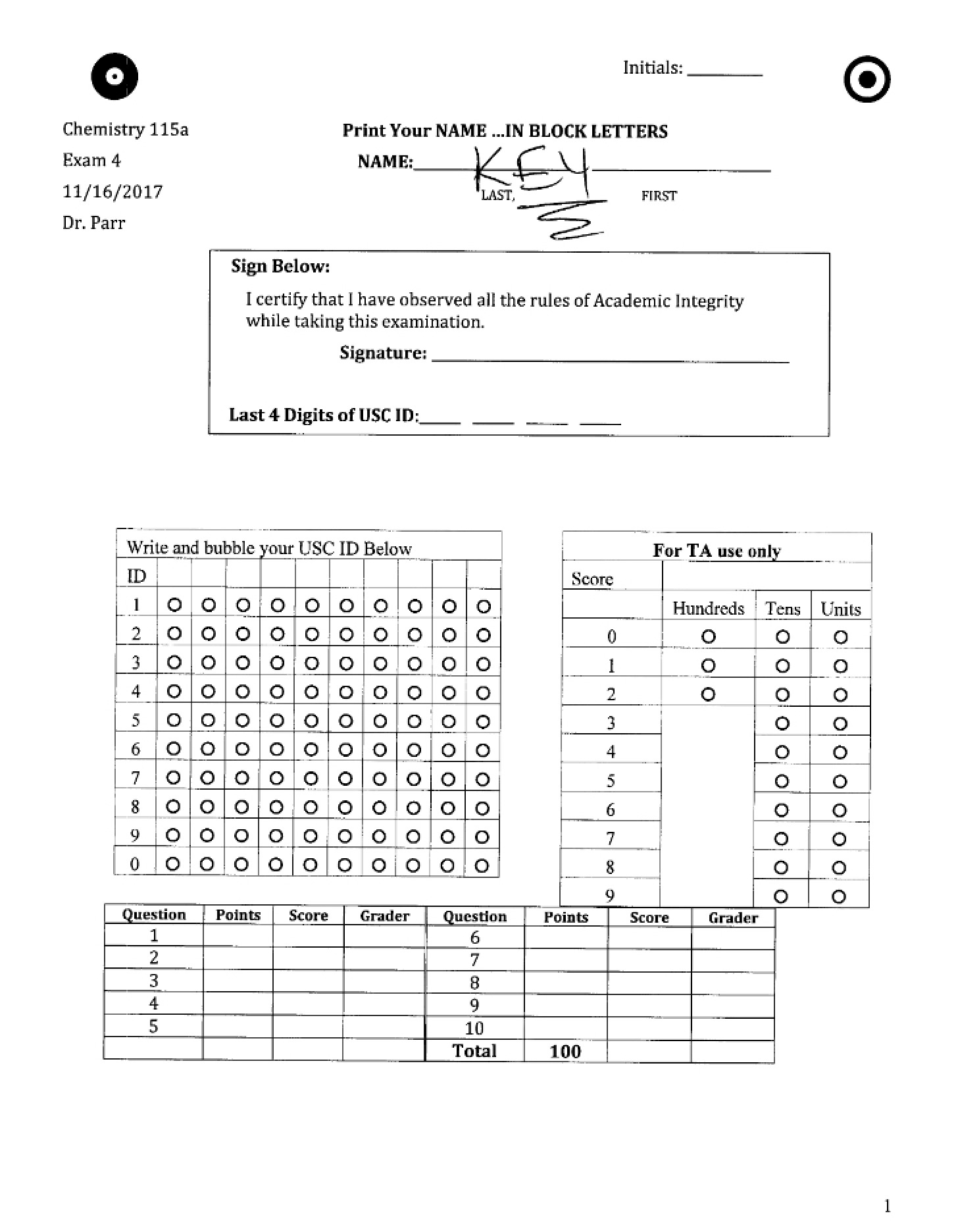
This document contains worked solutions for a sample exam in Advanced General Chemistry (CHEM 115aLg) at the University of Southern California. It’s designed to help students assess their understanding of key concepts covered in the course, specifically focusing on material likely to appear on Exam 4. The document mirrors the format of an actual exam, including instructions and space for student initials on each page.
Why This Document Matters
This resource is invaluable for students preparing for high-stakes assessments in a rigorous general chemistry curriculum. It’s particularly useful for identifying areas where your understanding needs strengthening. Working through these solutions *after* attempting the sample exam yourself will reveal common pitfalls and demonstrate effective problem-solving strategies. It’s best utilized as a study aid *after* independent practice and review of course materials, not as a substitute for learning the core concepts. Students who are struggling with specific topics, or those aiming for a comprehensive understanding, will find this particularly beneficial.
Common Limitations or Challenges
This document provides solutions to a *sample* exam, and does not guarantee coverage of *every* possible question type or topic that may appear on the actual exam. It is not a substitute for attending lectures, completing assigned homework, or actively participating in study groups. Furthermore, the solutions presented here do not include detailed explanations of the underlying chemical principles – it assumes a foundational understanding of the course material. It will not teach you the concepts, but rather demonstrate how those concepts are applied.
What This Document Provides
* Detailed solutions addressing a range of chemistry topics, including bonding theories and intermolecular forces.
* Worked examples relating to molecular geometry, hybridization, and polarity.
* Solutions to multiple-choice questions testing conceptual understanding.
* Problems involving thermochemistry and phase changes, including calculations of energy requirements.
* A replica of the exam format, including instructions and layout, to aid in test-taking preparation.
* Coverage of topics like sigma and pi bonds, lone pair identification, and orbital analysis.