What This Document Is
This document contains detailed worked solutions for a midterm examination in Applied Linear Algebra (EE 441) at the University of Southern California. It focuses on core concepts within the course, providing a comprehensive review of problem-solving techniques. The material covers fundamental principles and their application to various linear algebra challenges.
Why This Document Matters
This resource is invaluable for students who have recently completed a midterm exam in this course and wish to verify their understanding. It’s particularly helpful for identifying areas where conceptual gaps exist or where specific calculation methods were incorrectly applied. Studying these solutions can also serve as excellent preparation for future exams or quizzes, reinforcing key skills and boosting confidence. Students struggling with vector spaces, linear transformations, or fundamental subspace calculations will find this especially useful.
Common Limitations or Challenges
This document presents completed solutions; it does not offer step-by-step explanations of *how* to arrive at those solutions. It’s designed to be used *after* attempting the problems independently. Simply reviewing the solutions without prior effort will likely limit its educational benefit. Furthermore, it focuses specifically on the problems presented on *this* particular midterm and may not cover the full breadth of topics within the course.
What This Document Provides
* Detailed solutions to a range of problems assessing understanding of vector space properties.
* Applications of orthogonal projection concepts to specific vector sets.
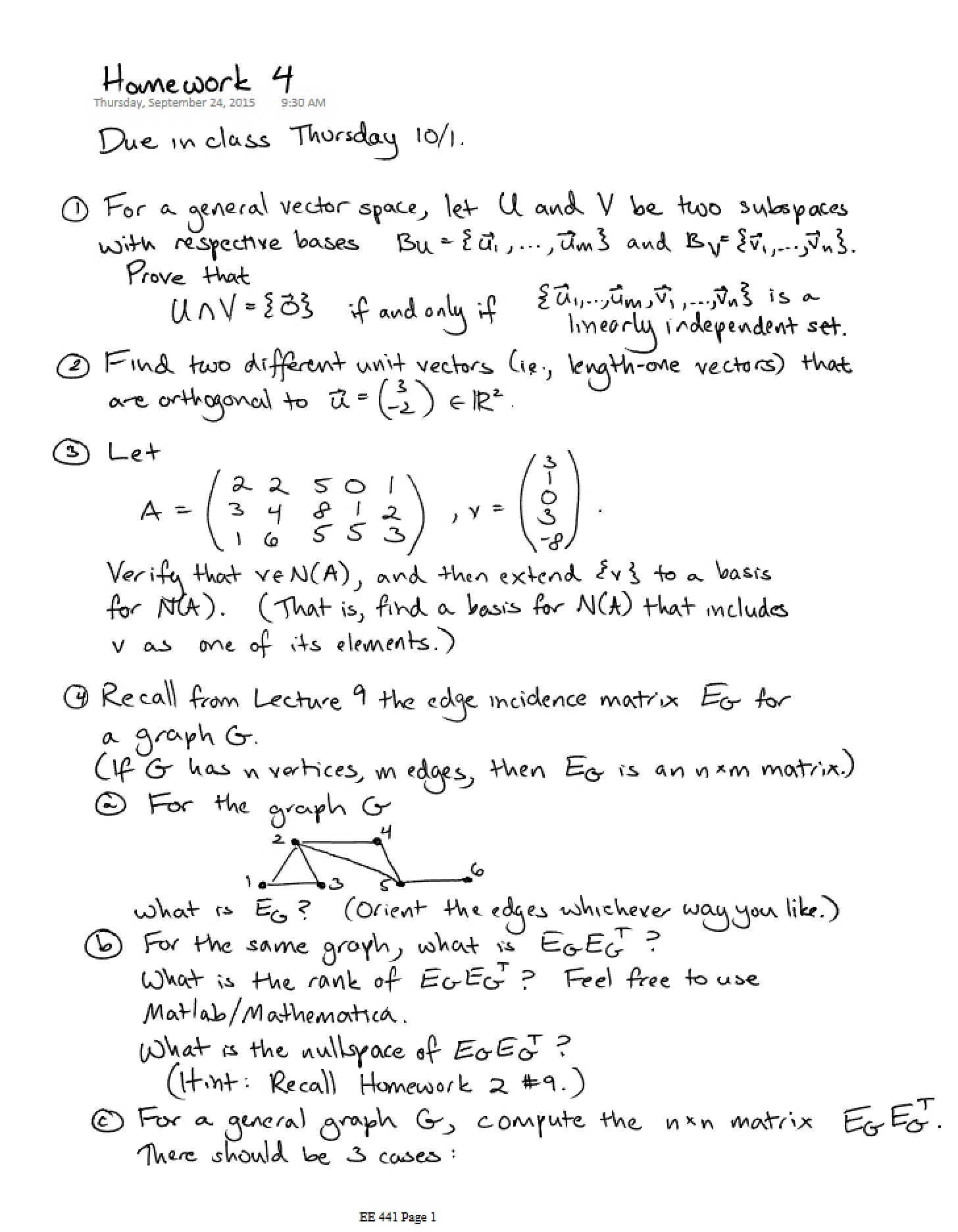
* Analysis of the fundamental subspaces (column space, row space, nullspace, left nullspace) of a given matrix, including dimension calculations.
* Matrix representation of linear transformations, specifically involving partial derivatives.
* Change-of-basis calculations for linear operators and their matrix representations.
* Problem sets covering topics such as linear operators and their matrix representations in different bases.