What This Document Is
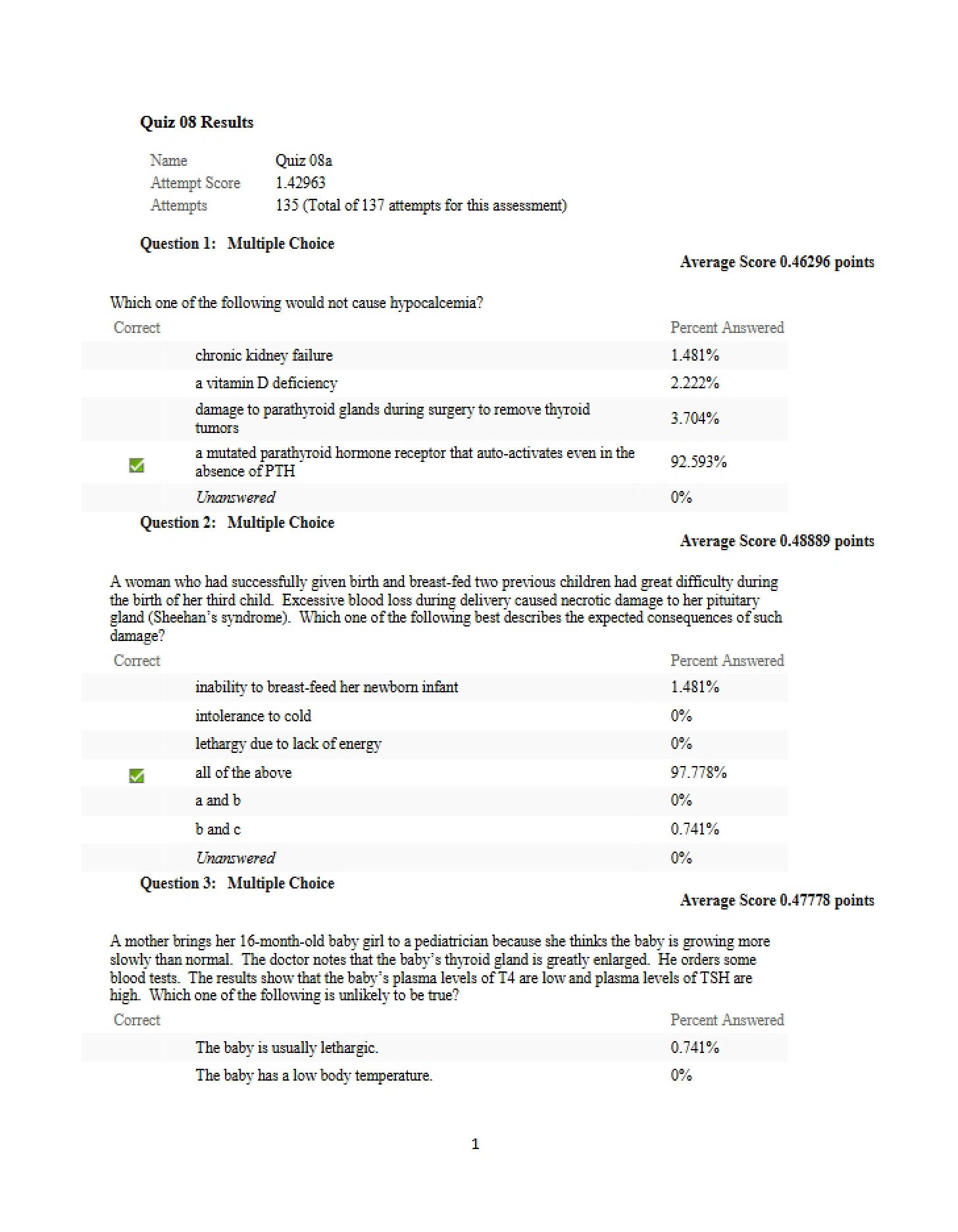
This document represents a past examination—specifically, Exam One—from BISC 307, a General Physiology course offered at the University of Southern California. It includes the questions posed on the exam, along with the instructor’s provided answers. The focus of the exam is on core physiological principles, testing understanding of fundamental concepts rather than rote memorization. It’s designed to assess a student’s ability to apply physiological knowledge to problem-solving scenarios.
Why This Document Matters
This resource is invaluable for students currently enrolled in or preparing for General Physiology courses, particularly those at USC or institutions with similar curricula. It’s especially helpful for understanding the *style* and *scope* of questions asked by the instructor. Reviewing past exams can help you identify key areas of focus, anticipate the level of detail expected in your answers, and refine your test-taking strategies. It’s best utilized *after* you’ve engaged with the course material (lectures, readings, and assignments) as a means of self-assessment and focused review.
Common Limitations or Challenges
While this exam provides a valuable glimpse into the course’s assessment methods, it’s important to remember that exam content can vary from year to year. This particular exam is from Spring 2009, and subsequent exams may cover different material or emphasize different concepts. Furthermore, simply reviewing the answers will not guarantee success; a thorough understanding of the underlying physiological principles is crucial. This resource does not include explanations of *why* answers are correct or incorrect.
What This Document Provides
* A collection of multiple-choice questions covering foundational physiology topics.
* Questions relating to cellular transport mechanisms and their regulation.
* Problems designed to test understanding of electrochemical gradients and membrane potentials.
* Questions exploring the function of neurons and neurotransmitters.
* Scenarios involving hormonal signaling pathways and their amplification mechanisms.
* Questions relating to osmotic pressure and its effects on cells.