What This Document Is
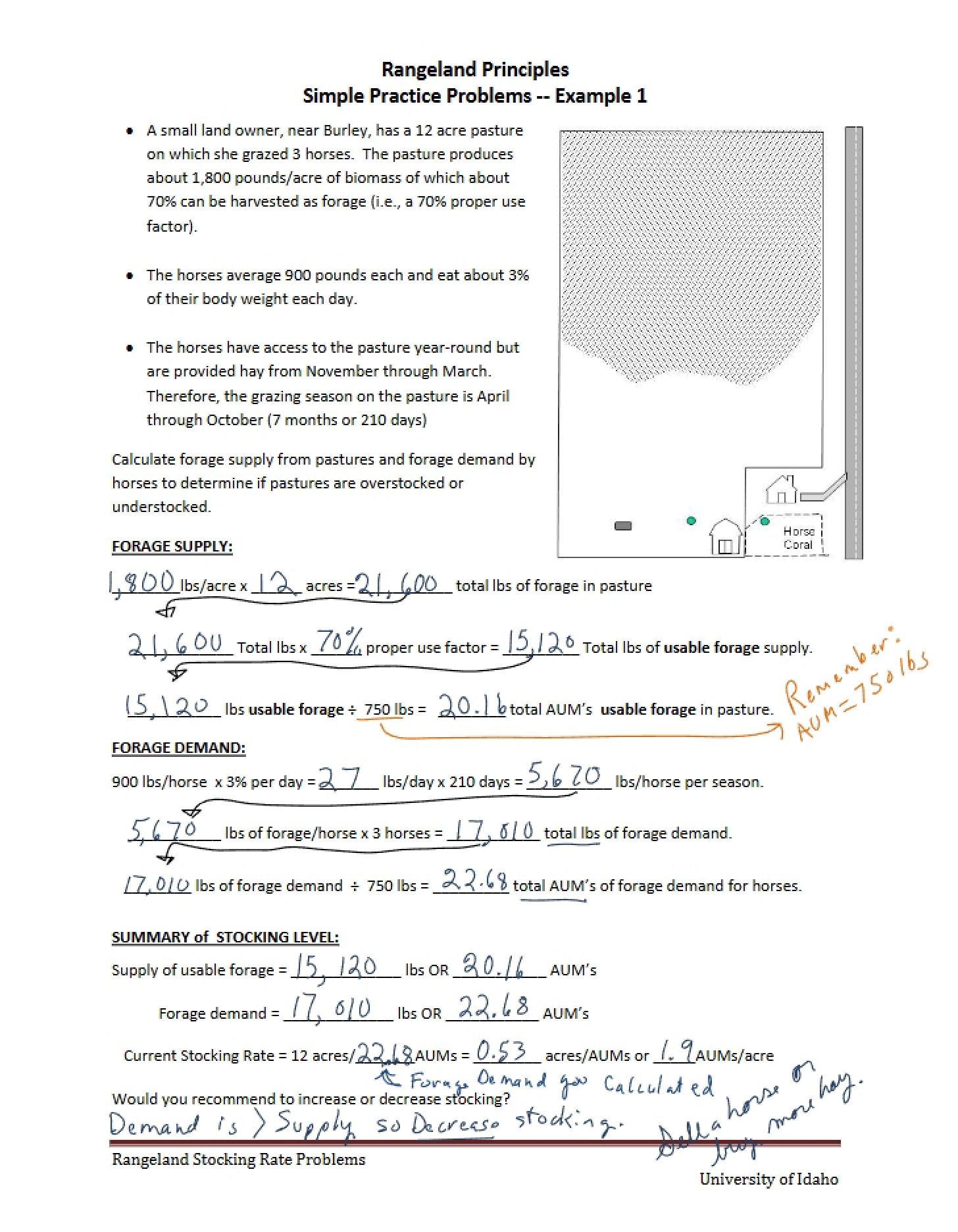
This study guide presents a series of practical problems focused on calculating and applying stocking rates in rangeland management. It’s designed to help students of integrated rangeland management solidify their understanding of how to determine appropriate grazing pressure for various landscapes and livestock types. The material centers around real-world scenarios requiring application of key principles, rather than simply defining them.
Why This Document Matters
This resource is ideal for students enrolled in rangeland management courses, particularly those seeking to improve their quantitative skills in a practical context. It’s most beneficial when used as a supplement to coursework, for self-study, or as preparation for assessments involving stocking rate calculations. Professionals in range management, ranching, or wildlife management will also find value in reviewing these problem-solving techniques. Successfully navigating these problems builds confidence in making informed grazing decisions.
Topics Covered
* Seasonal suitability grazing systems
* Forage demand estimation for different livestock classes (ewes, lambs, steers, cows, horses)
* Calculating forage requirements based on animal weight and production stages
* Determining appropriate stocking rates based on range condition and production capacity
* Analyzing utilization rates and adjusting stocking levels
* Applying Animal Unit Equivalents (AUE) and Animal Unit Months (AUM)
* Impact of terrain and water availability on stocking rate decisions
What This Document Provides
* Multiple detailed stocking rate problems with varying complexities.
* Scenario-based exercises involving different rangeland types (salt-desert shrubland, sagebrush grassland, mountain meadows, shortgrass prairie).
* Opportunities to practice calculations related to forage production, animal weight gain, and grazing periods.
* Problems requiring consideration of factors like range condition, precipitation, and terrain characteristics.
* A framework for applying learned concepts to practical rangeland management situations.