What This Document Is
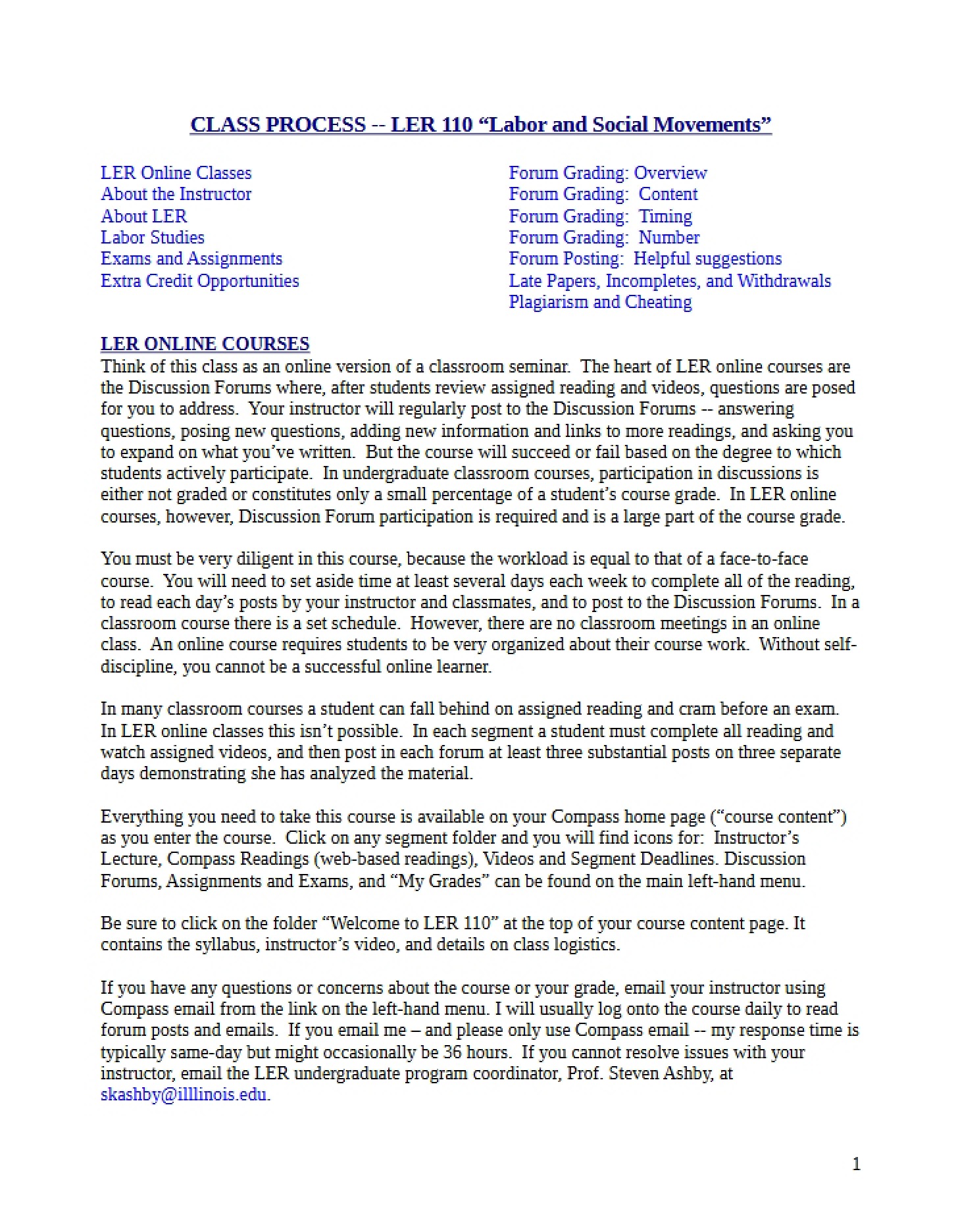
This is a syllabus for LER 110, “Labor and Social Movements,” offered at the University of Illinois at Urbana-Champaign during the Spring 2015 semester. It outlines the structure, expectations, and assessment components for an online course exploring the historical and contemporary relationship between labor organizing and broader social movements in the United States. The course focuses on the struggles for workers’ rights and economic justice, particularly as they intersect with community and civil rights initiatives. It’s designed as a second eight-week course, running from mid-March to early May.
Why This Document Matters
This syllabus is essential for any student considering enrolling in or currently registered for LER 110. It provides a comprehensive overview of the course’s objectives, allowing prospective students to determine if the subject matter aligns with their academic interests. Current students will find crucial information regarding course policies, grading criteria, assignment deadlines, and required materials. Understanding the syllabus *before* the course begins will help you prepare effectively and maximize your learning experience.
Common Limitations or Challenges
This syllabus provides a high-level overview of the course. It does *not* contain the actual course lectures, readings, or discussion prompts. It outlines the topics that will be covered, but it does not delve into the specific arguments, evidence, or analyses presented within the course materials. The detailed content of each segment, the specific questions posed in discussions, and the exact format of the exams are not included.
What This Document Provides
* A clear outline of the course’s learning objectives – what students will be able to *understand* upon completion.
* A schedule of topics covered week-by-week, indicating the flow of the course.
* Information regarding the required textbook and other learning resources.
* A breakdown of all assignments, including exams, participation components, and potential extra credit opportunities.
* The point value for each assignment and the grading scale used to determine final course grades.
* Contact information for the instructor and details regarding communication expectations.