What This Document Is
This document provides a focused exploration of Part of Speech (POS) tagging within the field of Natural Language Processing. It’s structured as a lecture, delving into the fundamental concepts behind categorizing words based on their grammatical roles and behaviors. The material examines the theoretical underpinnings of word classes and their importance in understanding sentence structure. It’s designed for students seeking a deeper understanding of the building blocks of language as they relate to computational analysis.
Why This Document Matters
This resource is particularly valuable for students enrolled in introductory NLP courses, or those looking to strengthen their foundational knowledge of computational linguistics. It’s ideal for use when you’re beginning to explore syntactic analysis and need a solid grasp of how words are classified before moving on to more complex topics like parsing and sentence construction. Understanding POS tagging is crucial for anyone aiming to develop applications involving text analysis, information retrieval, or machine translation.
Topics Covered
* Defining and identifying word classes based on contextual behavior and function.
* The distinction between open and closed word classes.
* Exploring the challenges of ambiguity in POS tagging.
* An overview of common tagsets used in NLP.
* The importance of frequency distributions in analyzing POS tags.
* Introduction to the use of corpora, specifically the Brown Corpus, in POS tagging research.
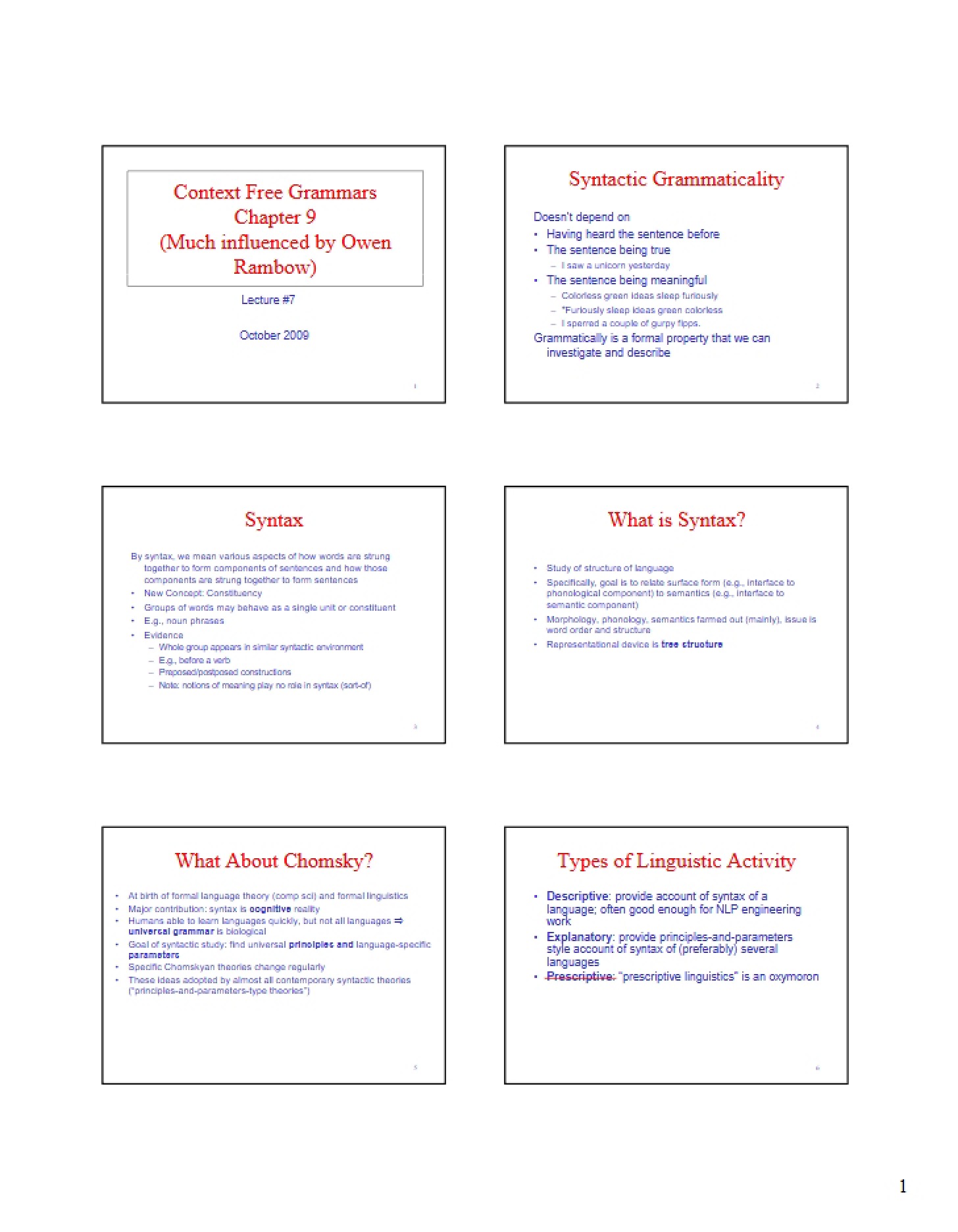
* Syntactic concepts like word order, constituency, and grammatical relations.
What This Document Provides
* A detailed examination of the rationale behind identifying parts of speech.
* Discussion of the complexities involved in assigning words to specific classes.
* An overview of the challenges presented by ambiguous words and how they impact tagging accuracy.
* Insights into the relationship between morphological form and syntactic function.
* A foundation for understanding how POS tagging contributes to broader NLP tasks.