What This Document Is
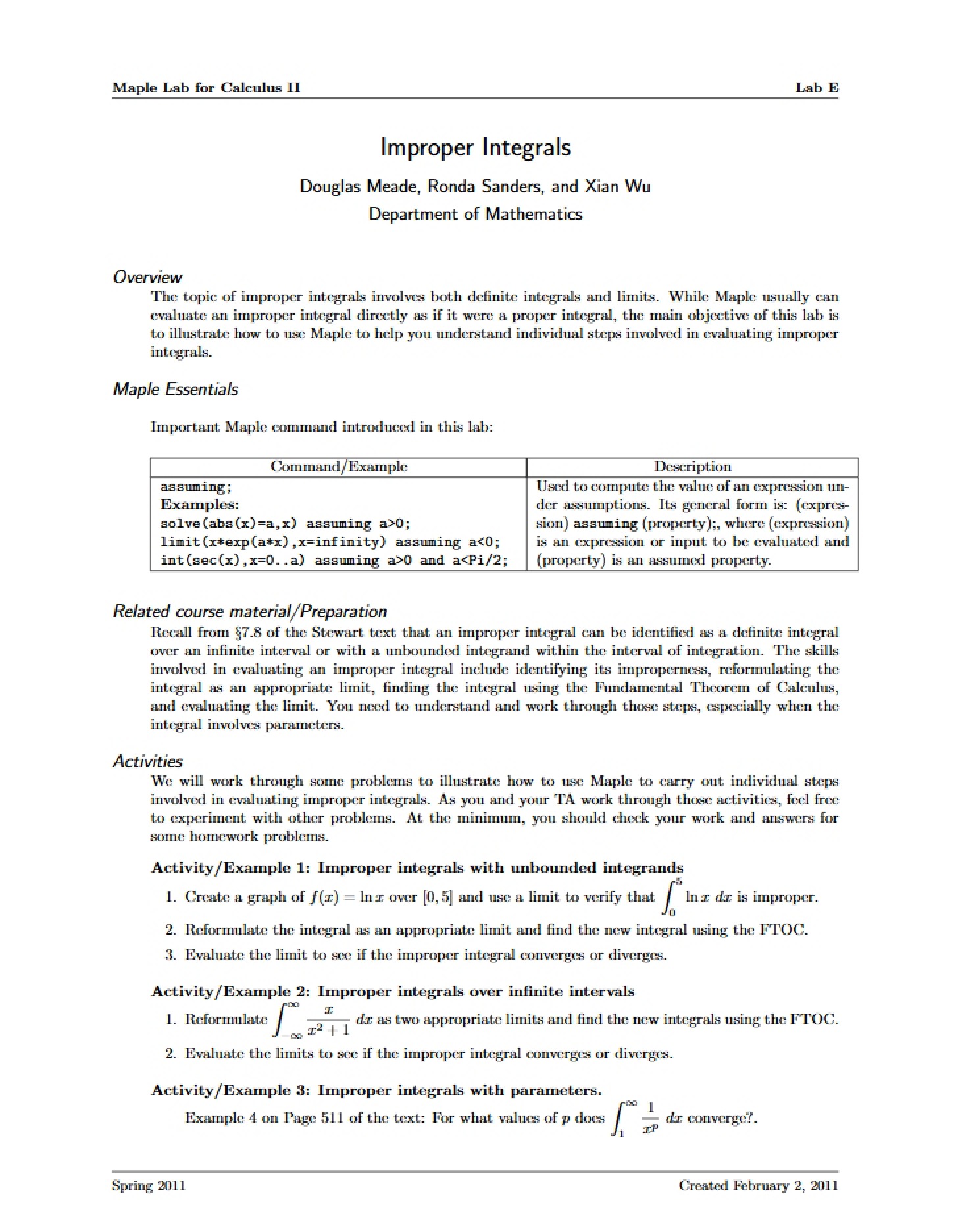
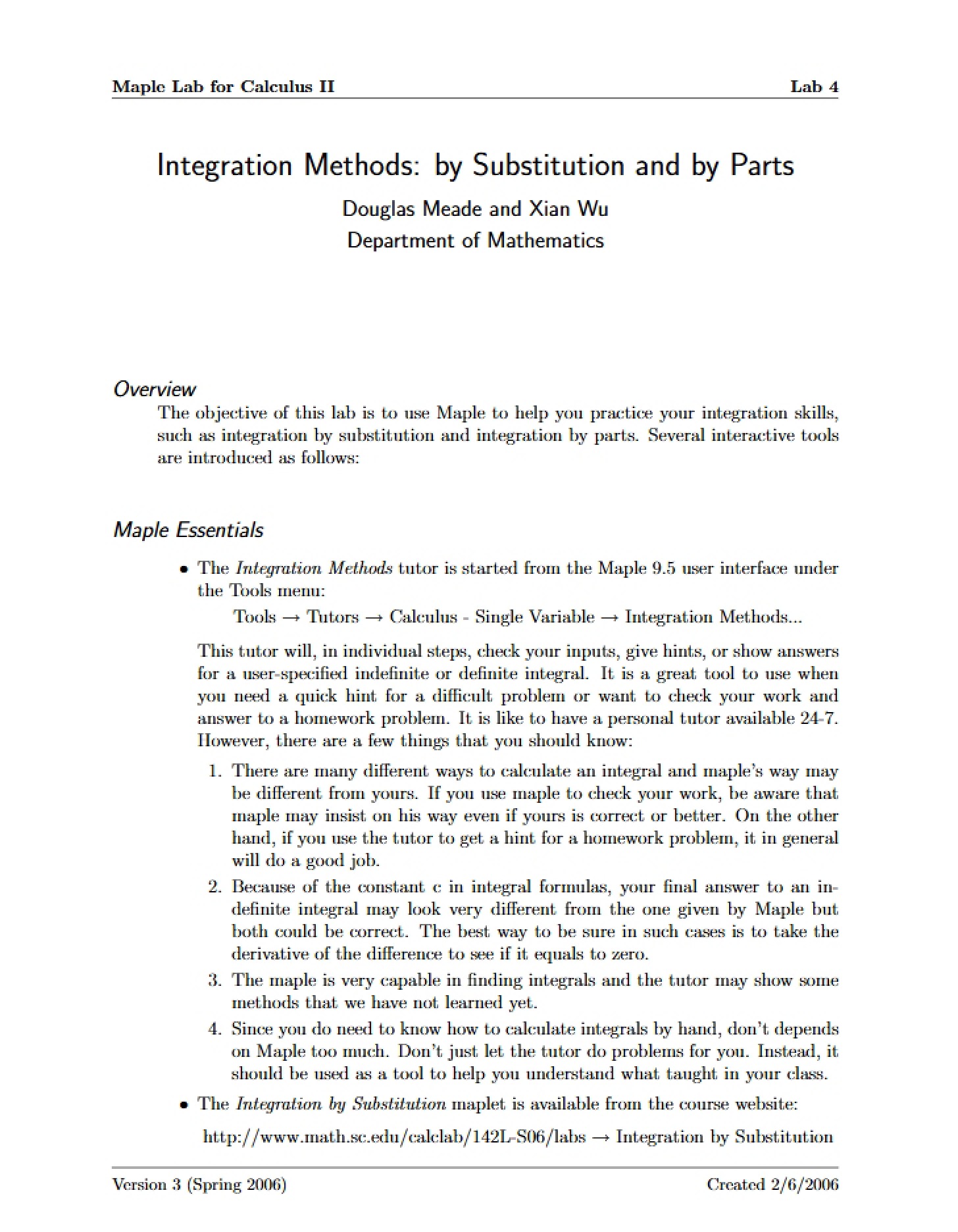
This resource is a laboratory exercise designed to accompany a Calculus II course, specifically focusing on the concepts of power series, Taylor series, and Maclaurin series. It’s intended for use with mathematical software (Maple is explicitly mentioned) to facilitate exploration and visualization of these important series representations of functions. The material builds upon foundational knowledge from Calculus I and introduces techniques for analyzing series convergence and function approximation.
Why This Document Matters
This lab is invaluable for students in a Calculus II course who are looking to solidify their understanding of infinite series beyond just theoretical calculations. It’s particularly helpful for those who benefit from a hands-on, computational approach to mathematics. If you’re struggling to connect the abstract concepts of Taylor and Maclaurin series to actual functions, or if you need practice determining intervals of convergence, this resource will be a significant aid. It’s best used *during* your study of these topics, not as a replacement for lectures or textbook readings, but as a complementary tool for active learning.
Common Limitations or Challenges
This lab focuses on applying concepts using specific software. While the underlying mathematical principles are universal, the instructions and examples are tailored to a particular computational environment. It does not provide a comprehensive review of all prerequisite Calculus I topics; a solid foundation in series and convergence tests is assumed. Furthermore, it doesn’t offer detailed proofs of theorems, but rather focuses on their application. It is not a substitute for understanding the core theory.
What This Document Provides
* Guidance on determining the radius and interval of convergence for various power series.
* A framework for exploring the relationship between power series and the functions they represent.
* Activities designed to visualize function approximation using Taylor polynomials.
* Instructions for utilizing specific software commands to manipulate and analyze series.
* A series of practice problems involving different types of power series.
* Examples of how to use the software to investigate series behavior at endpoints.