What This Document Is
This document serves as a foundational introduction to the core concepts within Survivable Systems and Networks (CS 448). It’s designed to establish a common understanding of what “survivability” means in the context of complex systems, moving beyond simple definitions of reliability. This material lays the groundwork for more in-depth explorations of system design, network architecture, and security considerations related to maintaining operational capability under adverse conditions. It’s a starting point for understanding the challenges and approaches to building resilient systems.
Why This Document Matters
This introduction is crucial for students new to the field of survivable systems, as well as those seeking a refresher on fundamental definitions. It’s particularly valuable at the beginning of a course or project focused on system resilience, network security, or fault tolerance. Professionals involved in designing, deploying, or maintaining critical infrastructure – including communication networks, control systems, and software applications – will find this overview helpful for framing their work within a broader survivability context. Understanding these core concepts is essential before diving into specific techniques and technologies.
Topics Covered
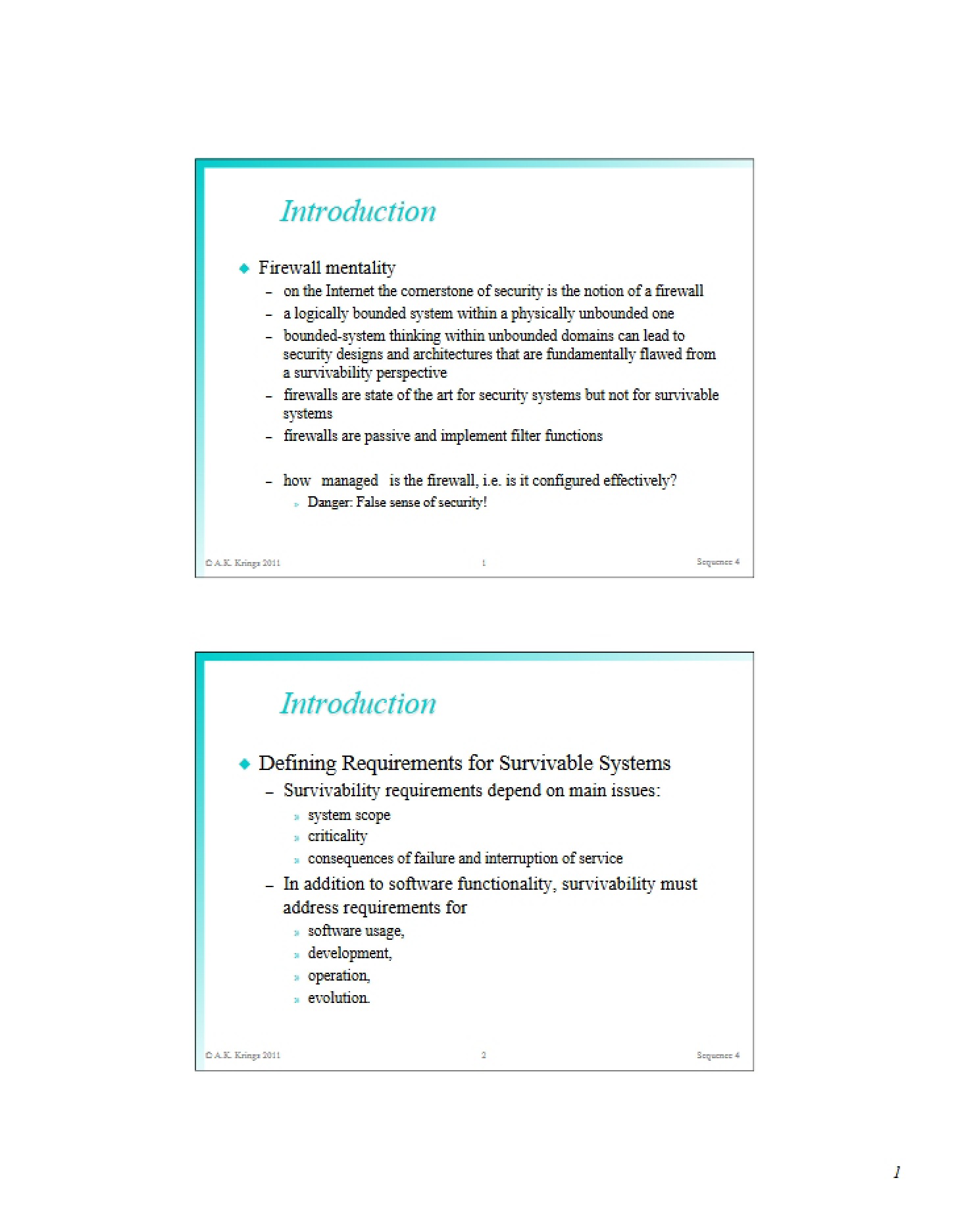
* Multiple perspectives on the definition of “survivability” from various authoritative sources.
* The relationship between survivability and related concepts like reliability, security, and dependability.
* Categorization of potential threats and adverse conditions that systems must withstand.
* Frameworks for defining and specifying survivability requirements.
* Key attributes used to measure and evaluate system survivability.
* Historical context and evolution of survivability concepts.
What This Document Provides
* A compilation of definitions of survivability from leading organizations and researchers in the field.
* An overview of different types of adversities systems may encounter.
* A foundational understanding of how survivability is measured and assessed.
* A basis for understanding the importance of specifying survivability requirements.
* A starting point for further exploration of specific survivability techniques and technologies.