What This Document Is
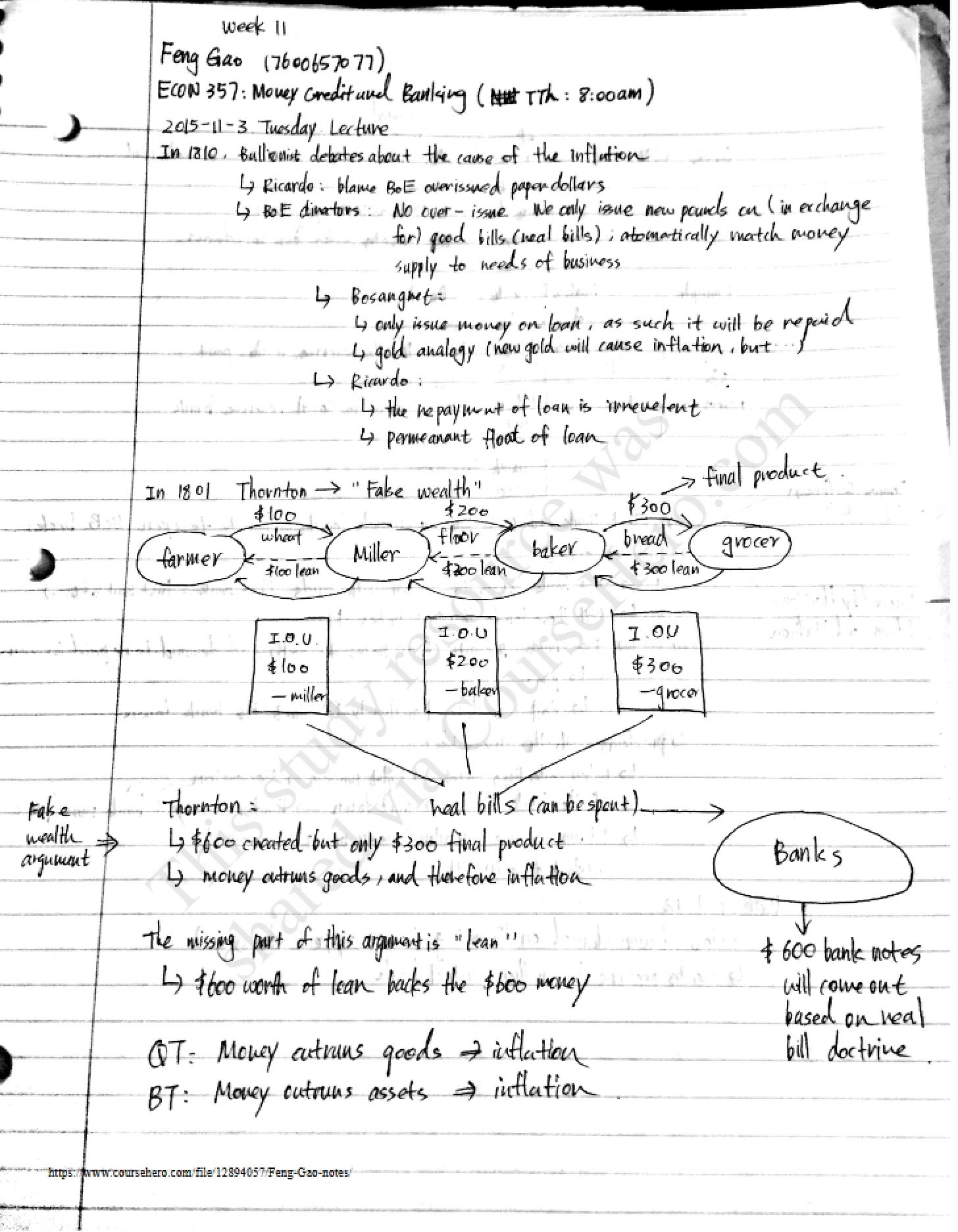
These are lecture notes from Week 11 of ECON 357: Money, Credit, and Banking at the University of Southern California, prepared by Jianing Shan. The notes comprehensively cover core principles related to the functions and evolution of modern monetary systems. Expect a detailed exploration of the mechanisms that underpin financial stability and the roles various institutions play in shaping economic outcomes. The focus appears to be on theoretical frameworks and their practical implications within the context of contemporary banking practices.
Why This Document Matters
This resource is invaluable for students currently enrolled in ECON 357 seeking to solidify their understanding of complex financial concepts. It’s particularly helpful for those who benefit from a detailed, written record of lectures to supplement textbook readings and class discussions. Use these notes while reviewing course material, preparing for quizzes, or as a reference point when tackling assignments. Students who find themselves needing a more granular breakdown of the week’s topics will find these notes exceptionally useful.
Common Limitations or Challenges
These notes are a specific interpretation of the lecture content and should not be considered a substitute for attending class or completing assigned readings. They do not include external data sets, case studies, or practice problems – those will likely be found in separate course materials. The notes are focused on the concepts *presented* in the lecture and won’t necessarily provide a complete, self-contained explanation of every economic principle. Access to the full document is required for complete context.
What This Document Provides
* A structured overview of key topics discussed in Week 11 of the course.
* Detailed explanations of theoretical concepts related to money and banking.
* Insights into the functions of financial intermediaries.
* A record of the instructor’s emphasis on specific areas within the broader subject matter.
* Connections between theoretical models and real-world applications (though specific examples are within the full document).