What This Document Is
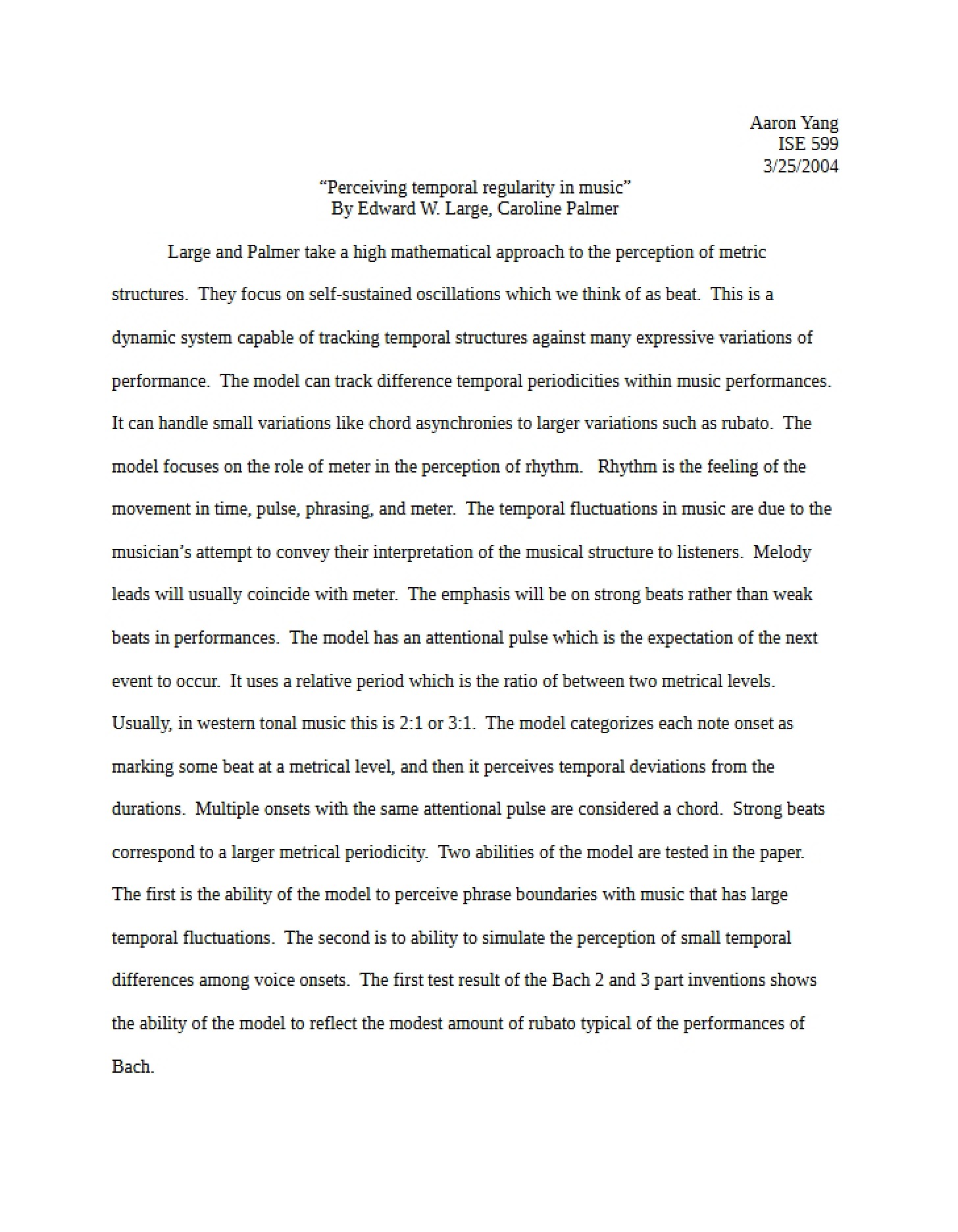
This study guide offers a focused analysis of a research paper concerning computational modeling of musical perception. Specifically, it delves into an approach designed to replicate how humans perceive and interpret metrical structure in music – essentially, how we instinctively feel the beat and organize music into bars and measures. The guide breaks down the core concepts presented in the original paper, focusing on the mechanics of a model built to *infer* this structure rather than simply recognize it. It’s a deep dive into the intersection of music theory, cognitive science, and computational modeling.
Why This Document Matters
Students in advanced courses related to computational perception, cognitive modeling, or even music technology will find this guide particularly valuable. It’s ideal for those seeking to understand how complex human abilities, like musical understanding, can be formalized and simulated using computational methods. This resource is especially helpful when preparing for discussions, presentations, or research projects centered around the challenges of modeling subjective experiences. It’s designed to accelerate your comprehension of sophisticated research without requiring a re-reading of the original, often dense, academic paper.
Common Limitations or Challenges
This guide is not a substitute for reading the original research paper. It provides a structured overview and analysis, but it does not include the full mathematical formulations or detailed experimental results presented in the source material. Furthermore, it doesn’t offer a comprehensive introduction to music theory; some foundational knowledge in that area is assumed. The guide focuses specifically on *this* model and its intricacies, and doesn’t provide a broad survey of all approaches to computational music analysis.
What This Document Provides
* A breakdown of the core principles behind a model for inferring metrical structure.
* An overview of the key improvements this model offers compared to previous attempts.
* Identification of the central variables and processes used within the model.
* Discussion of the mechanisms for handling conflicting information and tempo variations.
* Analysis of the identified limitations of the model and proposed solutions.
* Insight into the model’s approach to identifying hierarchical metrical groupings.