What This Document Is
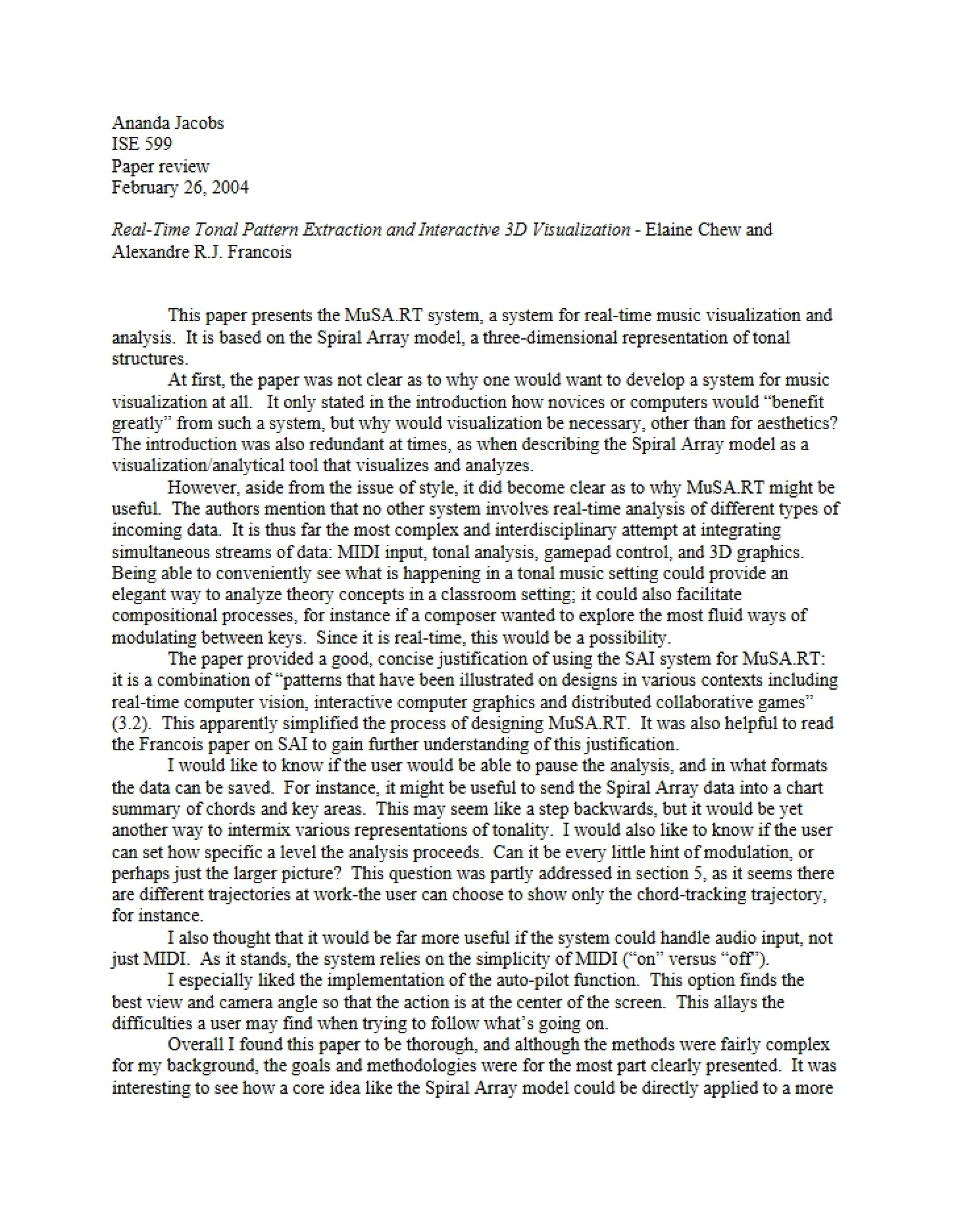
This document is a focused analysis of a research paper exploring the cognitive processes behind musical rhythm perception. Specifically, it delves into how humans perceive and internalize temporal patterns in music – the “beat” – and how these perceptions are maintained despite variations in performance. It examines a computational model designed to simulate these human abilities, applying mathematical principles to understand a fundamentally artistic experience. The analysis centers on the interplay between metric structure, rhythm, and the subtle fluctuations musicians introduce during performance.
Why This Document Matters
This resource is valuable for students in fields like cognitive science, music theory, computational modeling, and human-computer interaction. It’s particularly helpful when studying dynamic systems, perceptual modeling, or the intersection of mathematics and the arts. Individuals tackling research projects involving timing, pattern recognition, or the analysis of expressive performance will find this a useful starting point for understanding relevant theoretical frameworks. It’s best utilized *after* a foundational understanding of music theory and cognitive psychology has been established.
Common Limitations or Challenges
This analysis does not offer a comprehensive introduction to music theory or cognitive science. It assumes a pre-existing familiarity with these concepts. It also doesn’t provide a step-by-step guide to building or implementing similar computational models. The focus is on *understanding* the presented model and its implications, not on replicating it. Furthermore, it doesn’t cover the broader landscape of rhythm perception research beyond the scope of the analyzed paper.
What This Document Provides
* A detailed overview of a specific computational model for rhythm perception.
* An examination of the model’s core principles and how it addresses variations in musical timing.
* Insights into the relationship between metrical levels and perceived beat strength.
* Discussion of experimental tests conducted to validate the model’s performance.
* Analysis of the model’s ability to account for phenomena like rubato and chord perception.