What This Document Is
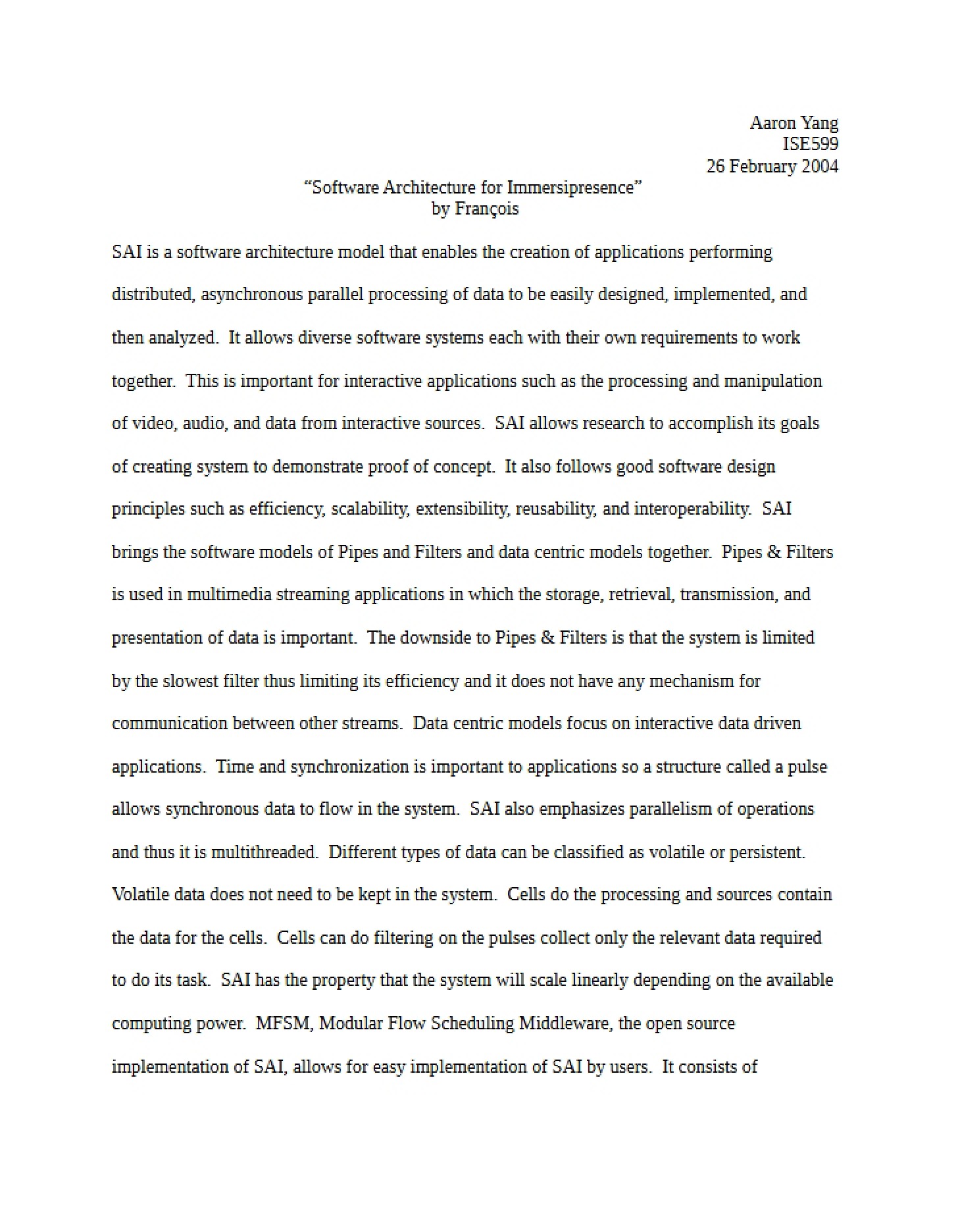
This material presents a focused exploration of a specific software architecture model designed for complex, interactive applications. It delves into the principles and structure of a system intended to facilitate the development of applications requiring distributed data processing, asynchronous operations, and parallel execution. The core subject matter centers around a framework aiming to bridge the gap between different software design approaches, specifically combining elements of data flow and data-centric methodologies. It examines the benefits of such an architecture in scenarios demanding efficiency, scalability, and interoperability.
Why This Document Matters
Researchers and advanced students in computer science, software engineering, and related fields will find this particularly valuable. It’s especially relevant for those working on projects involving real-time data processing, multimedia applications, or distributed systems. Individuals seeking to understand how to build modular, extensible software solutions capable of handling complex interactions will benefit from exploring the concepts presented. This resource is ideal for those at the stage of designing system architecture or evaluating different architectural patterns for a new project.
Common Limitations or Challenges
This exploration focuses on the theoretical underpinnings and design considerations of the architecture. It does *not* provide a step-by-step tutorial for implementation, nor does it offer comparative analyses against all other existing software architectures. The material assumes a foundational understanding of software design principles and parallel processing concepts. It also doesn’t cover specific coding languages or platform dependencies. Practical application and troubleshooting are outside the scope of this resource.
What This Document Provides
* An overview of a software architecture model’s core principles.
* Discussion of the advantages of combining different software modeling approaches.
* Examination of key characteristics like scalability and efficiency.
* Insights into the handling of different data types within the architecture.
* Information regarding an open-source implementation of the architecture.
* Illustrative examples of application areas where this architecture is applicable.