What This Document Is
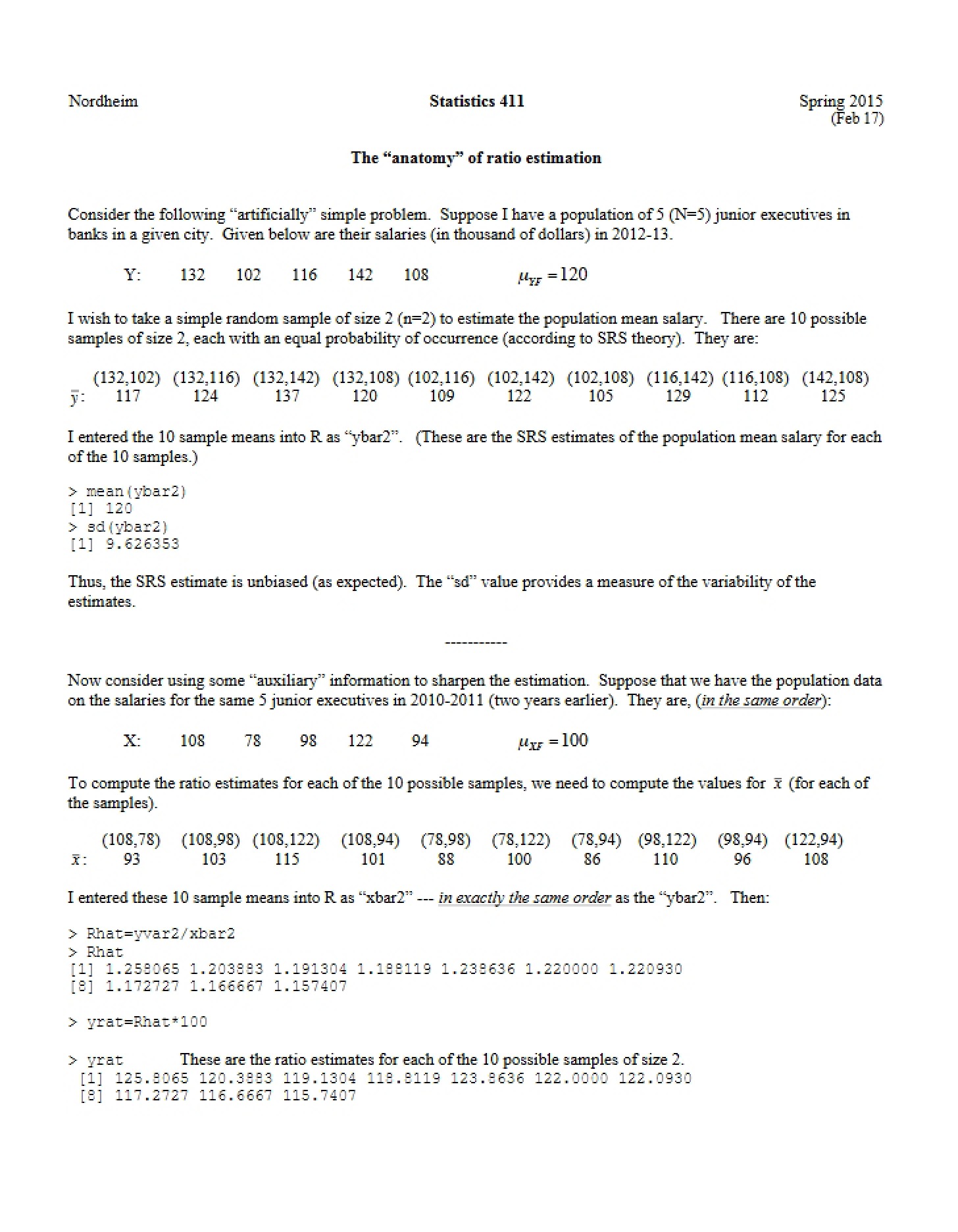
This document presents a focused exploration of ratio estimation techniques within the broader field of sample survey theory. It delves into applying these methods specifically when dealing with stratified samples – situations where a population is divided into distinct subgroups, or strata, before sampling. The material builds upon foundational statistical concepts and applies them to real-world estimation problems, focusing on estimating population means using auxiliary information. It utilizes a practical scenario involving worker-hour loss across different plants within a company to illustrate the techniques.
Why This Document Matters
Students enrolled in introductory statistics or survey methodology courses will find this resource particularly valuable. It’s ideal for those seeking to understand how to improve the precision of estimates when prior knowledge about population characteristics is available. Professionals in fields like market research, public health, or economics, where data collection and analysis are crucial, will also benefit from grasping these techniques. This material is most helpful when you’re ready to move beyond basic sampling methods and explore more efficient estimation procedures.
Common Limitations or Challenges
This resource concentrates on the theoretical underpinnings and application of stratified ratio estimation. It does not provide a comprehensive overview of all sampling methods, nor does it cover advanced topics like non-response bias or weighting adjustments. The focus is specifically on ratio estimation, and assumes a foundational understanding of basic statistical concepts like means, variances, and sampling distributions. It also doesn’t offer guidance on selecting appropriate strata or evaluating the quality of auxiliary information.
What This Document Provides
* A focused examination of ratio estimation within a stratified sampling framework.
* Illustrative examples using a company with multiple plants as strata.
* A comparison of separate versus combined ratio estimation approaches.
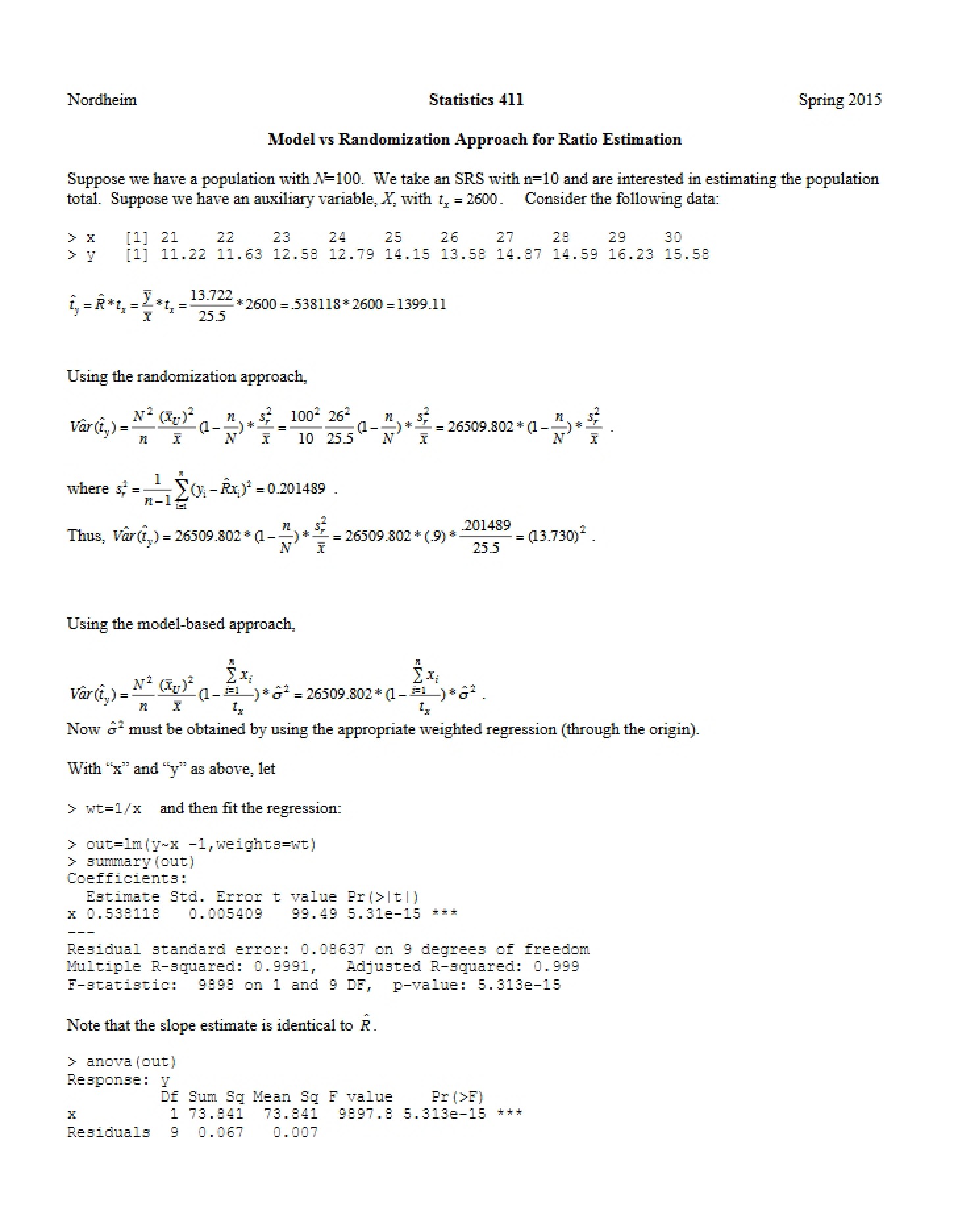
* Discussion of variance estimation related to ratio estimators.
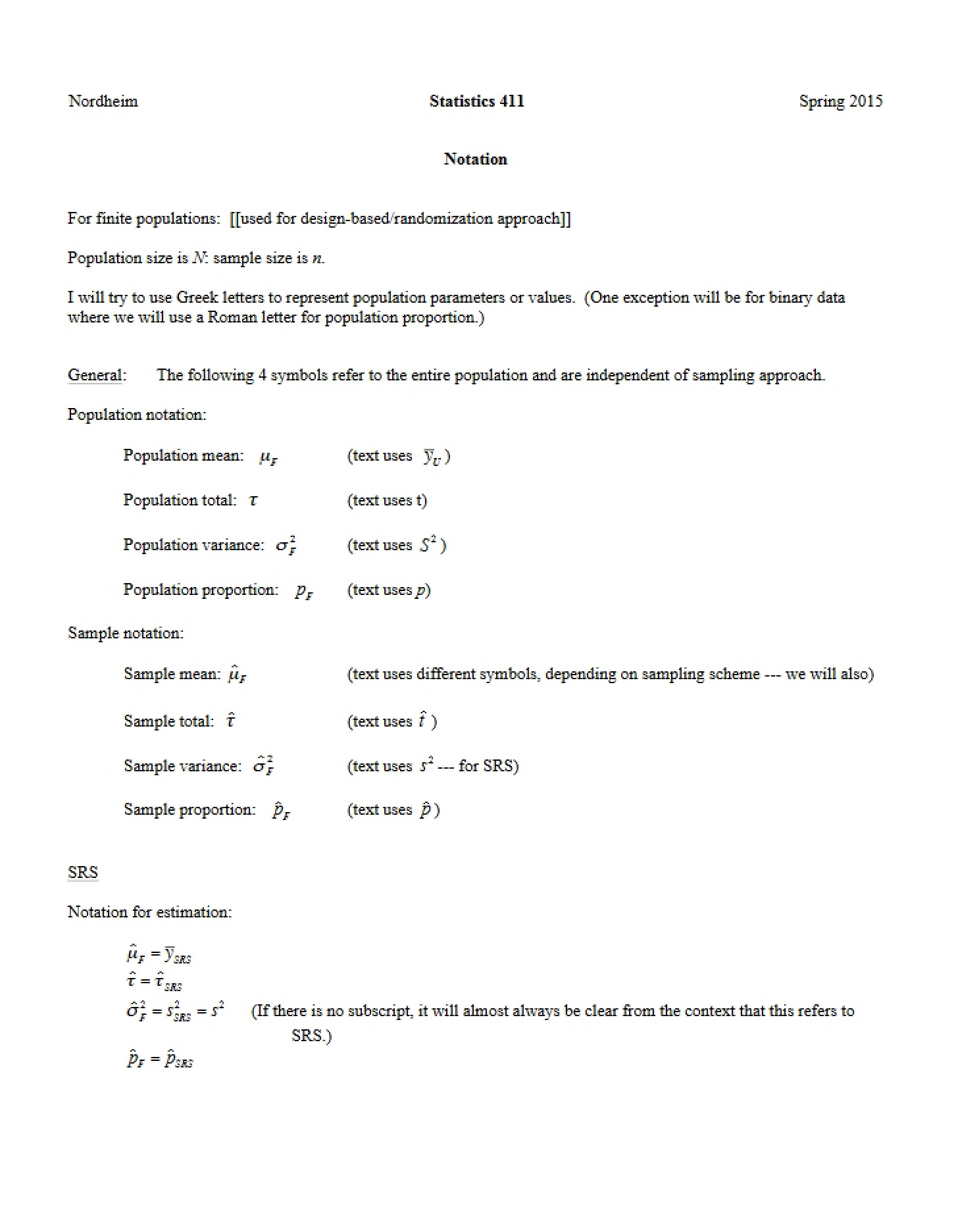
* Presentation of key formulas and notations used in ratio estimation.