What This Document Is
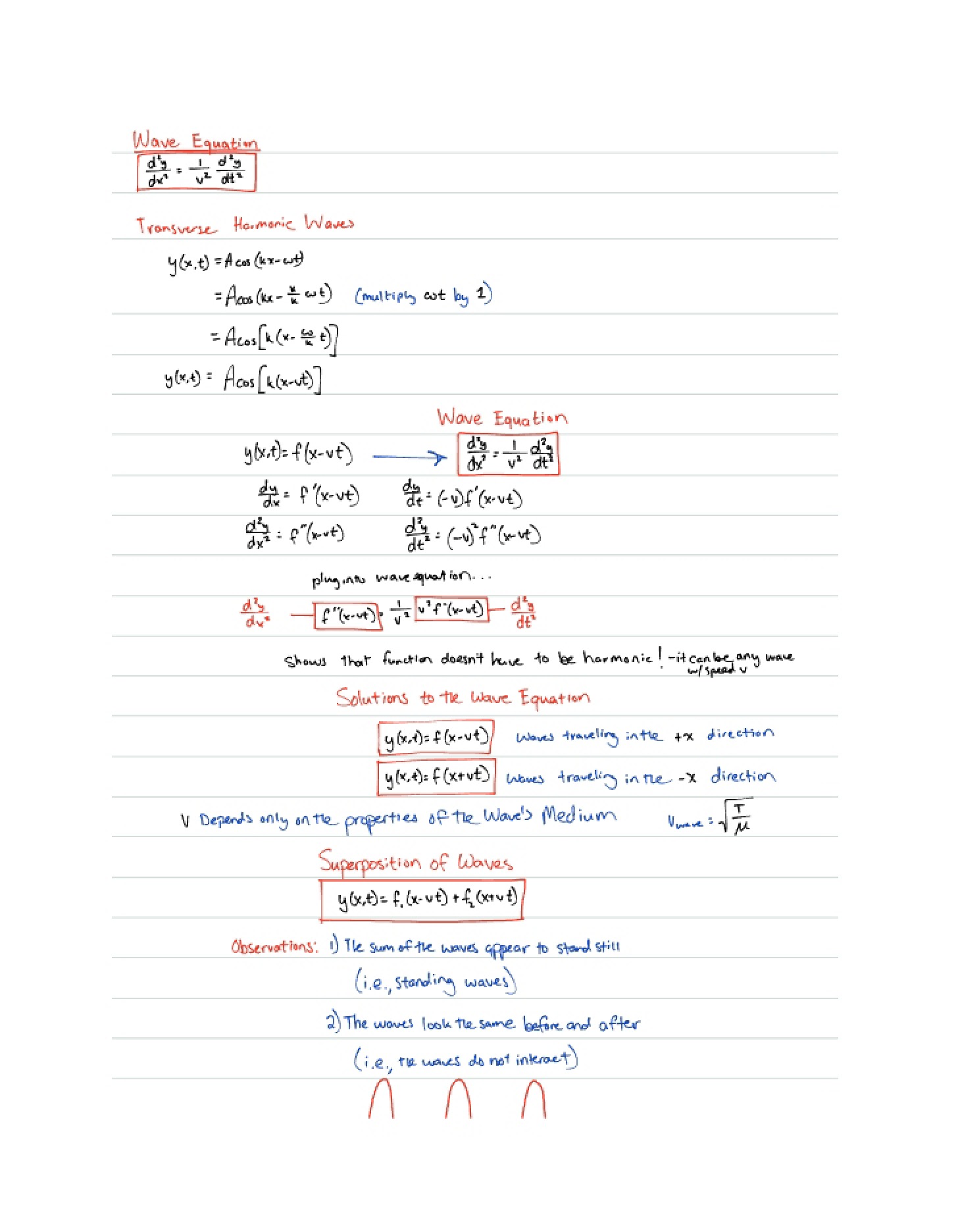
This is a comprehensive set of academic notes focusing on the principles of wave motion within the realm of University Physics – Mechanics (PHYS 211) at the University of Illinois at Urbana-Champaign. These notes delve into the mathematical and conceptual foundations governing wave behavior, exploring how disturbances propagate through various mediums. The material builds upon foundational mechanics concepts and applies them to the dynamic world of waves.
Why This Document Matters
These notes are invaluable for students currently enrolled in a university-level mechanics course, particularly those grappling with the complexities of wave phenomena. They are best utilized during focused study sessions, as a supplement to lectures, or when working through challenging problem sets. Students who find themselves needing a deeper understanding of wave properties, superposition, and interference will find this resource particularly helpful. It’s designed to reinforce core concepts and provide a structured approach to mastering this crucial topic.
Common Limitations or Challenges
While these notes offer a detailed exploration of wave mechanics, they are not a substitute for active class participation or a thorough understanding of the assigned textbook material. The notes do not include worked examples or step-by-step solutions to practice problems. They also assume a foundational knowledge of calculus and basic physics principles. This resource focuses on the *theory* behind wave motion and doesn’t offer extensive coverage of specific applications in areas like optics or acoustics.
What This Document Provides
* A focused examination of the fundamental wave equation and its implications.
* An exploration of wave solutions and their characteristics, including direction of travel.
* Discussion of the principle of superposition and its resulting phenomena.
* Detailed consideration of standing waves, including key features like nodes and antinodes.
* Analysis of wave interference patterns and the factors influencing them.
* Insights into wave reflection and related concepts.
* Examination of relationships between wave speed, frequency, and wavelength.