What This Document Is
These are meticulously crafted written notes covering core principles within University Physics – Mechanics (PHYS 211) at the University of Illinois at Urbana-Champaign. The notes delve into the fundamental concepts governing static equilibrium and the behavior of forces, focusing on applications related to rigid bodies and systems under various conditions. Expect a detailed exploration of forces, moments, and their interplay in maintaining balance and preventing motion. The material appears to build from foundational principles toward more complex scenarios involving multiple forces and constraints.
Why This Document Matters
This resource is invaluable for students currently enrolled in PHYS 211, or a similar introductory mechanics course, who are seeking a comprehensive and organized record of key lecture material. It’s particularly helpful for those who benefit from seeing concepts explained and re-explained in a written format, supplementing textbook readings and classroom discussions. These notes can be used for focused review before quizzes, during exam preparation, or as a reference while tackling challenging homework problems. Students who struggle with visualizing force interactions or applying equilibrium conditions will find this particularly useful.
Common Limitations or Challenges
While these notes aim for thoroughness, they are not a substitute for active class participation or a dedicated textbook. The notes represent *one* student’s interpretation and organization of the course material, and may not cover every nuance discussed in lectures. They do not include worked examples or step-by-step problem solutions; rather, they focus on the underlying principles and theoretical framework. Access to the full document is required to fully grasp the detailed explanations and derivations presented.
What This Document Provides
* Detailed examination of conditions for static equilibrium.
* Exploration of force components and their resolution.
* Discussion of the concepts of moments and torque.
* Analysis of scenarios involving multiple forces acting on rigid bodies.
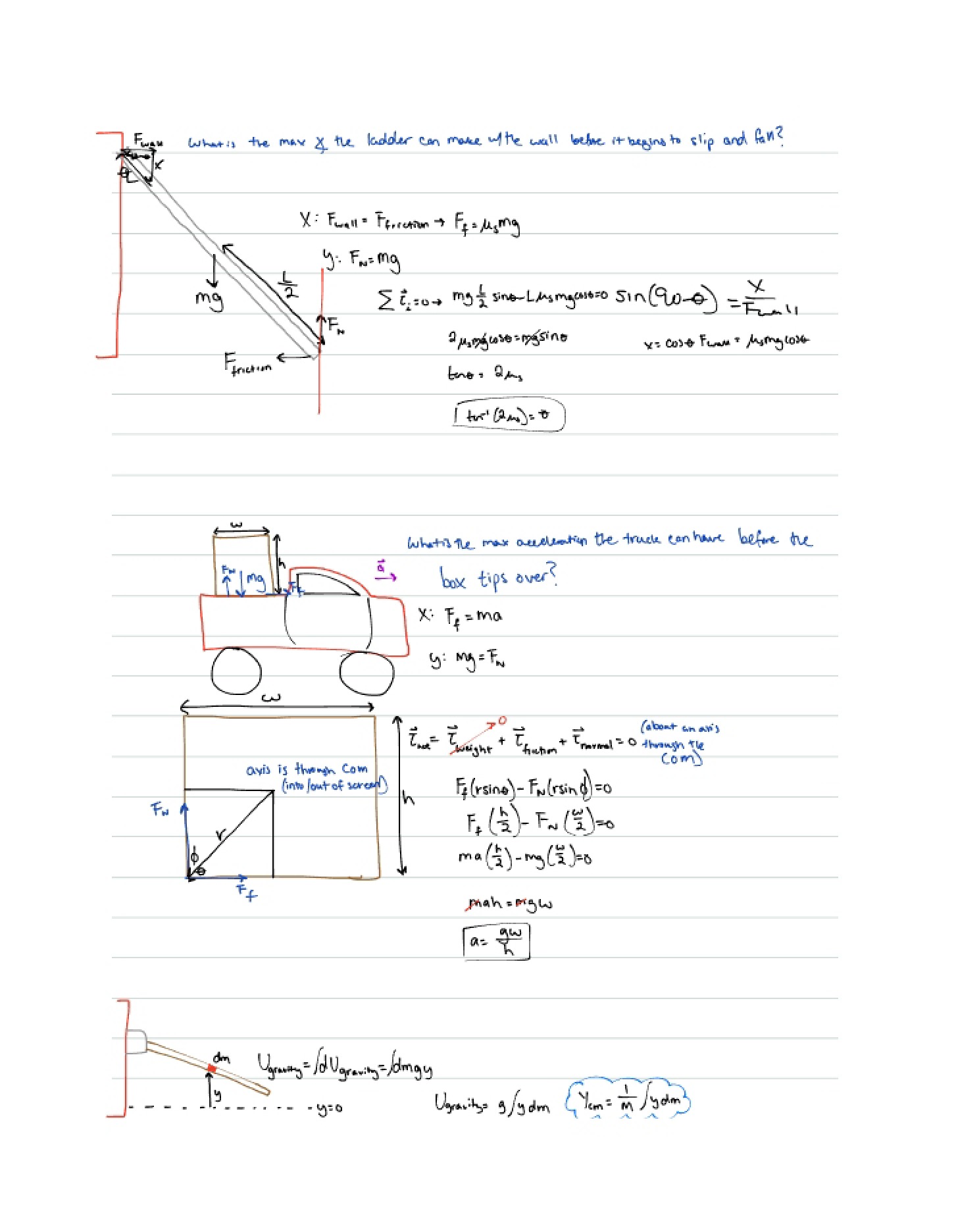
* Consideration of factors influencing stability and tipping points.
* Presentation of key relationships and equations related to force balance.
* Focus on applying theoretical concepts to understand physical systems.