What This Document Is
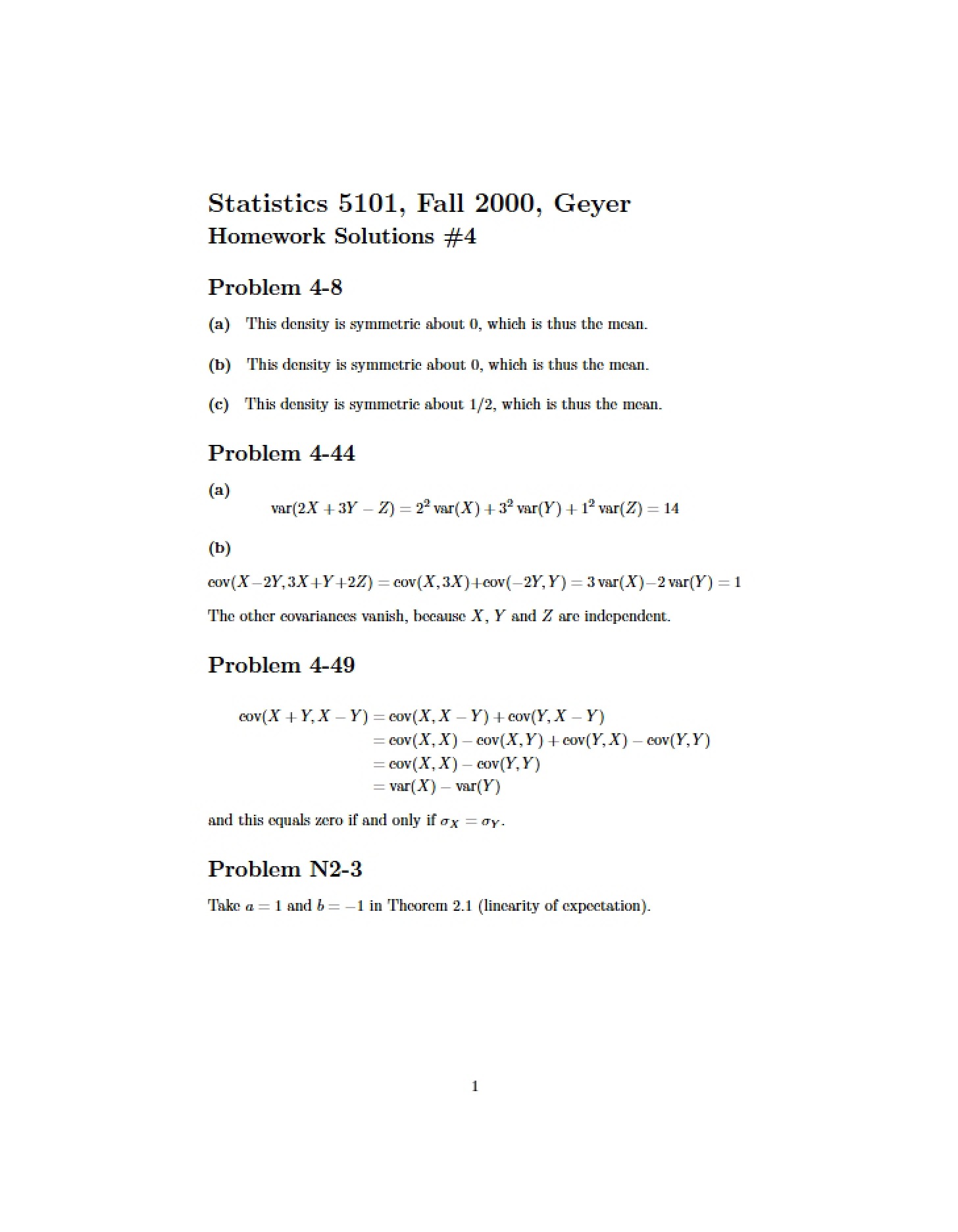
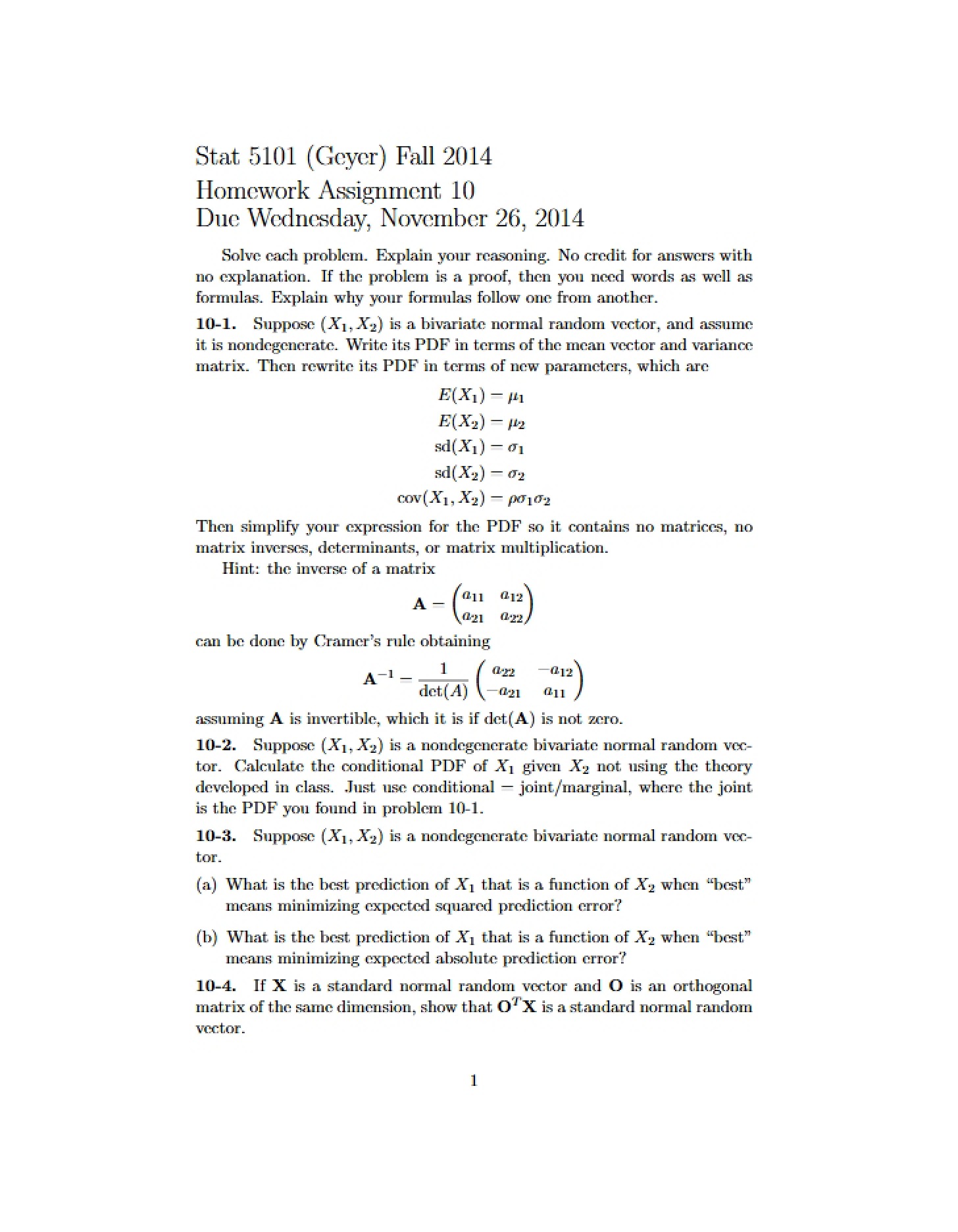
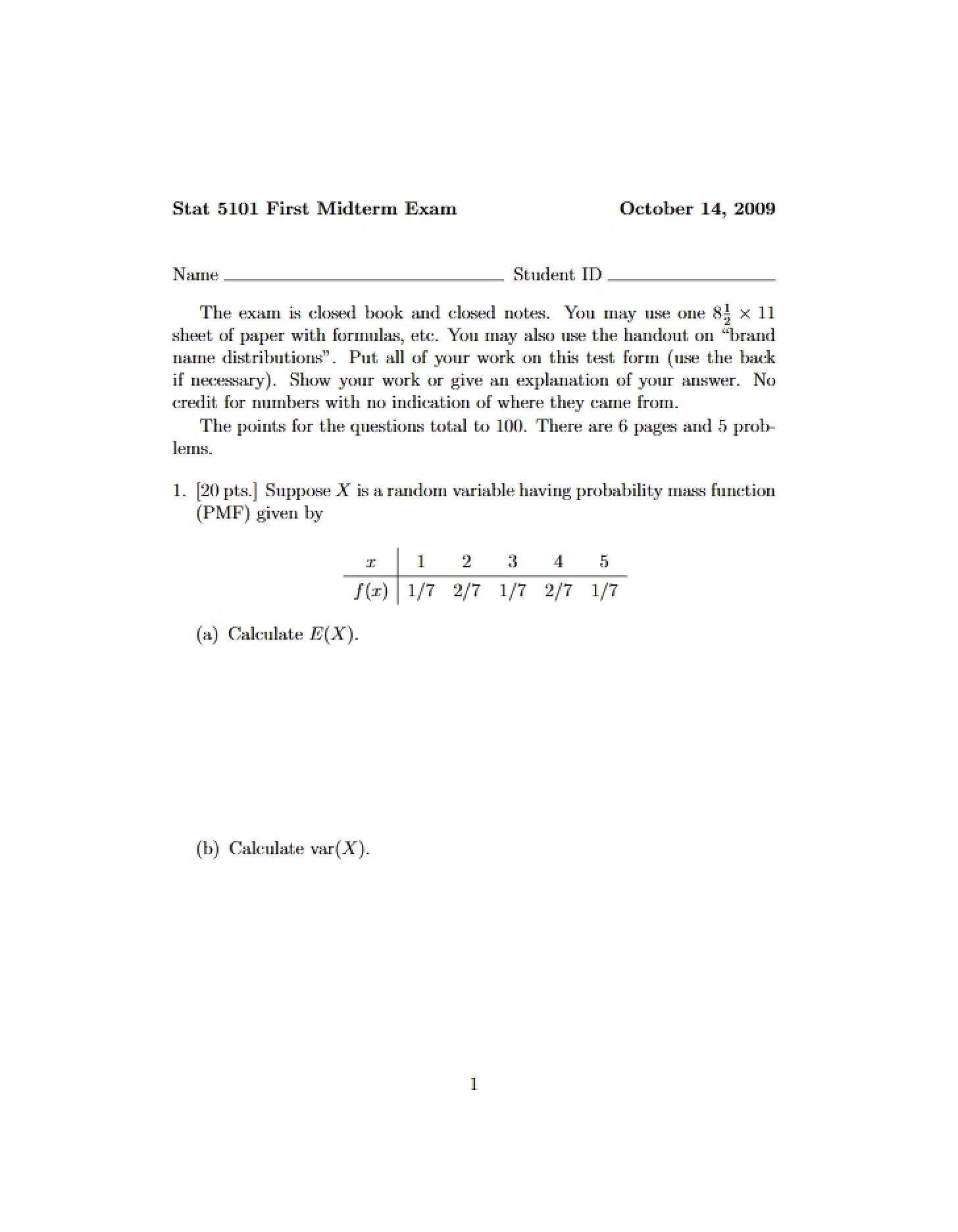
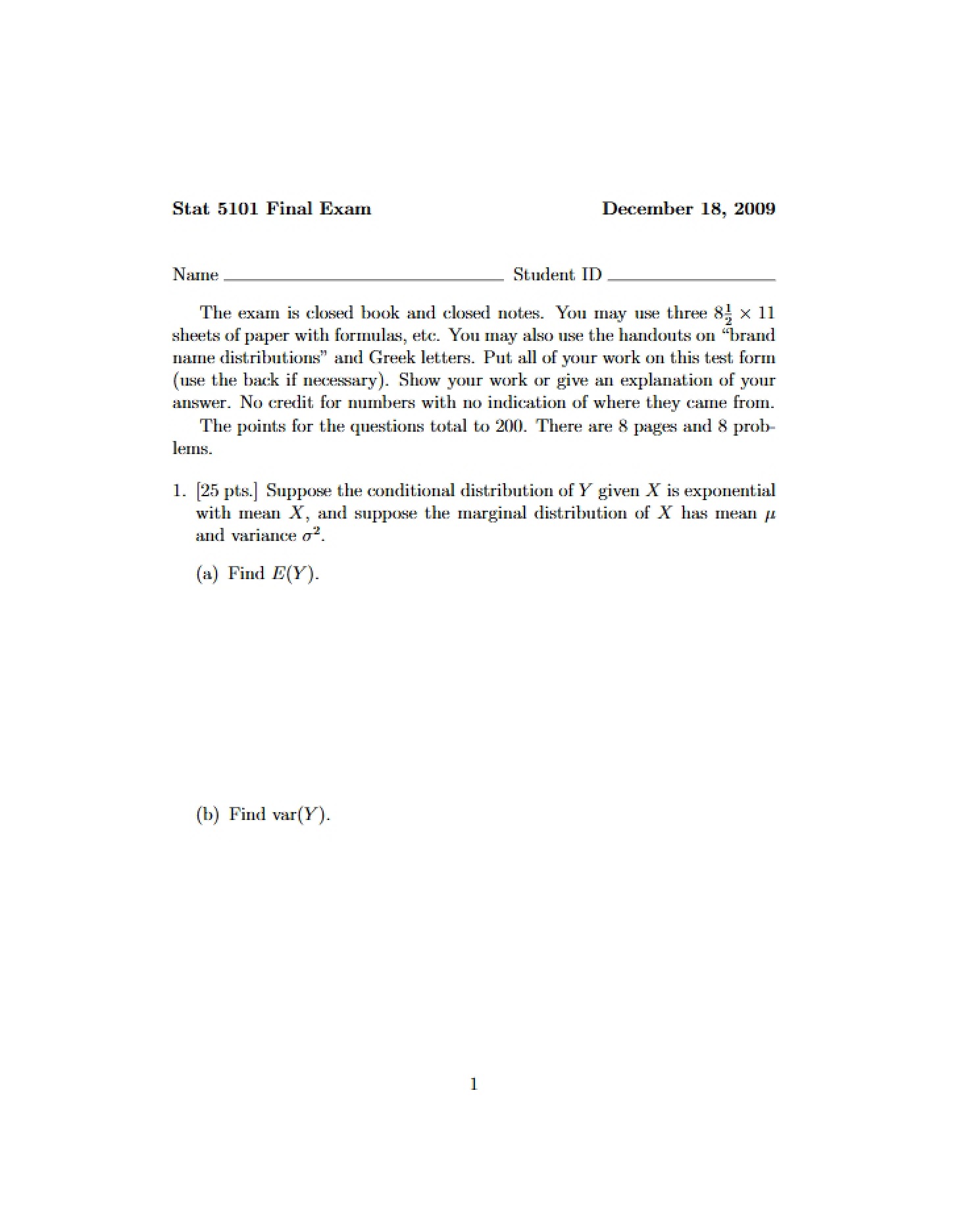
This document is a detailed answer key providing worked solutions to a series of homework assignments for STATS 5101, Theory of Statistics I, at the University of Minnesota Twin Cities. It covers a range of topics central to foundational statistical theory, including limit theorems, distributions, and multivariate analysis. The solutions demonstrate the application of statistical principles to solve specific problems, offering a comprehensive guide to understanding the course material.
Why This Document Matters
This resource is invaluable for students enrolled in a rigorous theory of statistics course. It’s particularly helpful when you’re seeking to solidify your understanding of complex concepts and verify your problem-solving approach. Use this answer key to check your work after completing assignments, identify areas where you may have struggled, and gain deeper insight into the reasoning behind correct solutions. It’s a powerful tool for self-assessment and targeted review, especially as you prepare for exams or further coursework.
Common Limitations or Challenges
This document focuses *solely* on providing solutions to the assigned homework problems. It does not include explanations of the underlying statistical concepts themselves, nor does it offer alternative approaches to problem-solving. It assumes a foundational understanding of statistical principles as presented in lectures and the course textbook. Simply reviewing the solutions will not guarantee comprehension; active engagement with the material and a solid grasp of the core concepts are essential.
What This Document Provides
* Detailed solutions to a variety of homework problems spanning multiple topics within statistical theory.
* Applications of key theorems and concepts covered in the course.
* Illustrative examples demonstrating the practical implementation of statistical methods.
* Calculations and derivations related to probability distributions and statistical inference.
* Solutions involving both theoretical derivations and computational exercises.
* Worked examples utilizing concepts from multivariate normal distributions and the Chi-squared distribution.