What This Document Is
This is a comprehensive study guide for EE 557: Computer Systems Architecture, offered at the University of Southern California. It outlines the course structure, expectations, and assessment methods for a deep dive into the world of modern computer systems. This guide details the scope of the course, moving beyond foundational concepts to explore the complexities of real-world architectures. It’s designed to provide a complete overview of the course for prospective and current students.
Why This Document Matters
This guide is essential for anyone enrolled in, or considering enrolling in, EE 557. It clarifies the course’s focus on current, commercially available systems, distinguishing it from lower-level courses that emphasize circuit-level design. Students will benefit from understanding the grading breakdown, required materials, and the types of assignments expected. It’s particularly useful during course selection to determine if the course aligns with your academic goals and interests within the field of computer engineering. It also serves as a valuable reference throughout the semester to stay organized and on track.
Common Limitations or Challenges
This guide provides a high-level overview of the course. It does *not* contain the actual lecture slides, homework assignments, simulation exercises, or quiz/exam questions. It outlines the *types* of assignments, but doesn’t provide solutions or detailed instructions. It also doesn’t delve into the specific architectural details that will be covered – those are part of the course content itself. Think of this as a roadmap, not the territory.
What This Document Provides
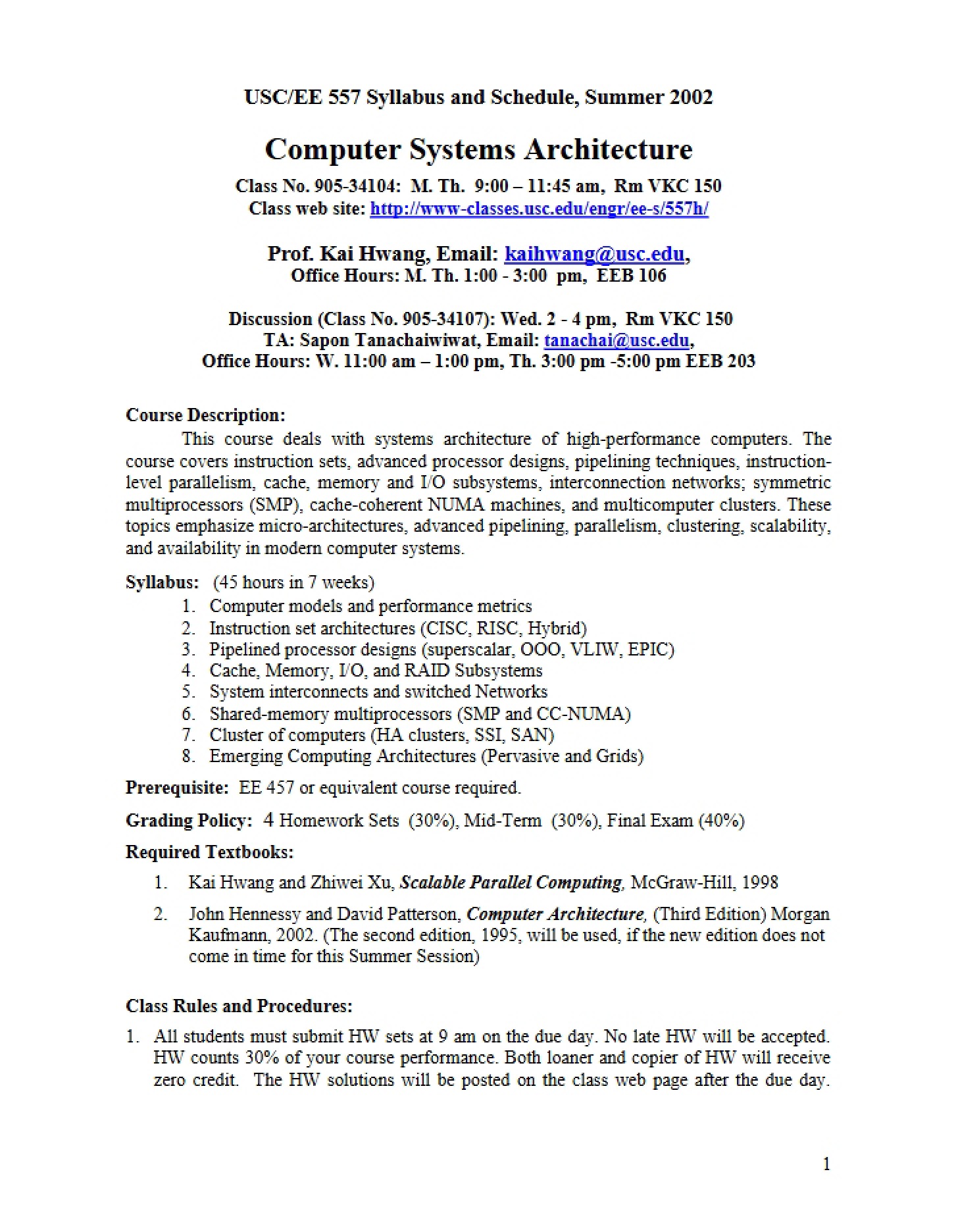
* A detailed course schedule outlining lecture and discussion times.
* Instructor and Teaching Assistant contact information and office hours.
* A clear course description outlining the learning objectives and focus.
* A list of required textbooks and supplementary materials.
* A breakdown of the grading components (homework, simulations, quizzes, midterm, final).
* Information on the types of simulation tools that will be utilized.
* Policies regarding quizzes and exams (open book/note status, device restrictions).
* Grading policy guidelines and score-to-letter grade expectations.