What This Document Is
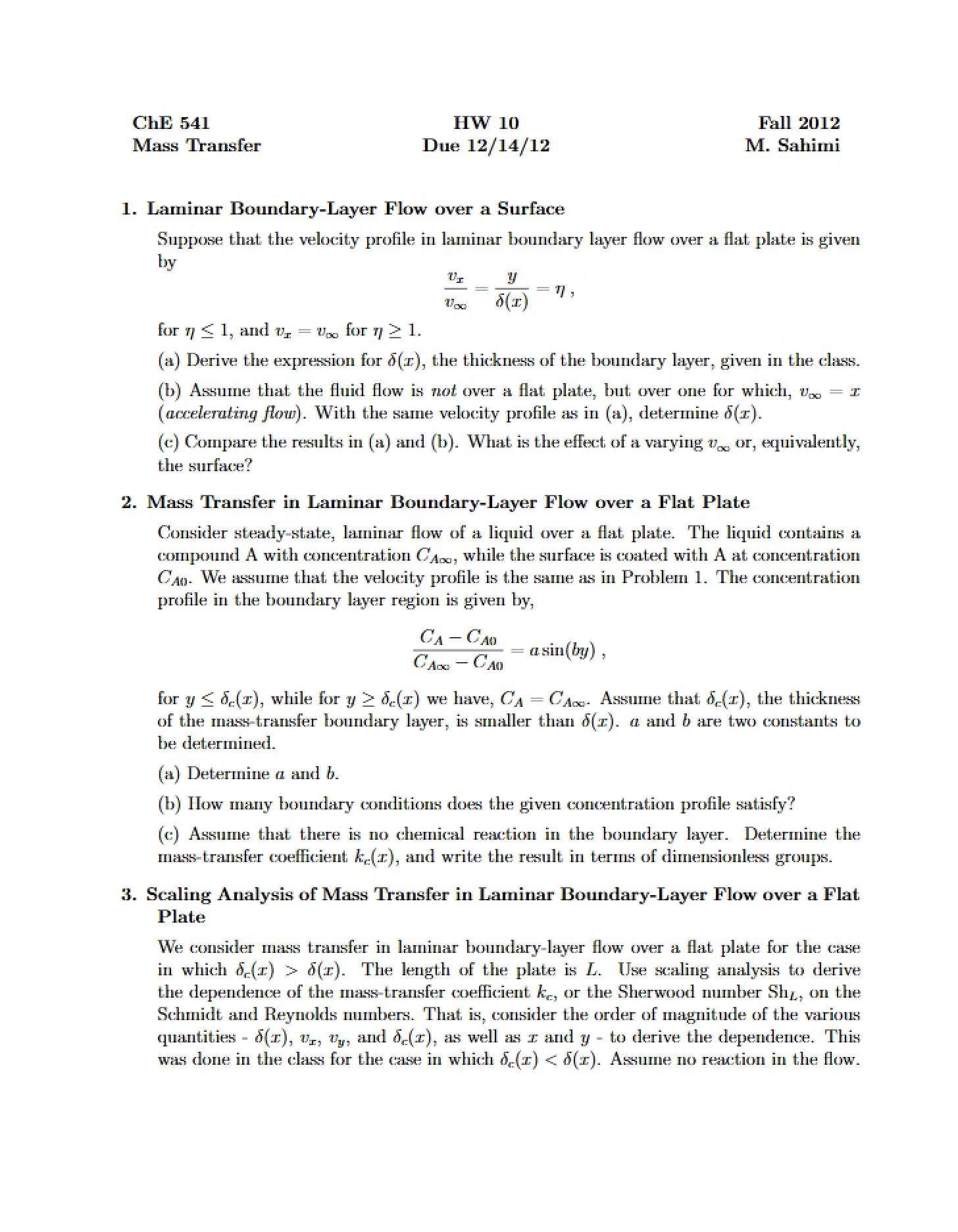
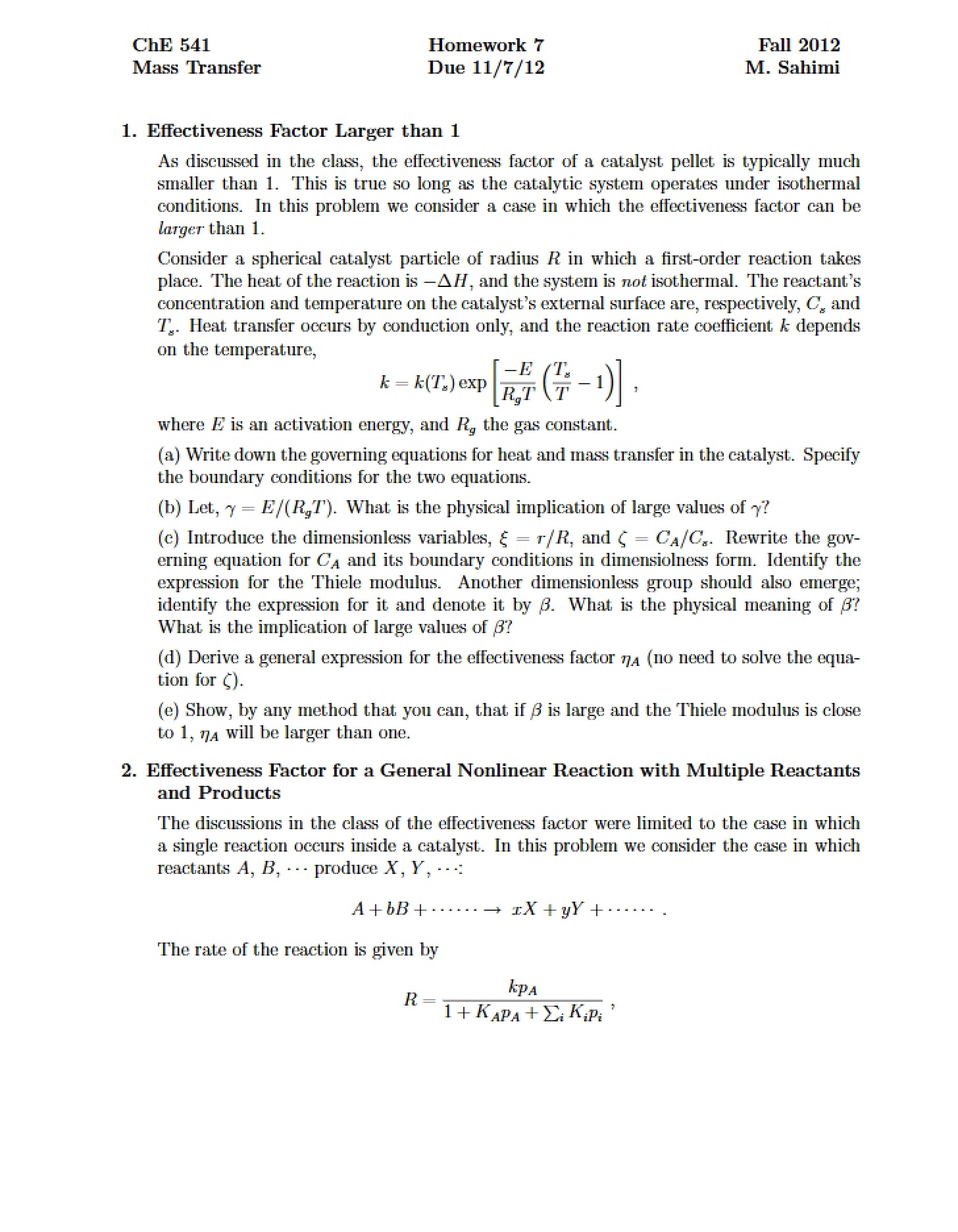
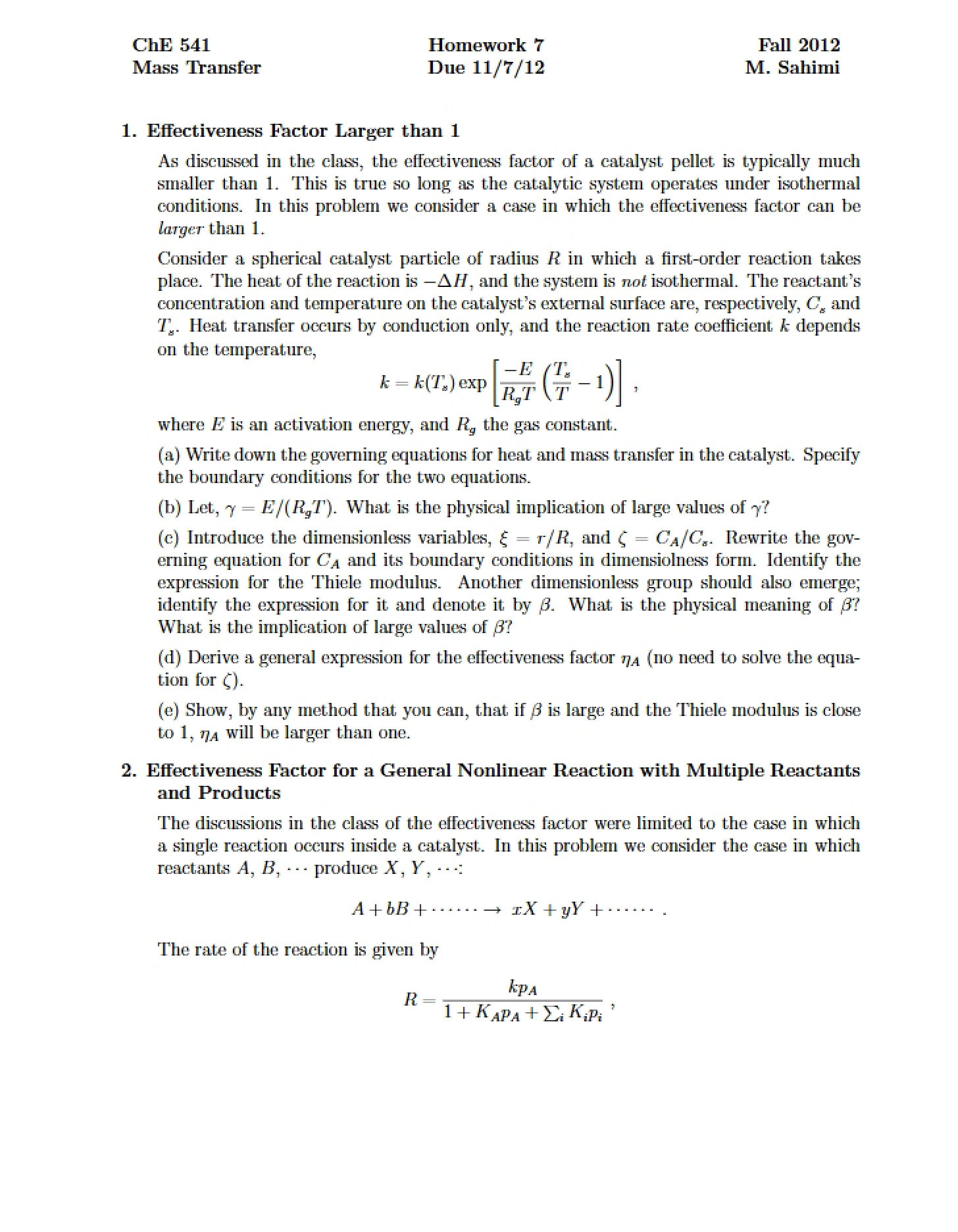
This is a homework assignment for CHE 541, a graduate-level Mass Transfer course at the University of Southern California. It focuses on applying fundamental mass transfer principles to solve complex, real-world engineering problems. The assignment challenges students to develop analytical skills and demonstrate a deep understanding of transport phenomena. It’s designed to be completed individually and assesses comprehension of core course concepts.
Why This Document Matters
This assignment is crucial for students enrolled in advanced chemical engineering courses, particularly those specializing in reaction engineering, separation processes, or materials science. Successfully completing this work will reinforce your ability to model and predict the behavior of systems involving mass transfer – a skill essential for designing and optimizing chemical processes. It’s best utilized *after* thorough review of lecture notes and relevant textbook chapters on diffusion, reaction kinetics, and dimensionless analysis. Students preparing for exams or further study in related fields will also find working through these problems beneficial.
Common Limitations or Challenges
This assignment presents problems requiring a strong mathematical foundation and a solid grasp of differential equations. It does *not* provide step-by-step solutions or worked examples. Students will need to independently apply the concepts learned in class and through readings. The problems require significant analytical effort and may involve simplifying assumptions to arrive at tractable solutions. It also assumes familiarity with standard notation and terminology used in mass transfer.
What This Document Provides
* Problem statements centered around oxide film growth and particle coagulation.
* Opportunities to apply diffusion principles to analyze reaction-limited processes.
* Exercises in formulating and manipulating partial differential equations.
* Practice with dimensionless analysis techniques for simplifying complex problems.
* A challenge to explore invariance properties of governing equations through transformations.
* A framework for considering appropriate boundary conditions in mass transfer modeling.