What This Document Is
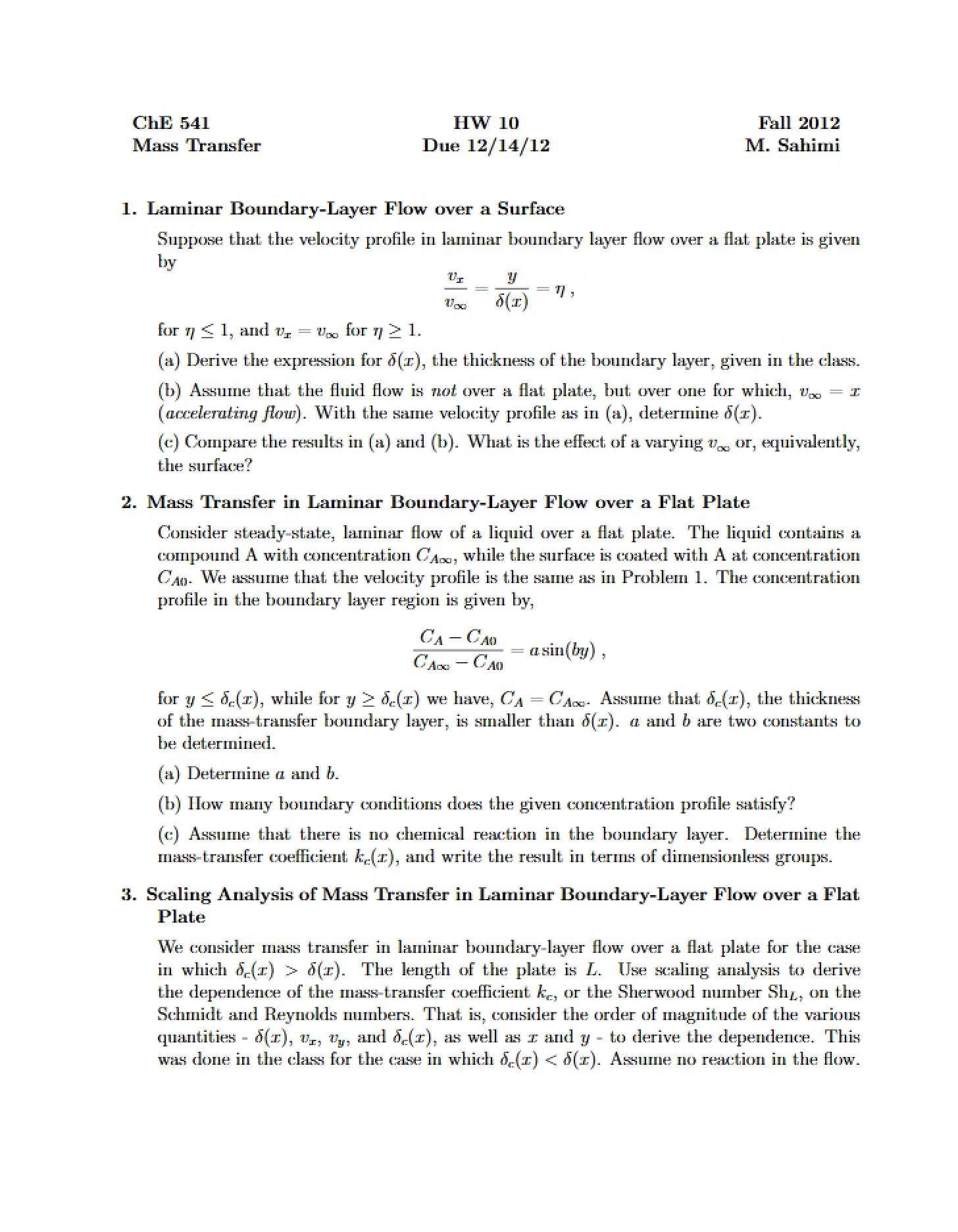
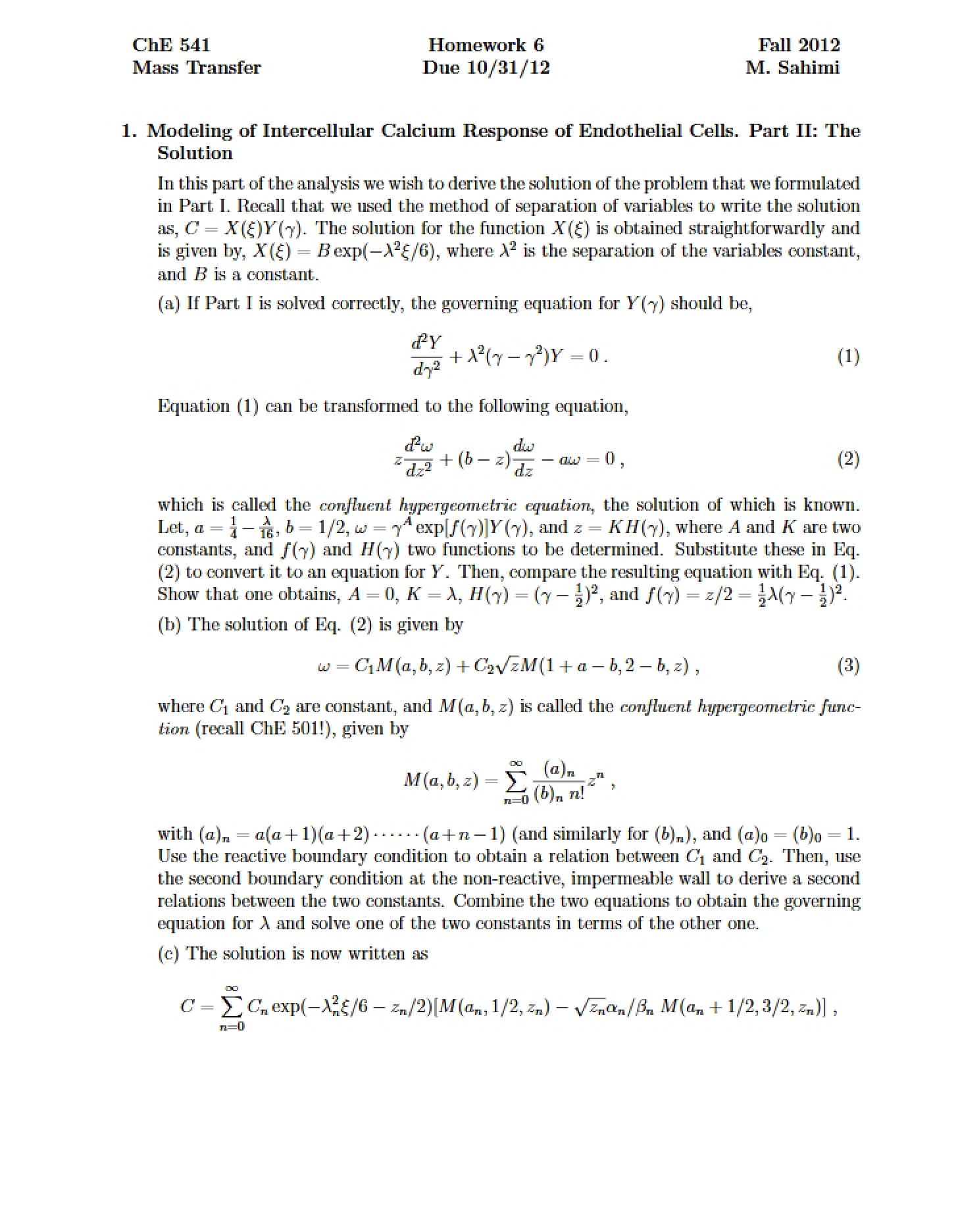
This is a homework assignment for CHE 541, a graduate-level Mass Transfer course at the University of Southern California. It focuses on applying theoretical concepts to solve complex problems related to diffusion, evaporation, and reaction engineering within porous media. The assignment challenges students to utilize analytical and potentially numerical methods to model transport phenomena. It builds upon previously covered material, referencing earlier homework problems, and introduces advanced mathematical techniques.
Why This Document Matters
This assignment is crucial for students seeking to solidify their understanding of unsteady-state mass transfer processes. It’s particularly valuable for those preparing for advanced coursework or careers in chemical engineering fields dealing with separation processes, reactor design, or materials science. Working through these problems will enhance your ability to formulate mathematical descriptions of physical systems and apply appropriate solution strategies. It’s best utilized *after* a thorough review of lecture notes and relevant textbook chapters on diffusion, convection, and reaction kinetics.
Common Limitations or Challenges
This assignment does not provide step-by-step solutions or fully worked examples. It presents problems that require independent application of the principles learned in class. Students will need a strong foundation in differential equations, particularly those related to unsteady-state transport phenomena, and familiarity with techniques like similarity solutions and perturbation methods. Access to mathematical software for numerical calculations may also be beneficial, but is not explicitly provided within the assignment itself.
What This Document Provides
* Problems centered around diffusion in membranes, extending pseudo-steady-state analysis to early-time behavior.
* Exercises involving unsteady-state evaporation and the application of similarity variables.
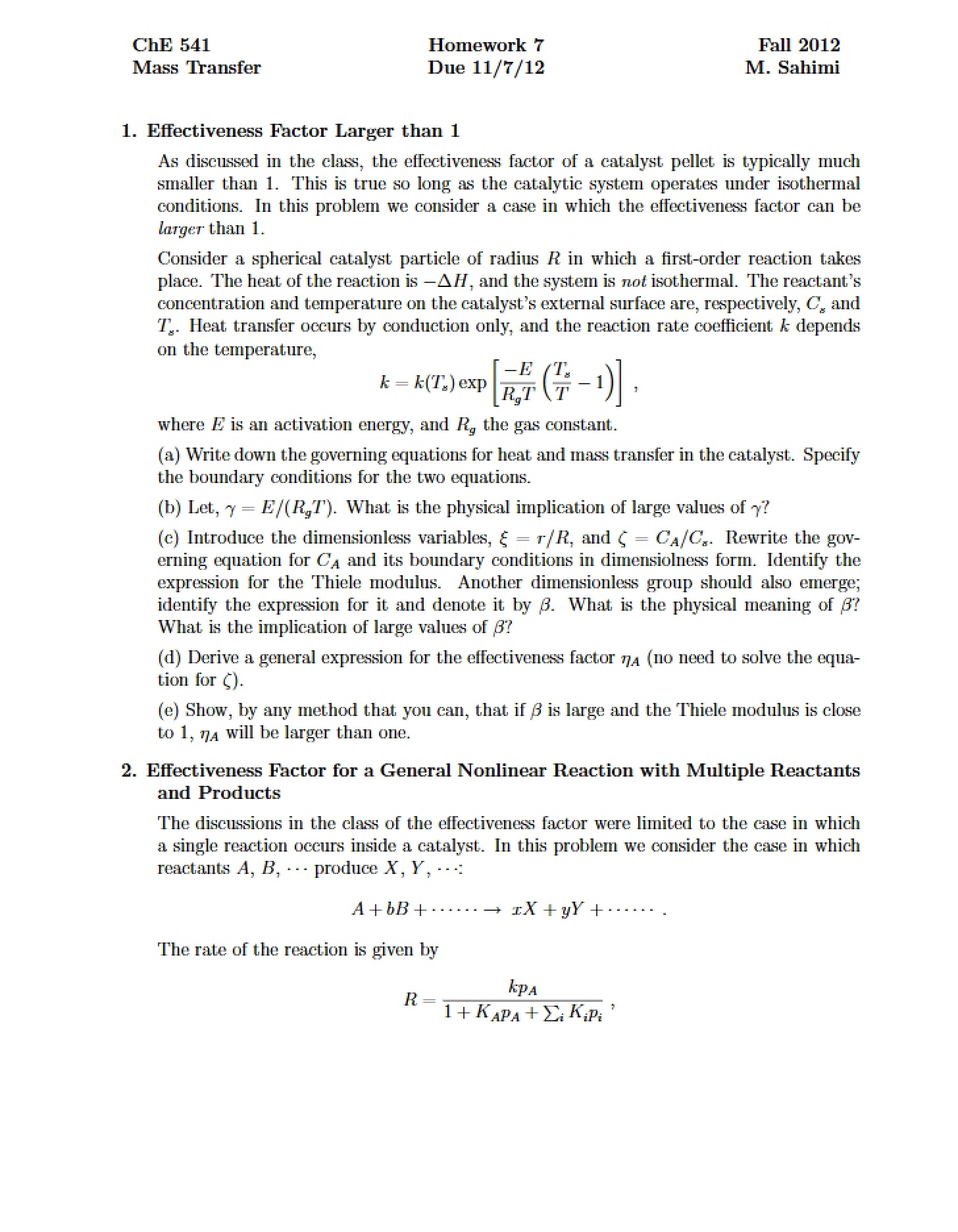
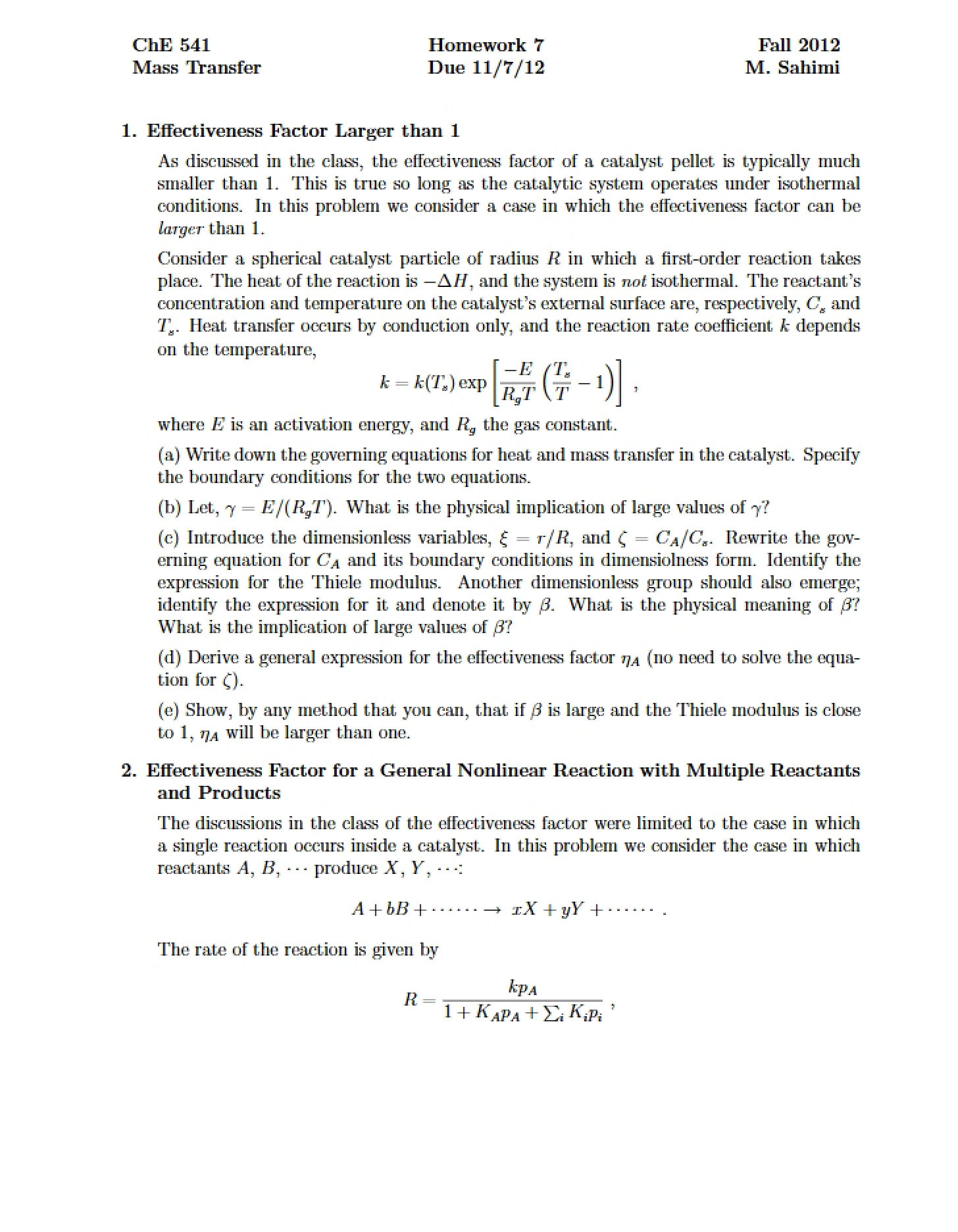
* A scenario exploring the impact of fluid flow on reaction rates within a catalyst particle.
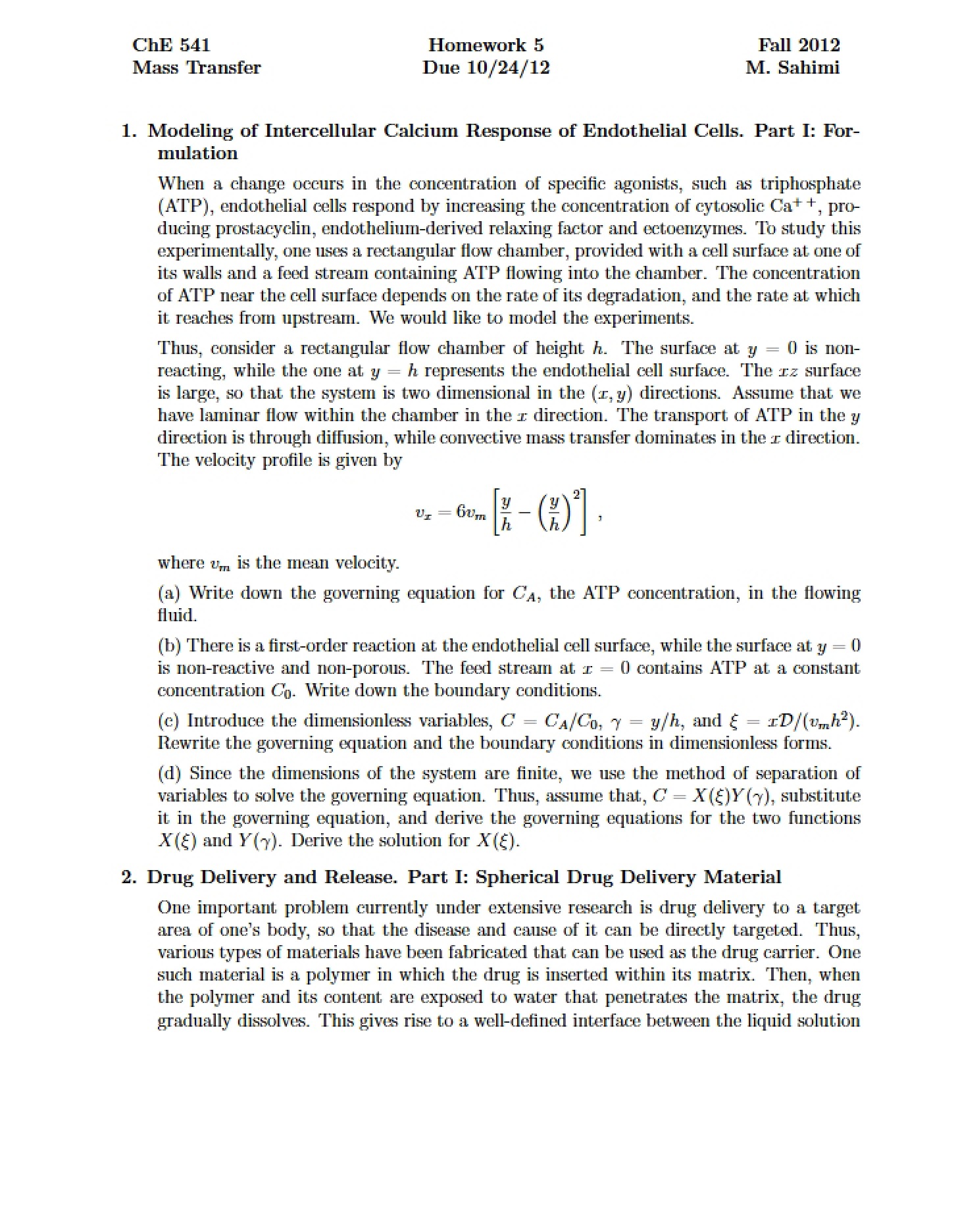
* Opportunities to define governing equations for mass transfer with chemical reaction.
* Practice in non-dimensionalizing equations and identifying key dimensionless groups like the Damkohler and Péclet numbers.
* Exposure to advanced mathematical concepts like Whittaker’s equation and singular perturbation theory.