What This Document Is
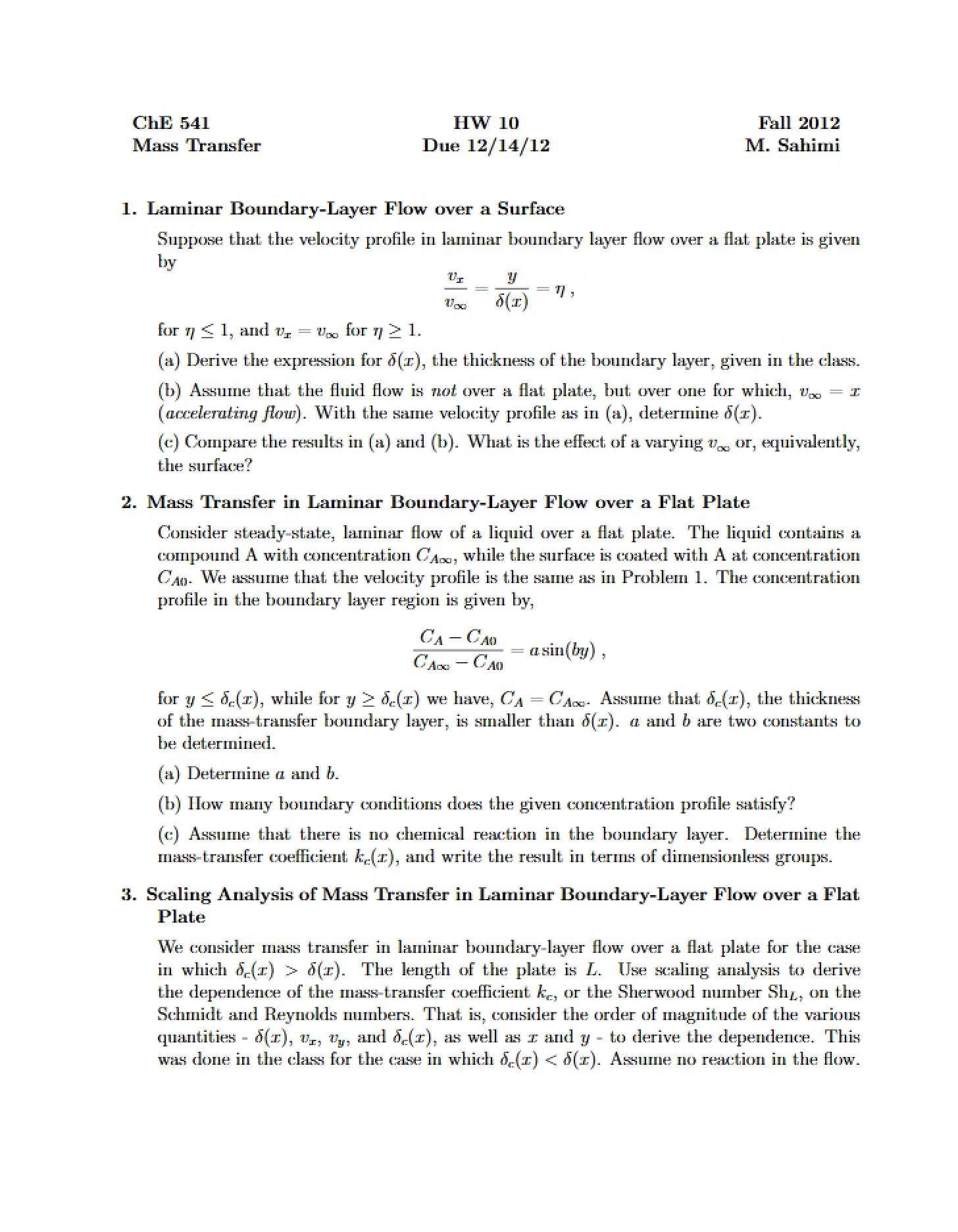
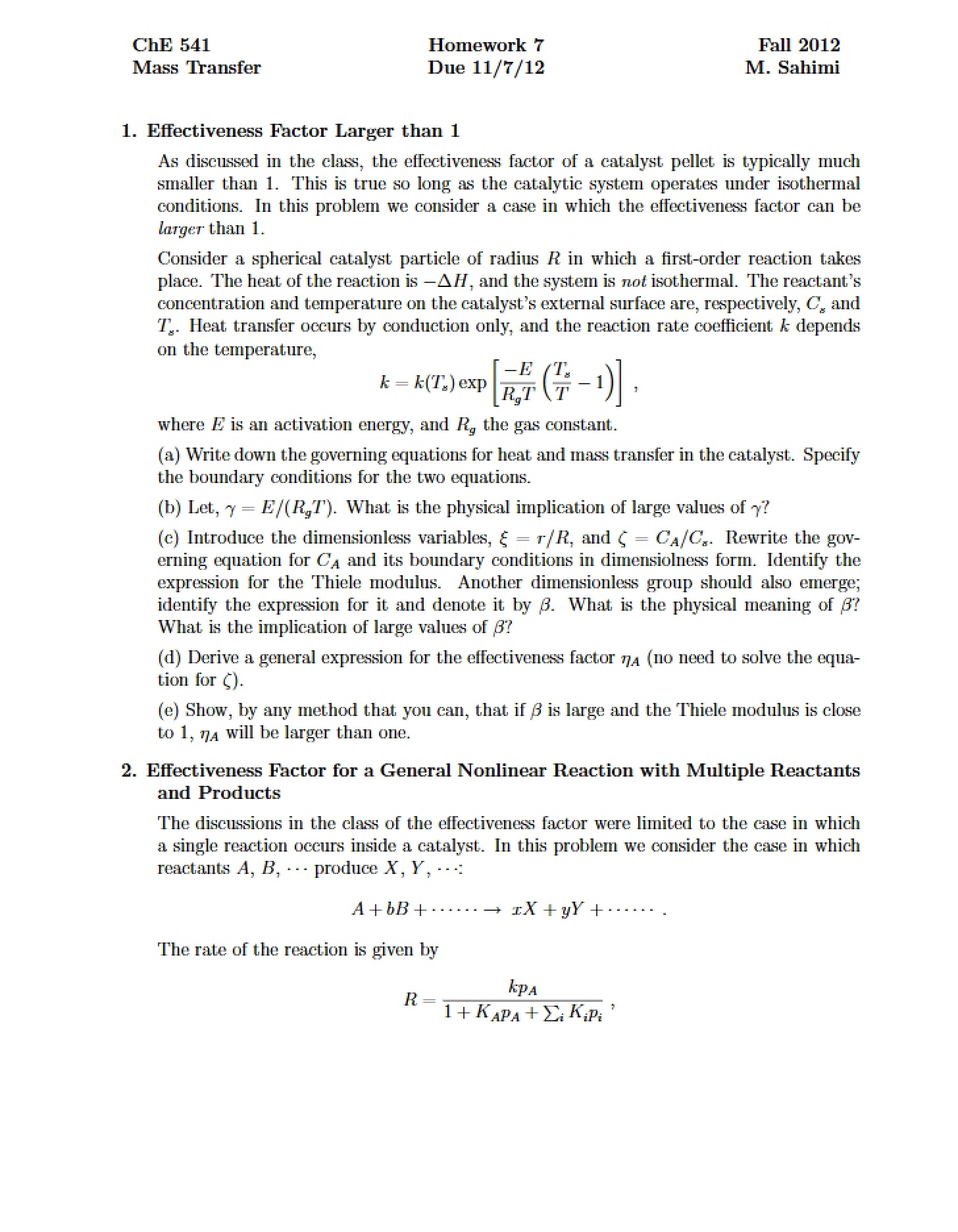
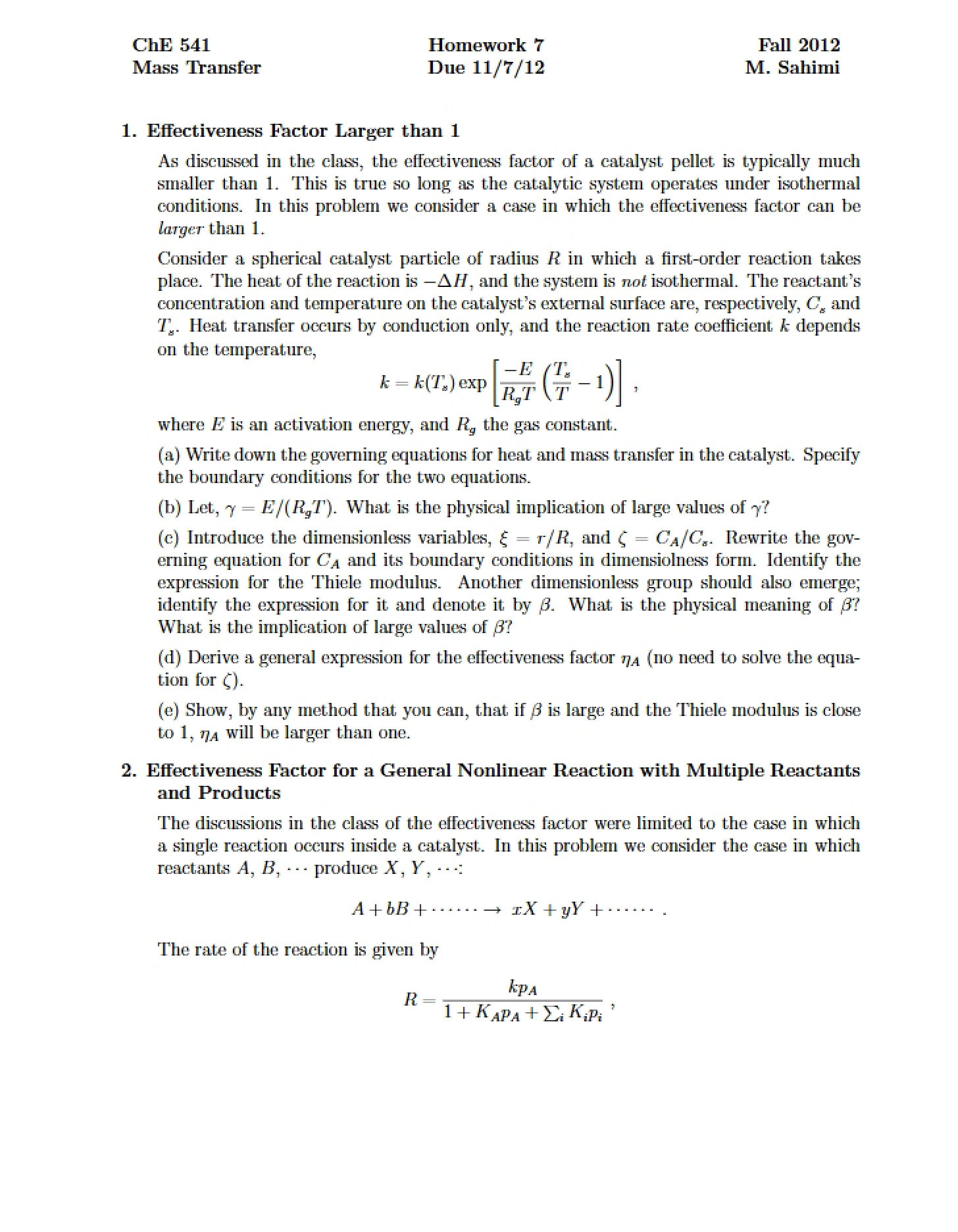
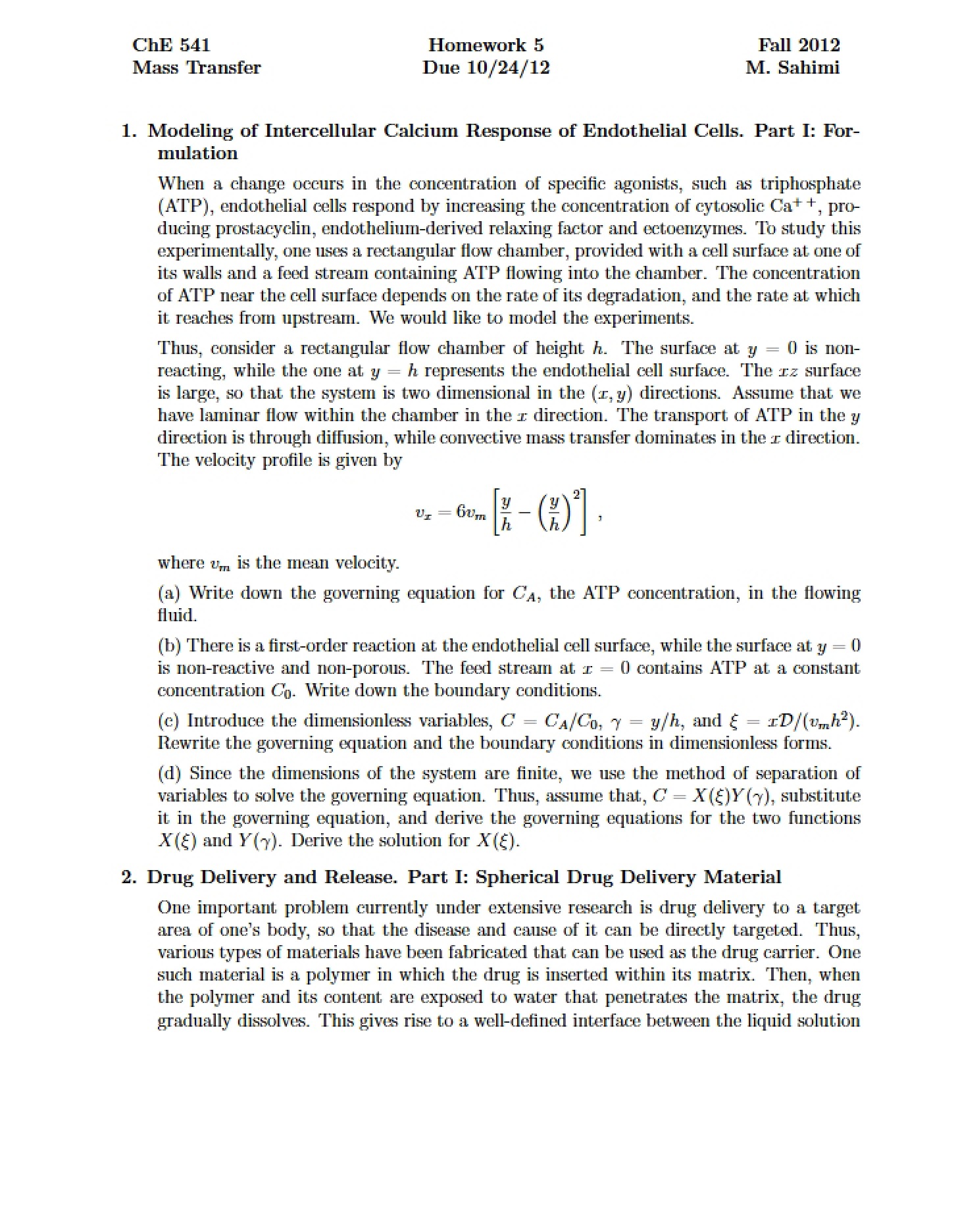
This is a problem set, specifically Assignment 2, for a graduate-level Mass Transfer course (CHE 541) at the University of Southern California. It focuses on applying fundamental mass transfer principles to complex, real-world scenarios involving reaction and separation processes. The assignment challenges students to develop analytical skills and apply theoretical knowledge to solve engineering problems. It builds upon core concepts typically covered in an advanced chemical engineering curriculum.
Why This Document Matters
This assignment is ideal for students currently enrolled in a rigorous Mass Transfer course seeking to solidify their understanding of key concepts. It’s particularly valuable for those preparing for exams or looking to deepen their ability to model and analyze systems involving diffusion, reaction, and membrane separations. Working through these types of problems is crucial for developing the skills needed for process design and optimization in chemical engineering practice. It’s best utilized *after* a thorough review of lecture materials and relevant textbook chapters.
Common Limitations or Challenges
This assignment does not provide a comprehensive review of foundational mass transfer principles. It assumes a pre-existing understanding of concepts like Fick’s Law, steady-state diffusion, and basic reaction kinetics. It also doesn’t offer step-by-step solutions or worked examples; it’s designed to test your independent problem-solving abilities. The problems require a strong mathematical background and the ability to formulate and solve differential equations.
What This Document Provides
* Problem statements centered around diffusion with enzymatic reactions.
* Scenarios involving pseudo-steady-state analysis of diffusion within membranes.
* Challenges related to the pseudo-steady-state analysis of liquid evaporation.
* Opportunities to practice dimensionless analysis and Damköhler number calculations.
* Exercises requiring the derivation of flux expressions and time scale analysis.
* Problems designed to assess understanding of the limitations of simplifying assumptions (like steady-state).