What This Document Is
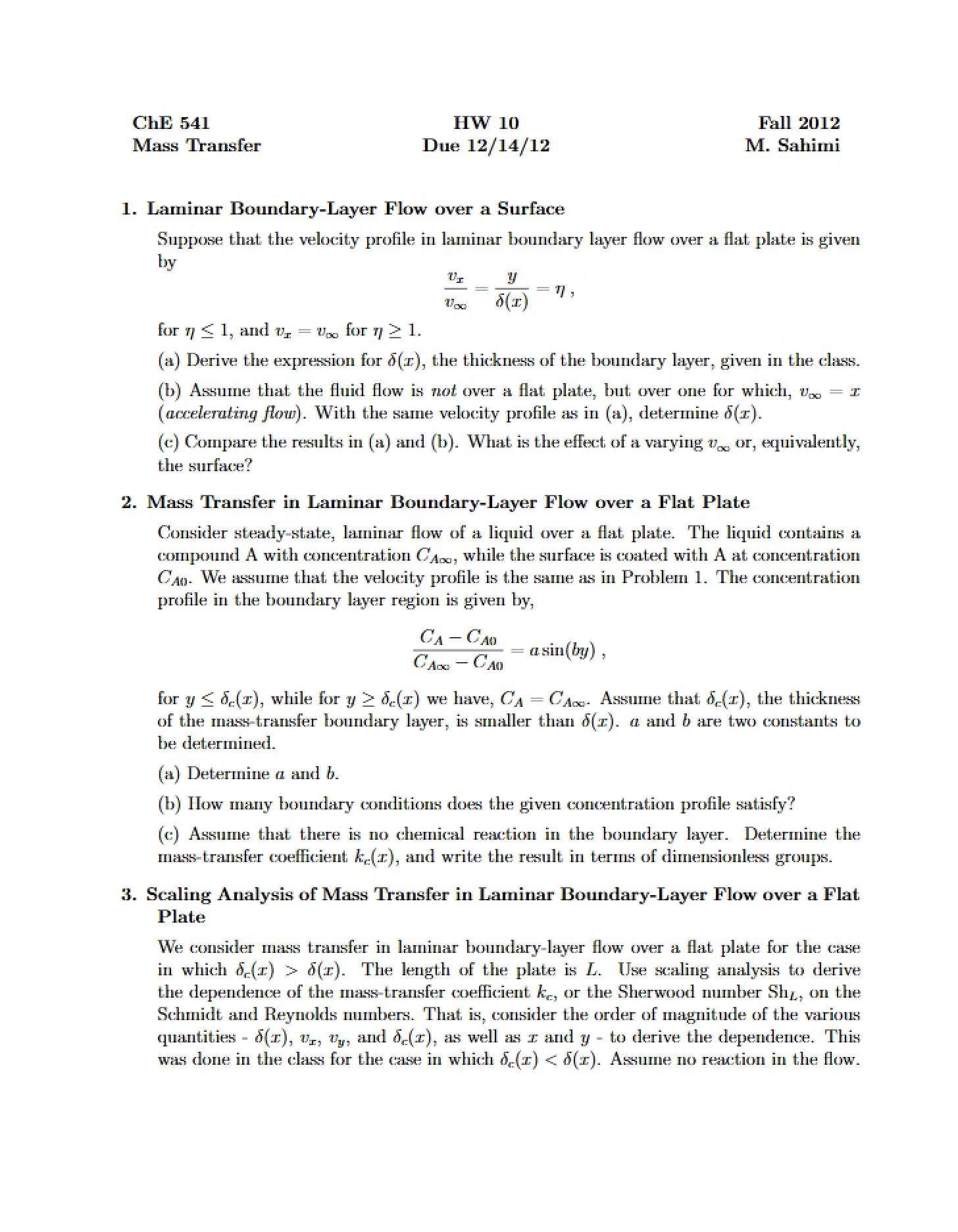
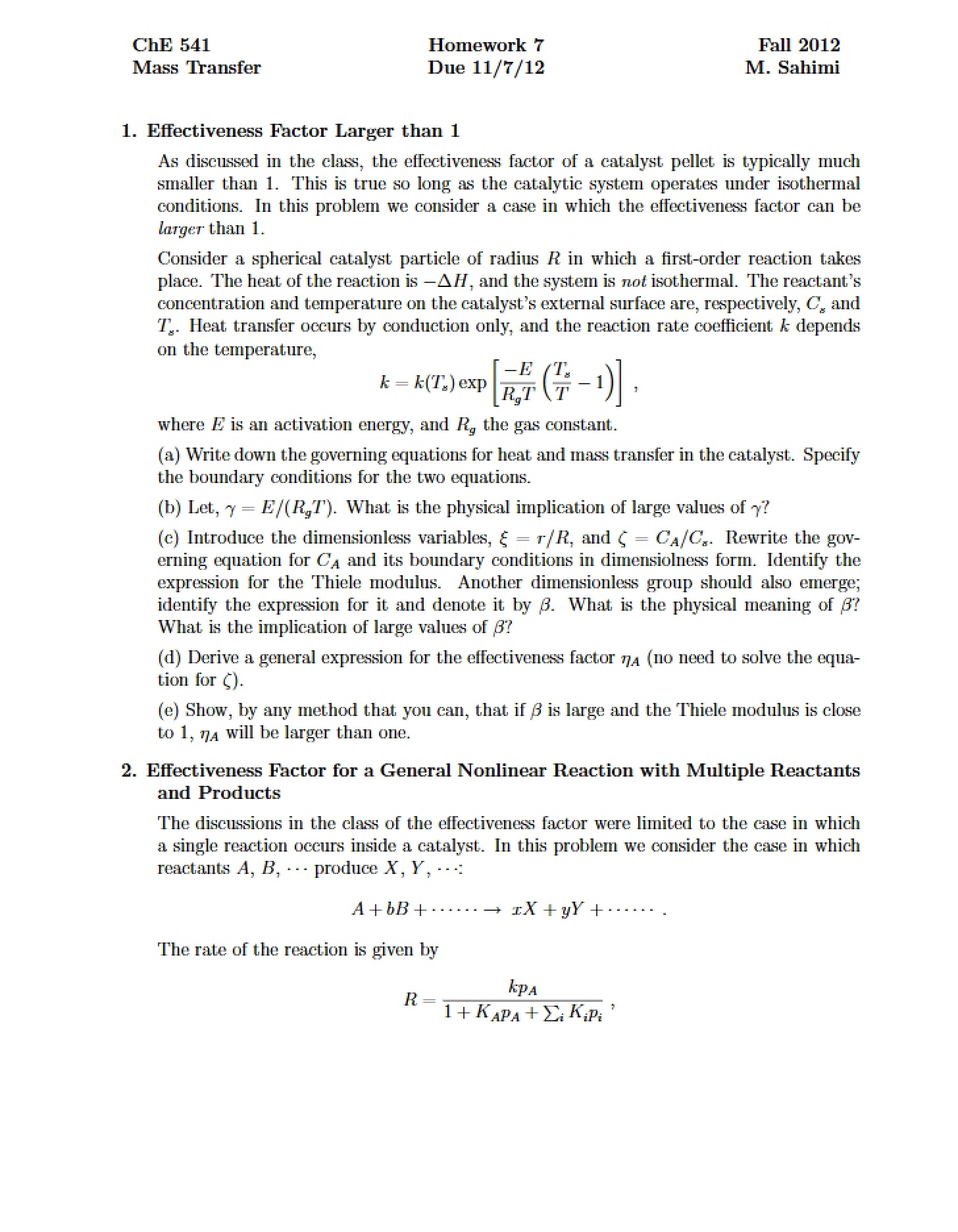
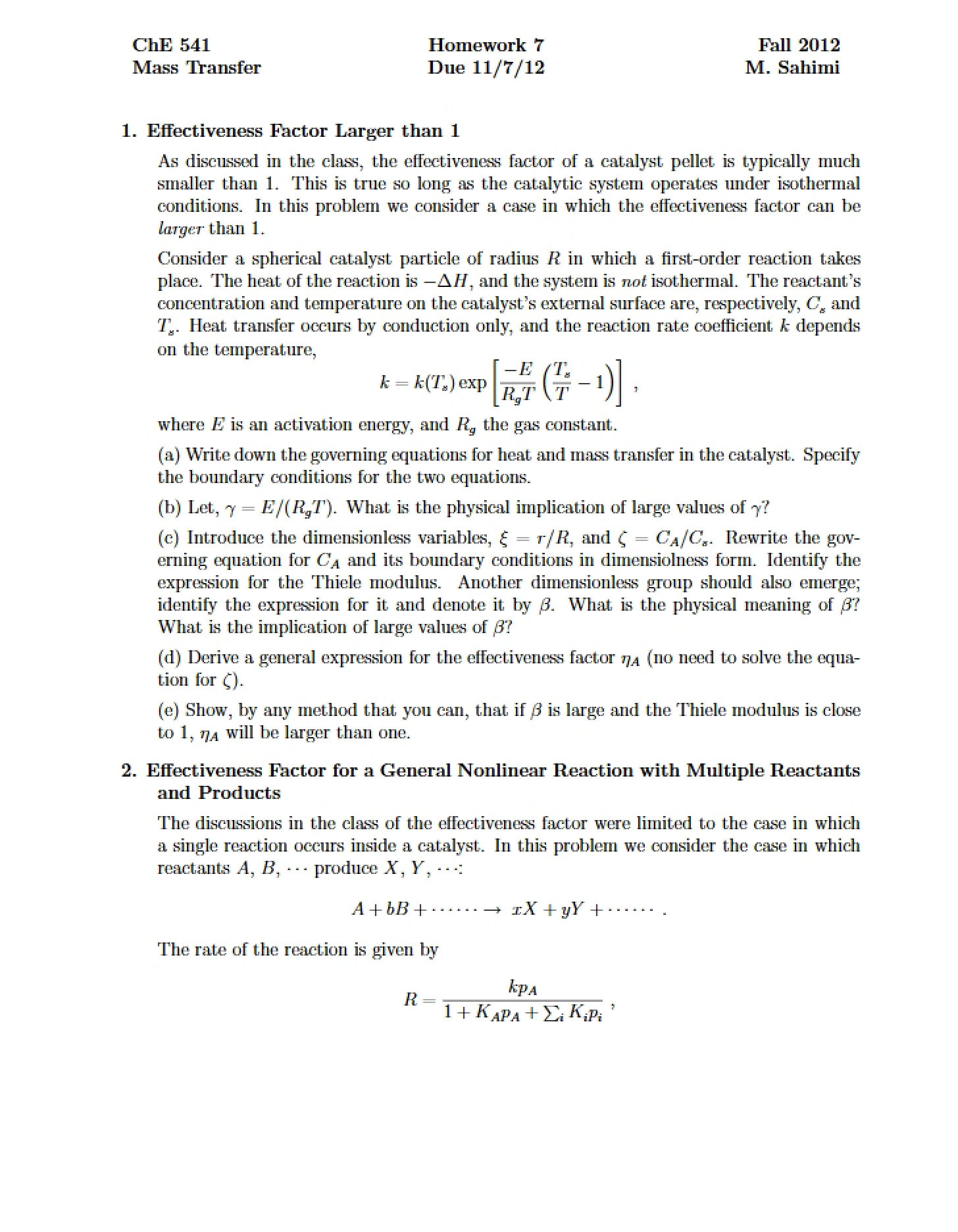
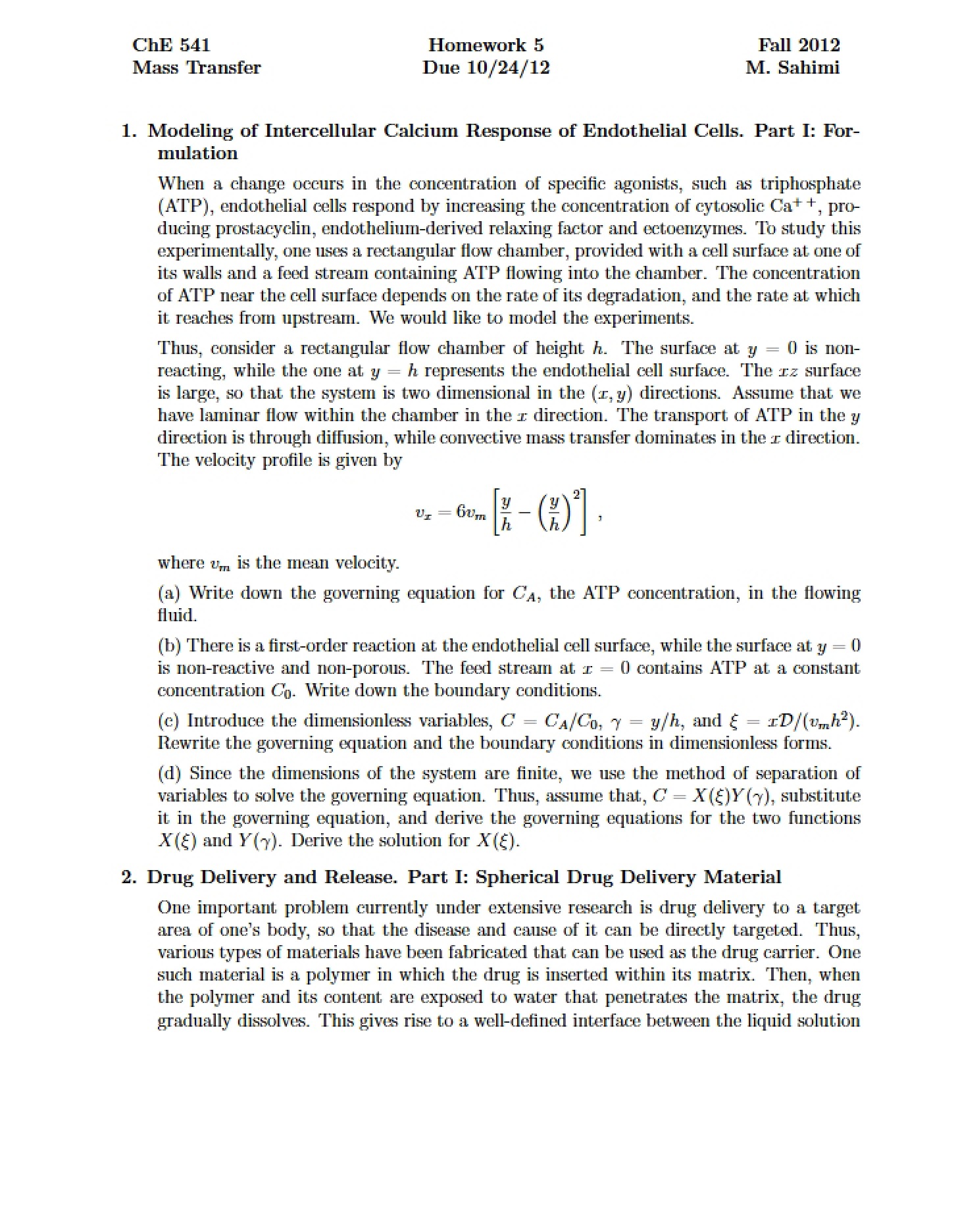
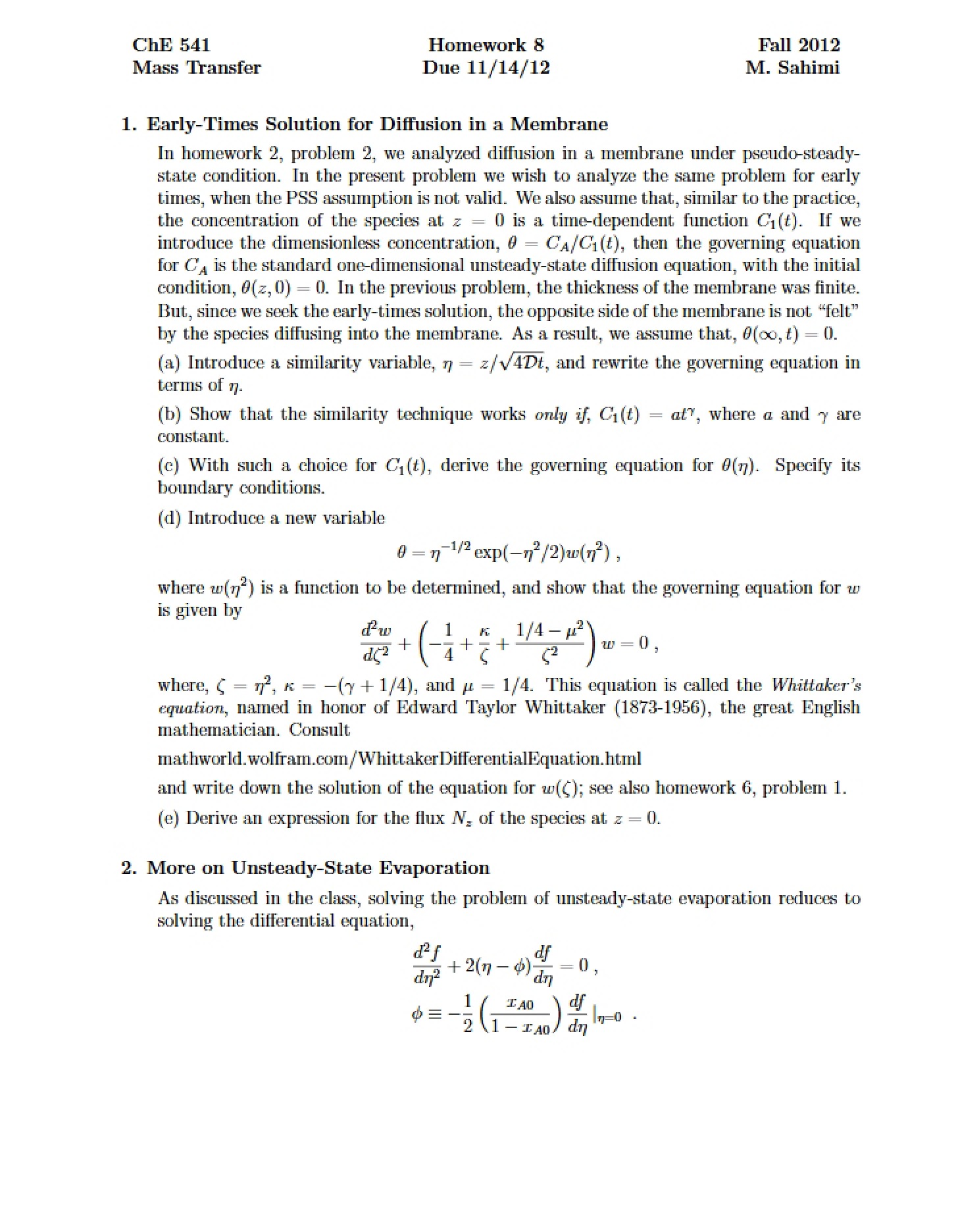
This is a homework assignment for CHE 541, a graduate-level Mass Transfer course at the University of Southern California. It focuses on applying fundamental mass transfer principles to complex, real-world scenarios. The assignment presents a series of challenging problems designed to test your understanding of transport phenomena, particularly diffusion and its interplay with other factors like electrical potential and chemical reactions. It requires in-depth analysis and problem-solving skills, going beyond simple textbook applications.
Why This Document Matters
This assignment is crucial for students enrolled in advanced mass transfer courses. Successfully completing it demonstrates a strong grasp of core concepts and the ability to apply them to non-ideal systems. It’s particularly valuable for those pursuing careers in chemical engineering fields dealing with separation processes, membrane technology, reaction engineering, or transport phenomena modeling. Working through these problems will solidify your understanding and prepare you for more advanced coursework and professional challenges. It’s best utilized *after* a thorough review of lecture notes and relevant textbook chapters.
Common Limitations or Challenges
This assignment does not provide step-by-step solutions or worked examples. It’s designed to be a self-directed learning experience, requiring you to independently apply the principles learned in class. The problems involve multi-faceted systems, demanding a strong foundation in mathematical modeling and a clear understanding of underlying assumptions. It assumes familiarity with concepts like fluxes, diffusivities, electroneutrality, and the Stefan-Maxwell equations. It also doesn’t offer guidance on specific software or computational tools that might be used for solving these types of problems.
What This Document Provides
* Problem statements involving transport through charged hydrogel membranes.
* Scenarios concerning the diffusion of multiple components through a membrane.
* A problem focused on the rapid reaction of radicals in liquid solutions and its relation to diffusion.
* Opportunities to apply concepts of diffusive, convective, and migration contributions to flux.
* Problems requiring the derivation of expressions for concentration profiles and reaction rates.
* A framework for relating boundary conditions to fluxes in multi-component systems.
* Exercises designed to test understanding of binary and mixture diffusivities.