What This Document Is
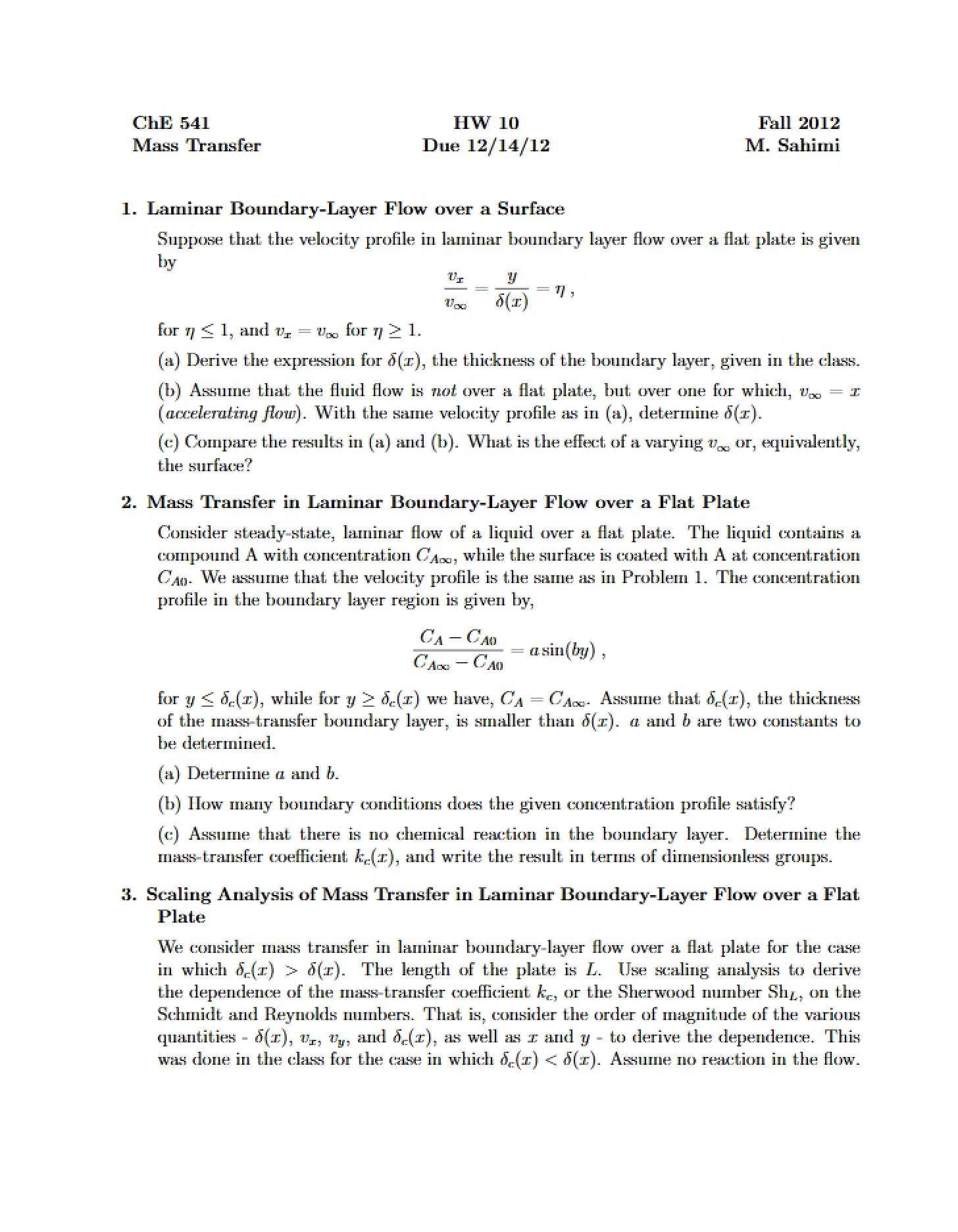
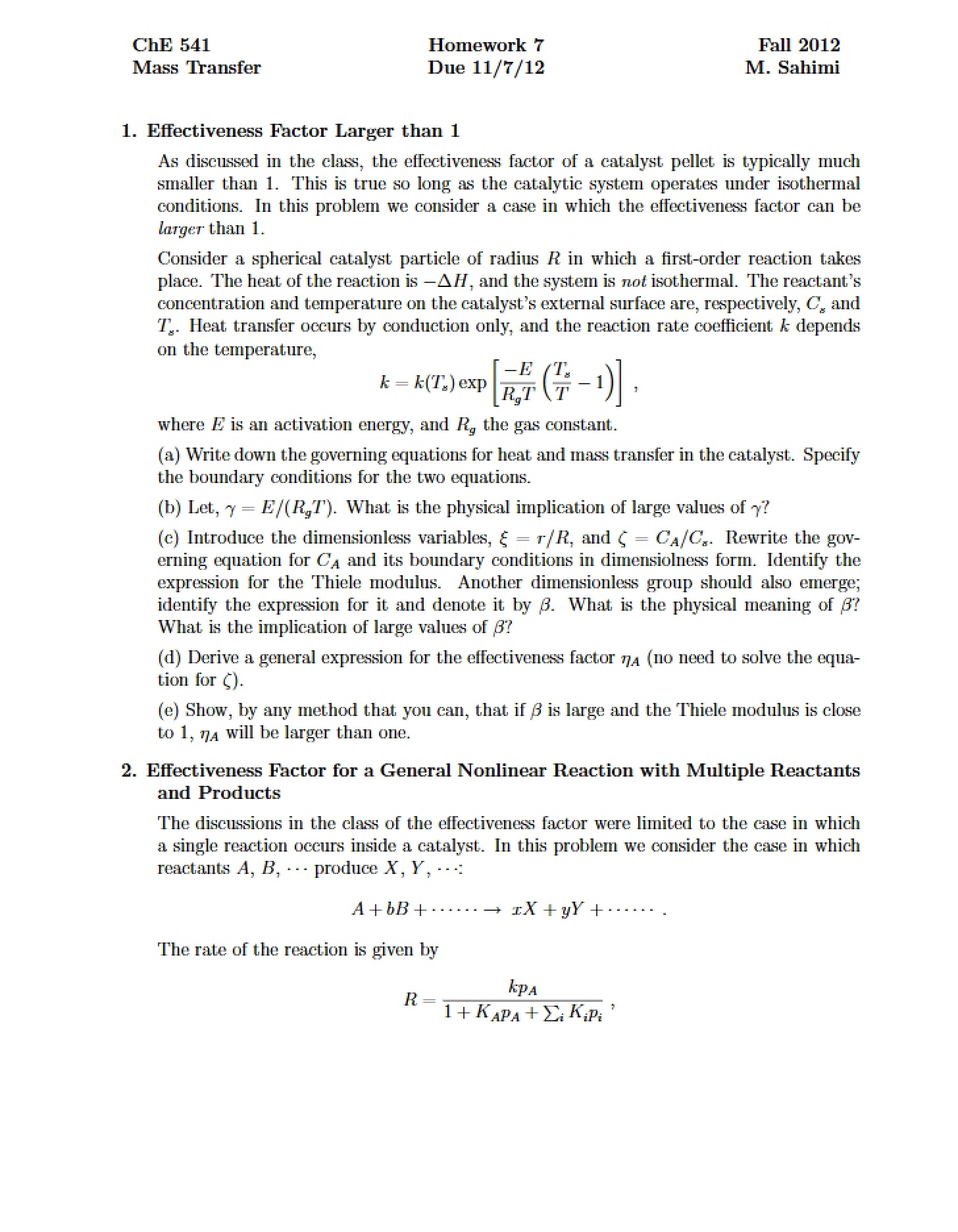
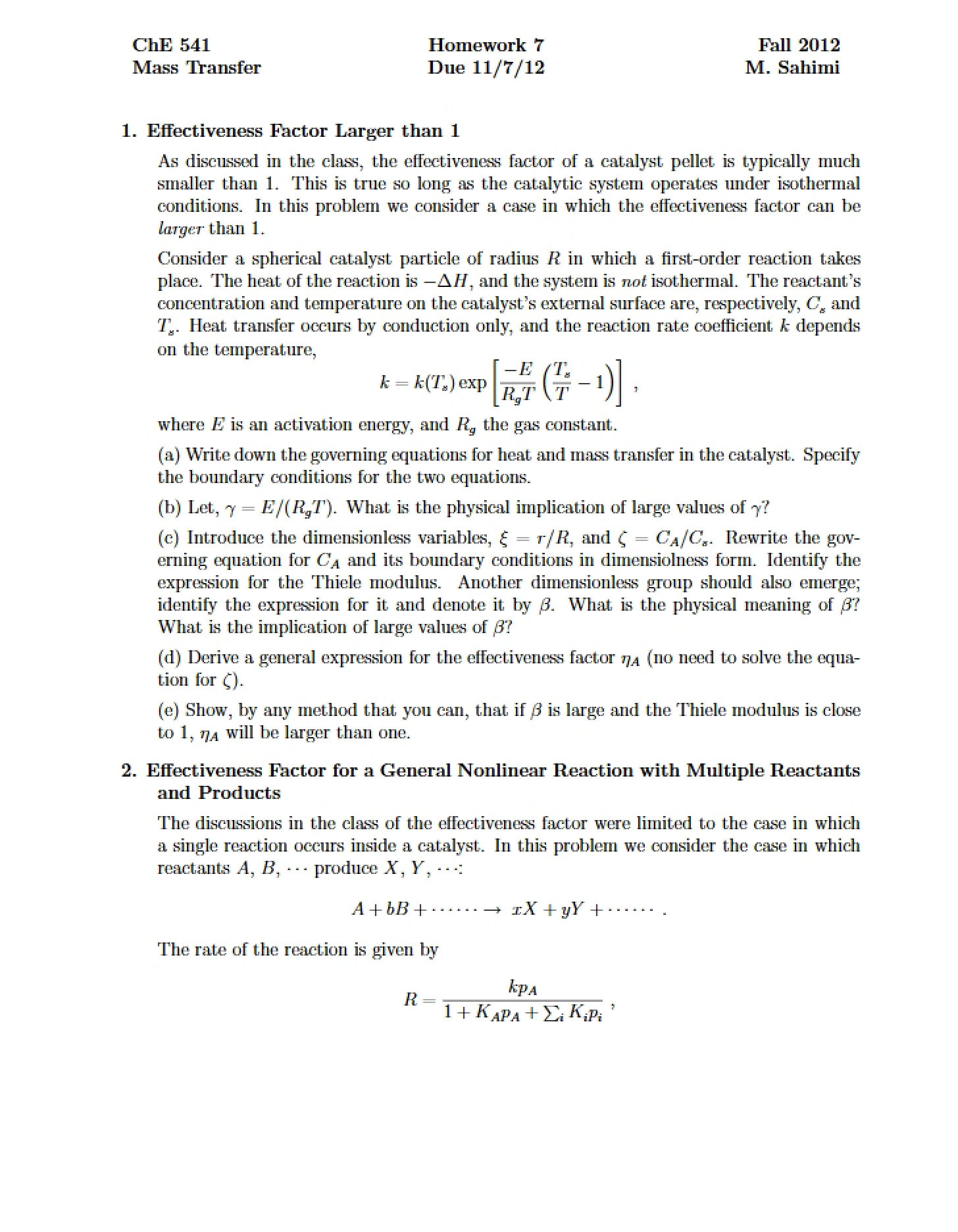
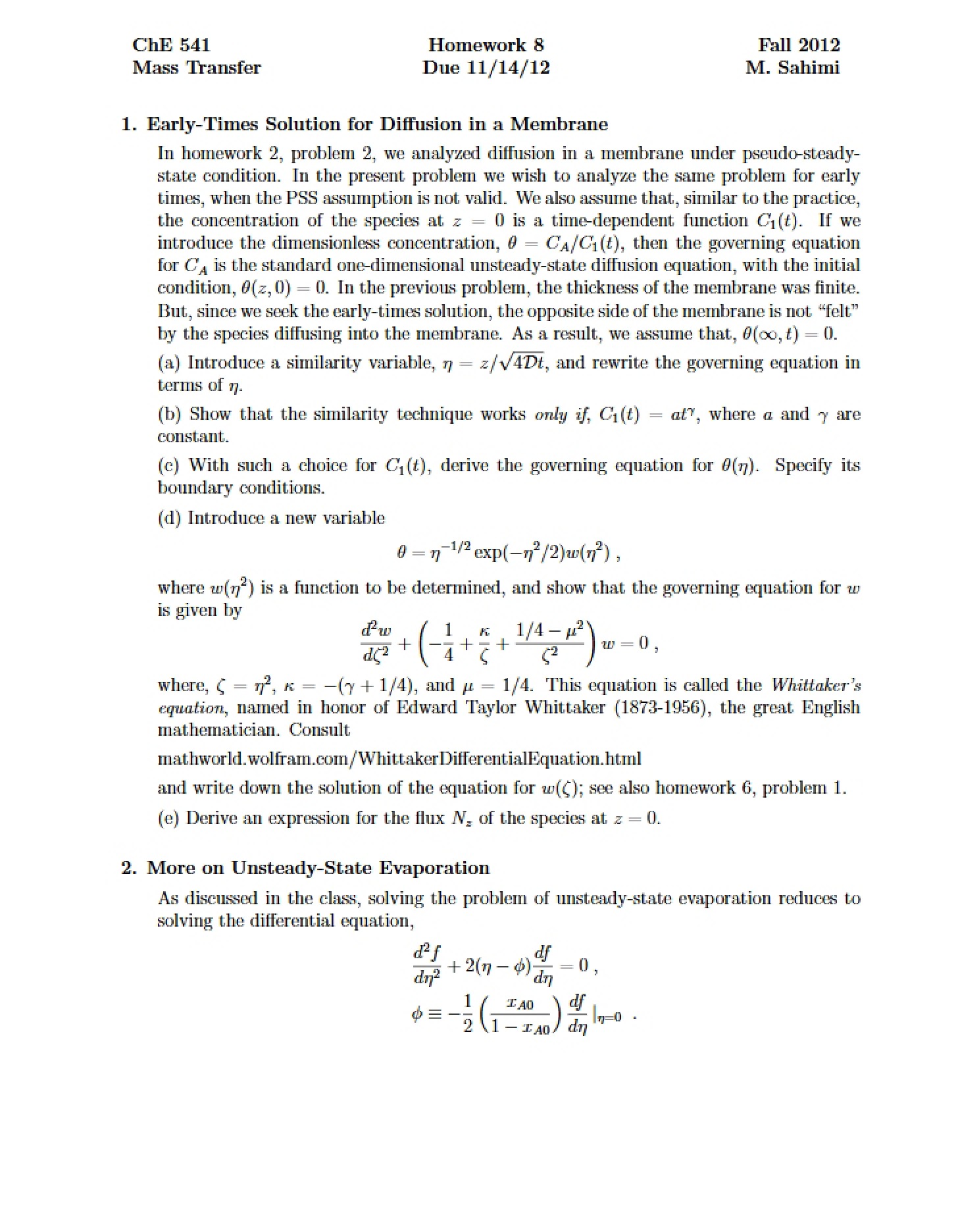
This is a homework assignment for CHE 541: Mass Transfer, offered at the University of Southern California. It focuses on applying fundamental mass transfer principles to complex, real-world scenarios. The assignment presents a series of problems requiring students to formulate and solve mathematical models related to transport phenomena. The problems delve into areas like biological systems, pharmaceutical delivery, and polymer processing. It’s designed to test your ability to translate physical situations into governing equations and boundary conditions.
Why This Document Matters
This assignment is crucial for students enrolled in an advanced mass transfer course. Successfully completing it demonstrates a strong grasp of concepts like diffusion, convection, and reaction kinetics. It’s particularly valuable for those pursuing careers in chemical engineering fields dealing with process design, biotechnology, pharmaceutical engineering, or materials science. Working through these problems will strengthen your analytical and problem-solving skills, preparing you for more advanced coursework and professional challenges. It’s best utilized *after* a thorough review of lecture notes and textbook material on the topics covered.
Common Limitations or Challenges
This assignment provides the problem statements and requires you to develop and execute the solutions independently. It does *not* include worked examples, step-by-step solution guides, or explanations of the underlying theory. It assumes a solid foundation in differential equations, calculus, and the core principles of mass transfer. Students should be prepared to consult external resources and collaborate with peers to overcome challenges. Access to appropriate software for solving differential equations may also be necessary.
What This Document Provides
* Three distinct, multi-part problems related to mass transfer.
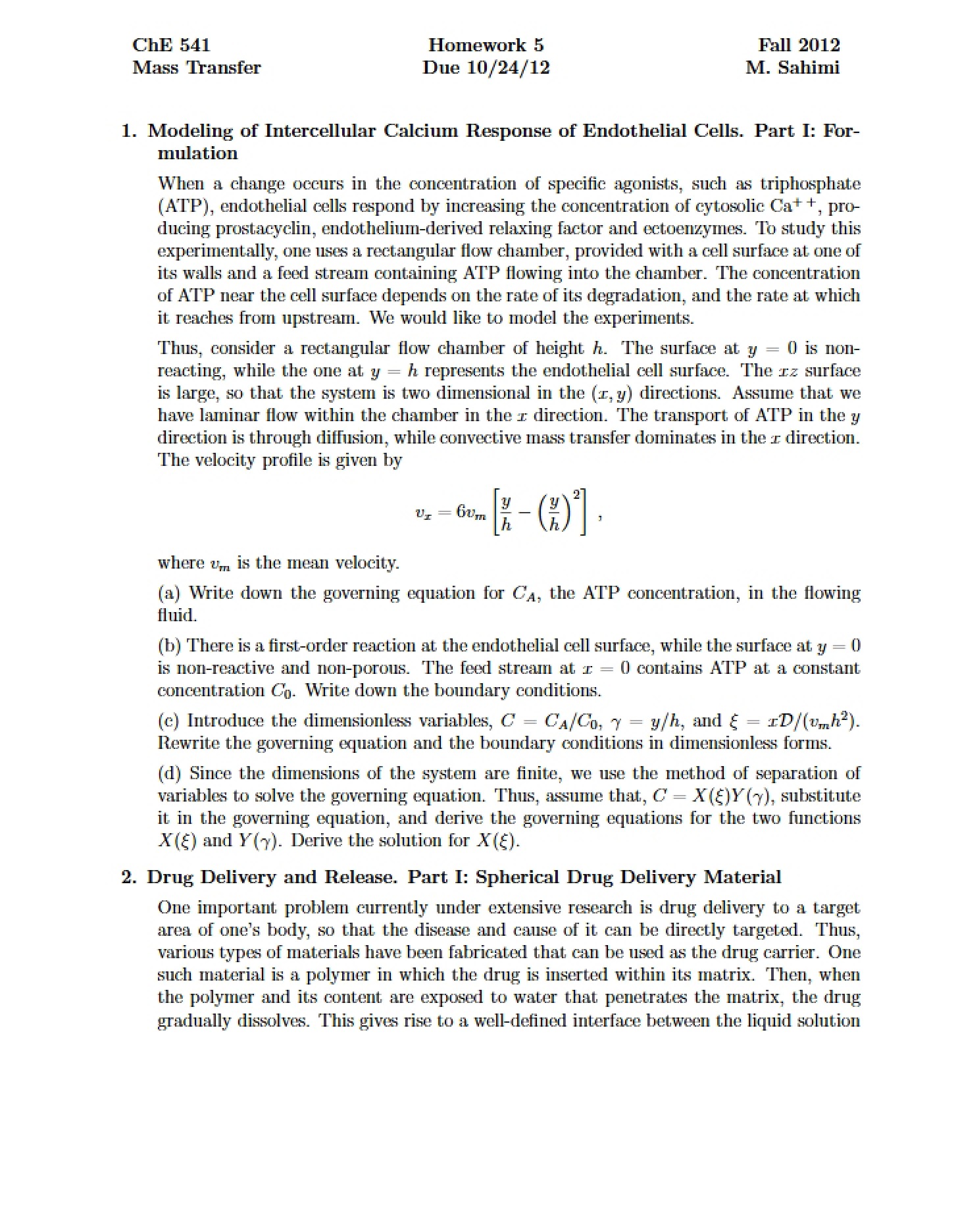
* Problem 1: Modeling transport phenomena in a biological system (endothelial cells).
* Problem 2: Analyzing drug release from a polymeric matrix.
* Problem 3: Investigating mass transfer during a polymer processing operation.
* Detailed problem descriptions with specific system geometries and conditions.
* Clear statements of required deliverables for each problem part (e.g., governing equations, boundary conditions, dimensionless forms).