What This Document Is
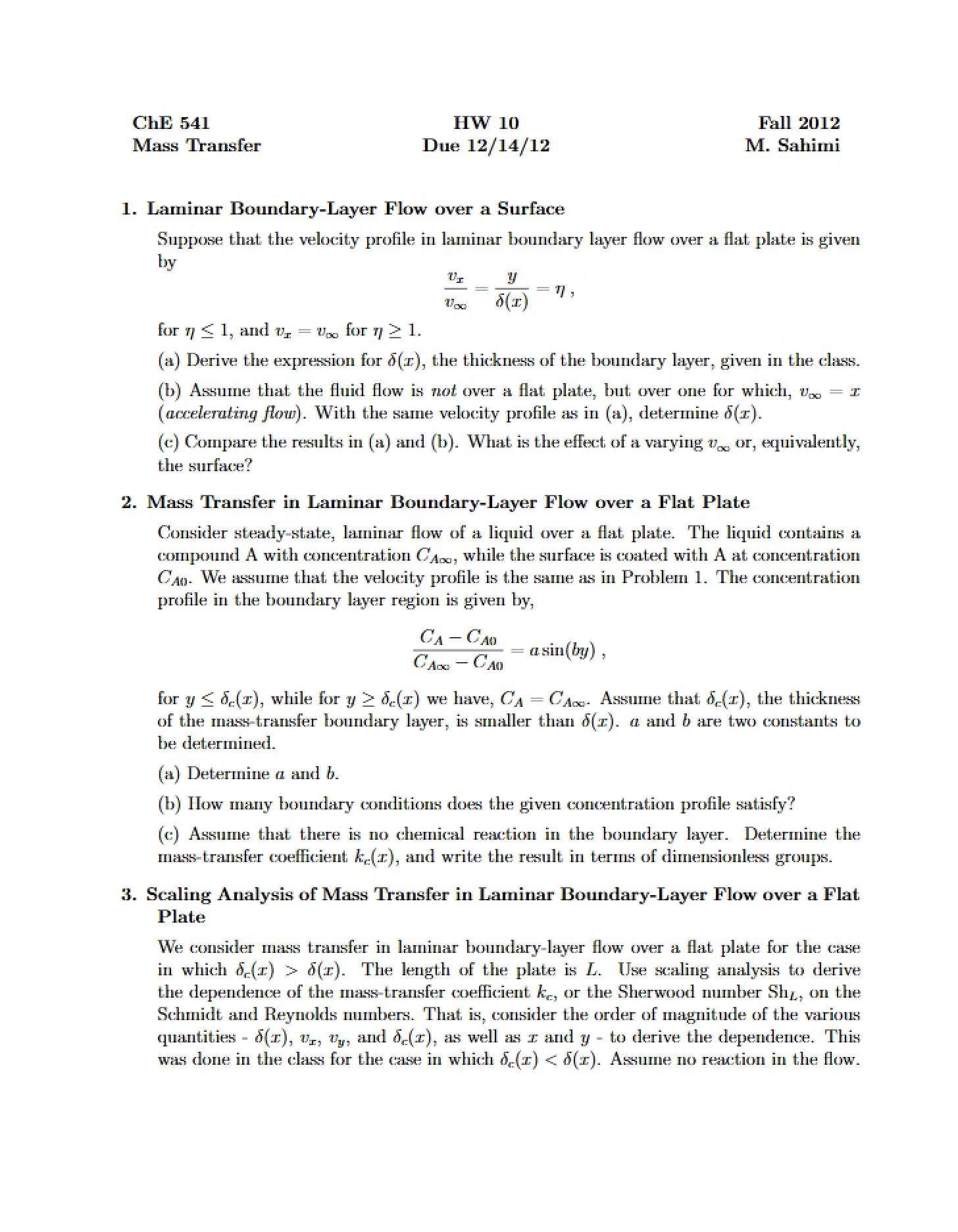
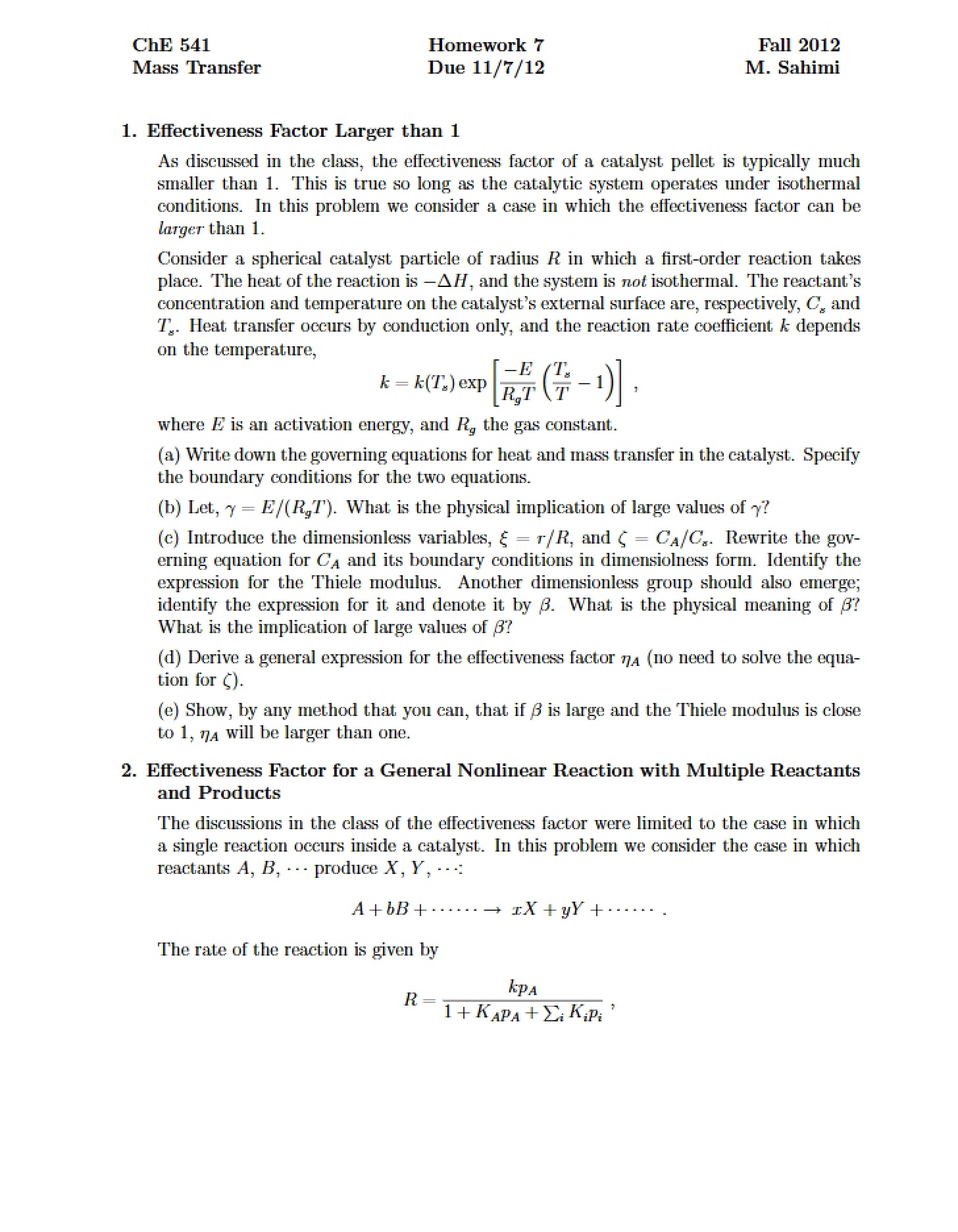
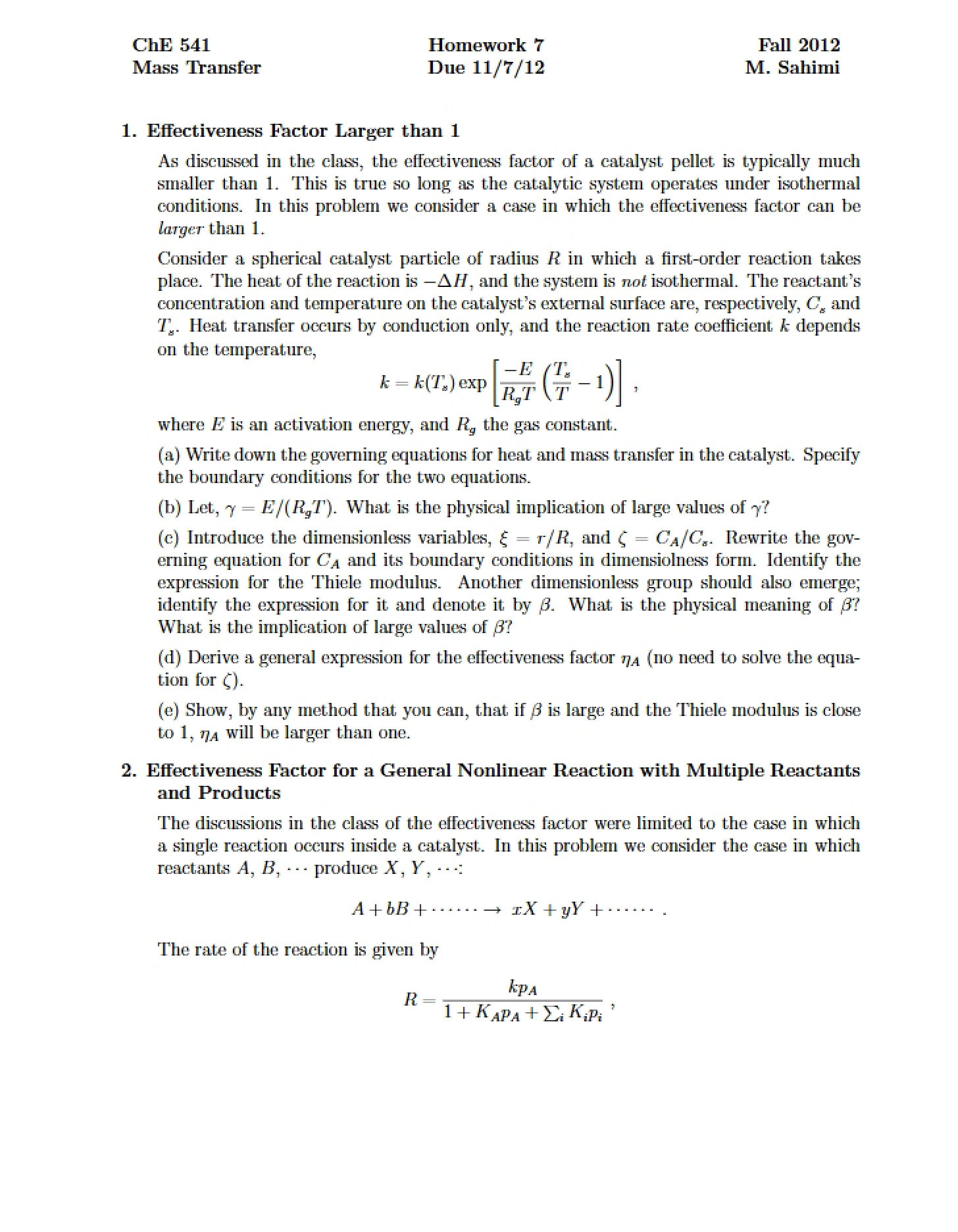
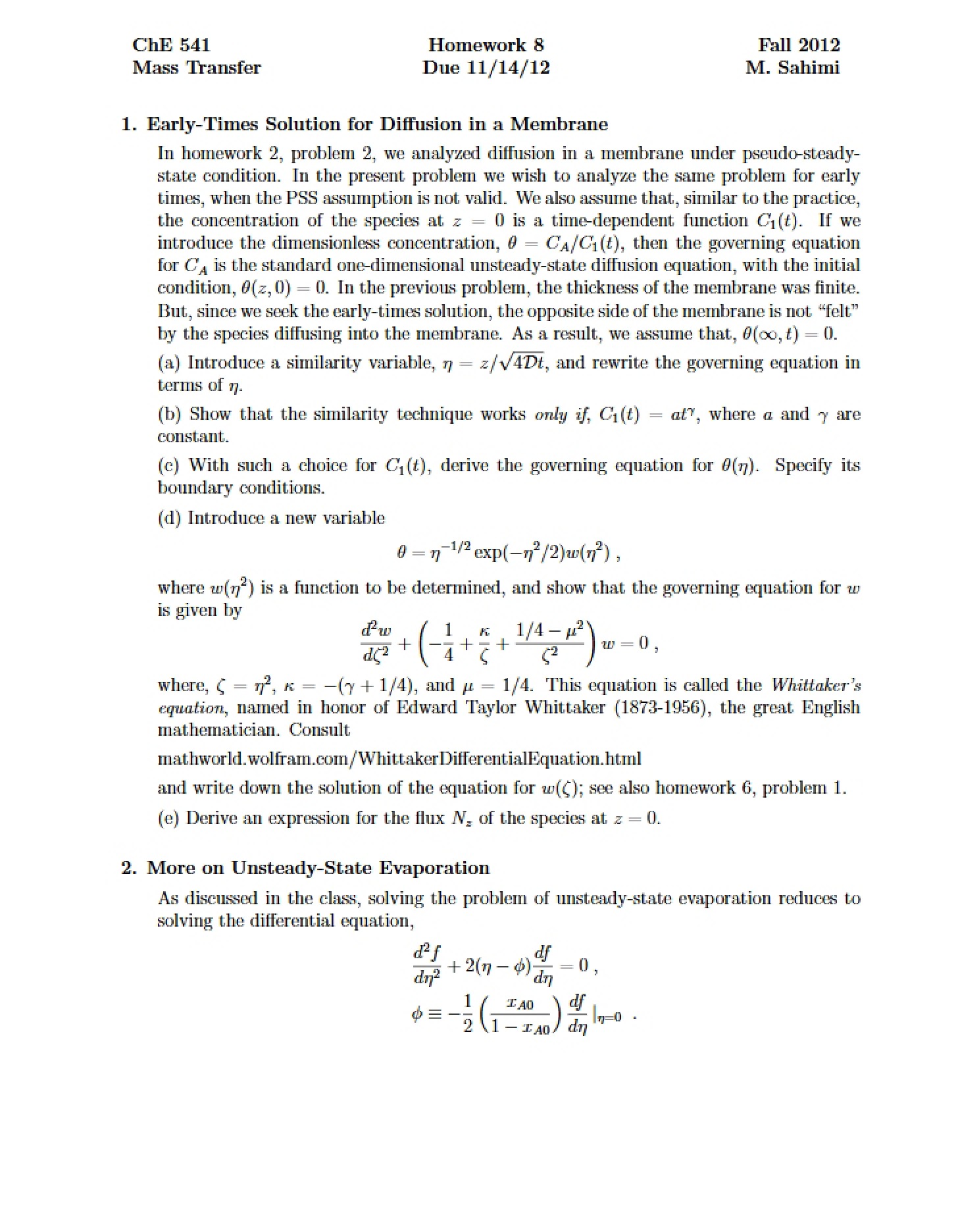
This is a homework assignment for CHE 541: Mass Transfer, offered at the University of Southern California. It focuses on applying theoretical mass transfer principles to complex, multi-part problems. The assignment builds upon previously covered material, requiring students to synthesize and extend their understanding of concepts like diffusion, convection, and solution techniques for partial differential equations. It appears to be the second part of a series of assignments exploring specific applications.
Why This Document Matters
This assignment is crucial for students enrolled in an advanced mass transfer course. Successfully completing it demonstrates a strong grasp of applying mathematical modeling to real-world engineering scenarios. It’s particularly valuable for those intending to specialize in fields like chemical engineering design, biotechnology, or materials science, where mass transfer phenomena are fundamental. Working through these problems will reinforce your ability to formulate, analyze, and interpret solutions to complex transport problems – skills essential for professional practice and further academic study. It’s best utilized *after* a thorough review of course lectures and relevant textbook chapters.
Common Limitations or Challenges
This assignment does not provide step-by-step solutions or fully worked examples. It presents problem statements and expects students to independently apply the learned methodologies. It assumes prior knowledge of concepts covered in earlier coursework, including familiarity with confluent hypergeometric functions and separation of variables techniques. The problems require a significant time investment and a strong foundation in mathematical analysis. It also builds on the results from prior homework assignments ("Part I"), so completing those is essential.
What This Document Provides
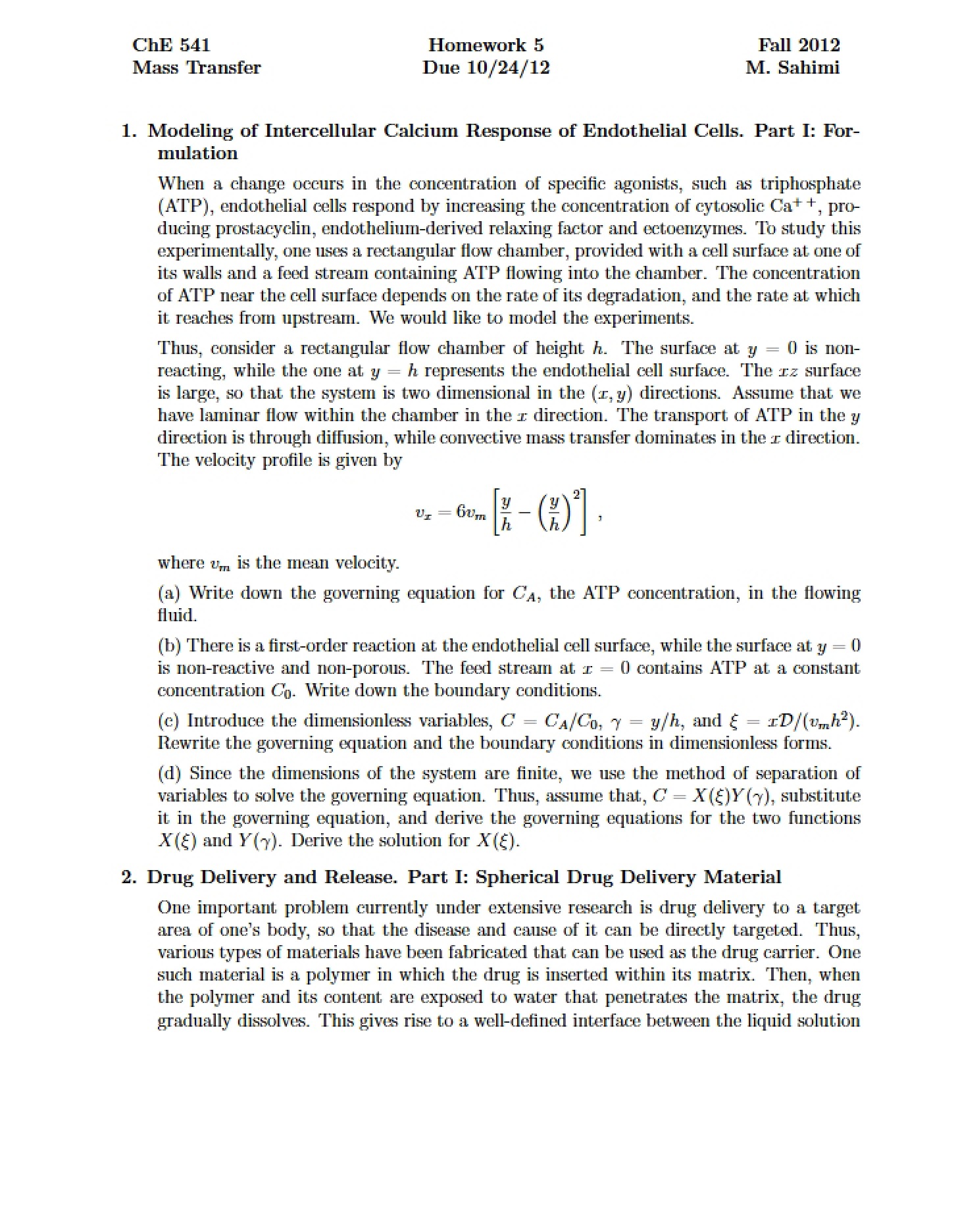
* Problem statements relating to intercellular calcium response modeling.
* A scenario involving drug delivery and release from spherical materials.
* A problem focused on volatile monomer transport during polymeric sheet stretching.
* Opportunities to apply boundary condition analysis to mass transfer problems.
* Exercises requiring the use of dimensionless analysis to simplify governing equations.
* A framework for applying previously derived equations and results to new scenarios.