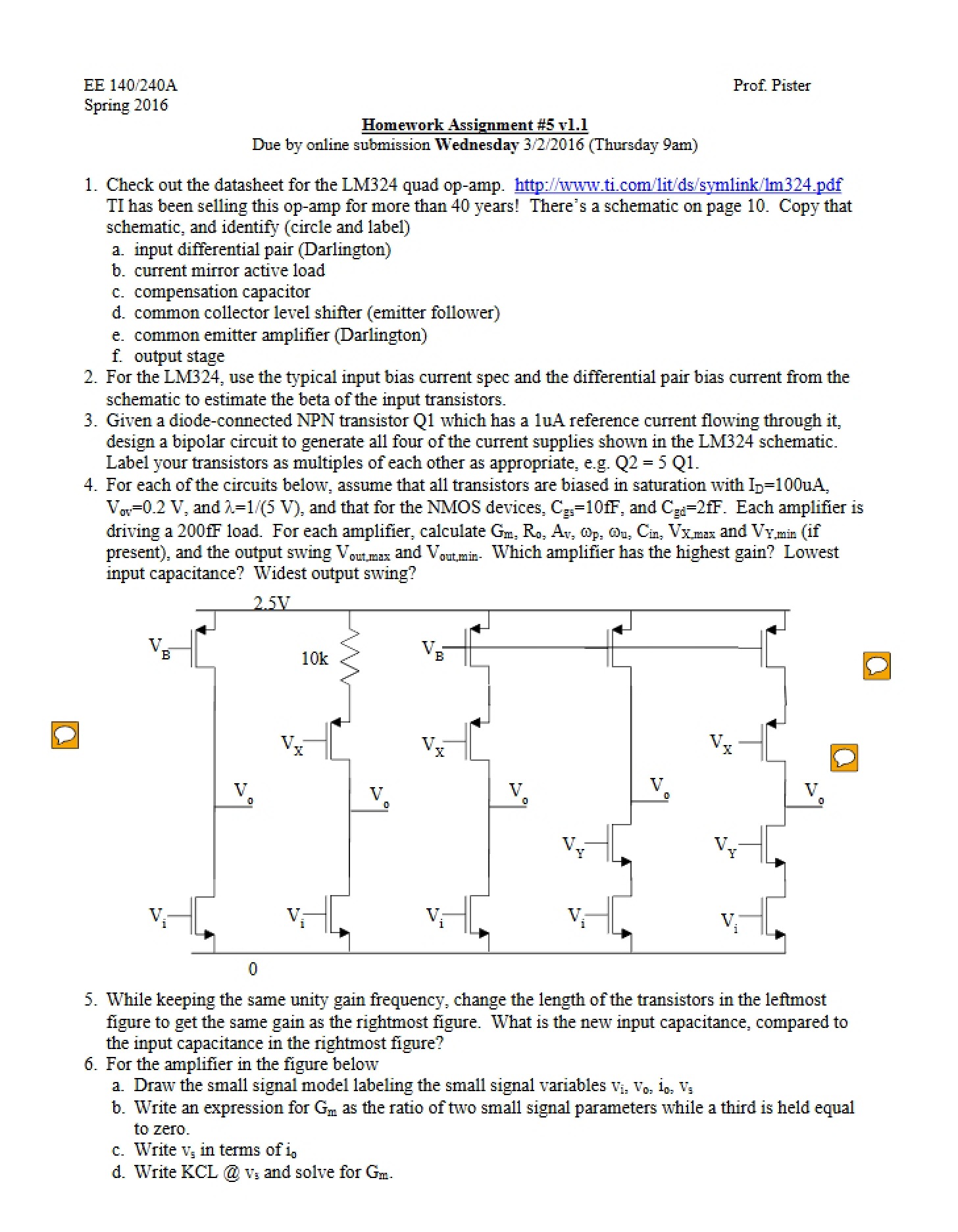
What This Document Is
This is a homework assignment for EE 140/240A, Analog Integrated Circuits, at the University of California, Berkeley. It focuses on applying core principles of analog circuit design to practical problems. The assignment challenges students to analyze existing circuits and design new ones, reinforcing theoretical understanding with hands-on application. It’s designed to be completed independently and submitted online.
Why This Document Matters
This assignment is crucial for students enrolled in an analog integrated circuits course. Successfully completing it demonstrates a strong grasp of fundamental concepts and the ability to translate those concepts into working circuit designs. It’s particularly valuable when preparing for more advanced coursework or professional roles in analog circuit design, and serves as a practical test of understanding after lecture and readings. Students will benefit from working through these problems to solidify their skills.
Topics Covered
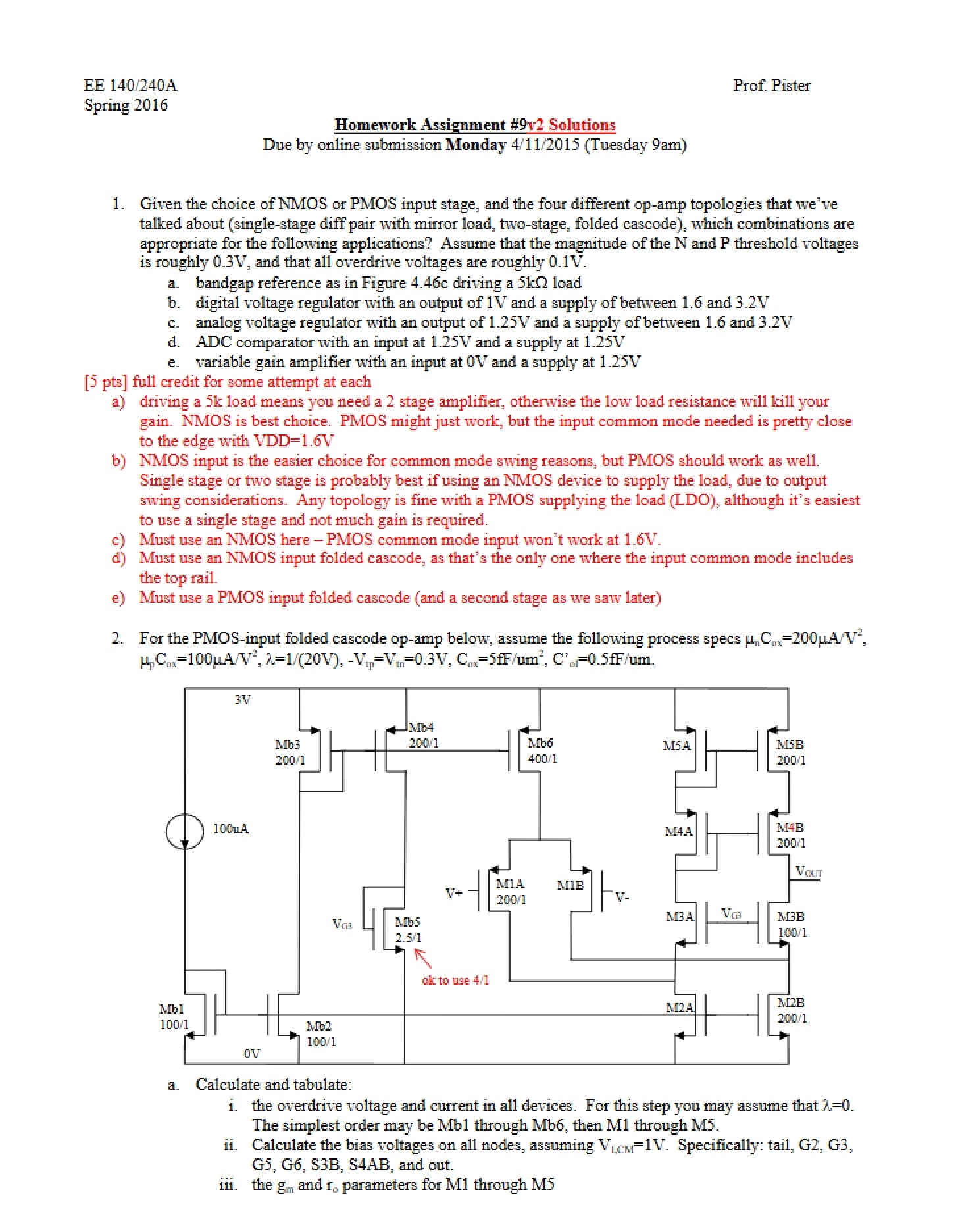
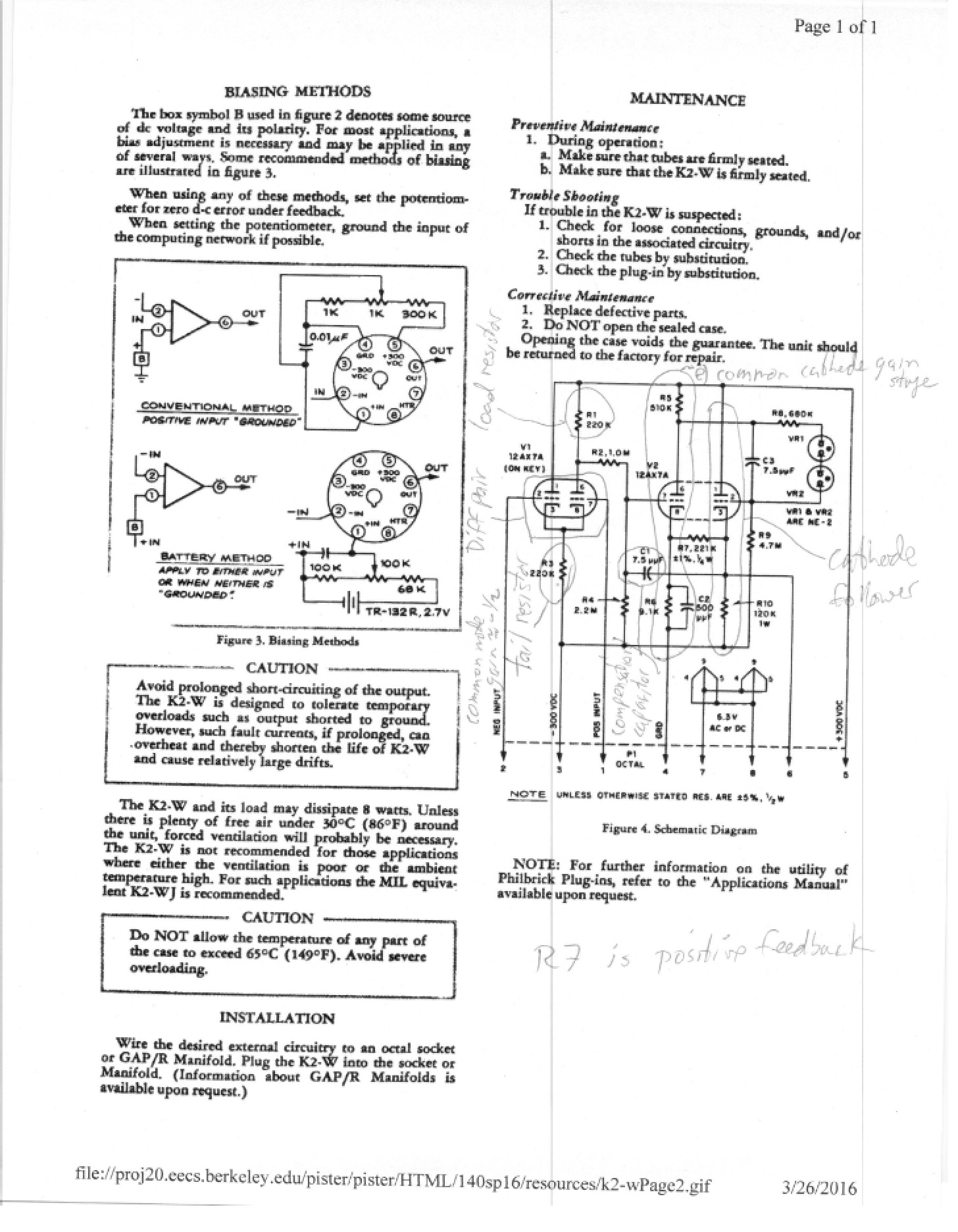
* Operational Amplifier (Op-Amp) Analysis – including historical implementations
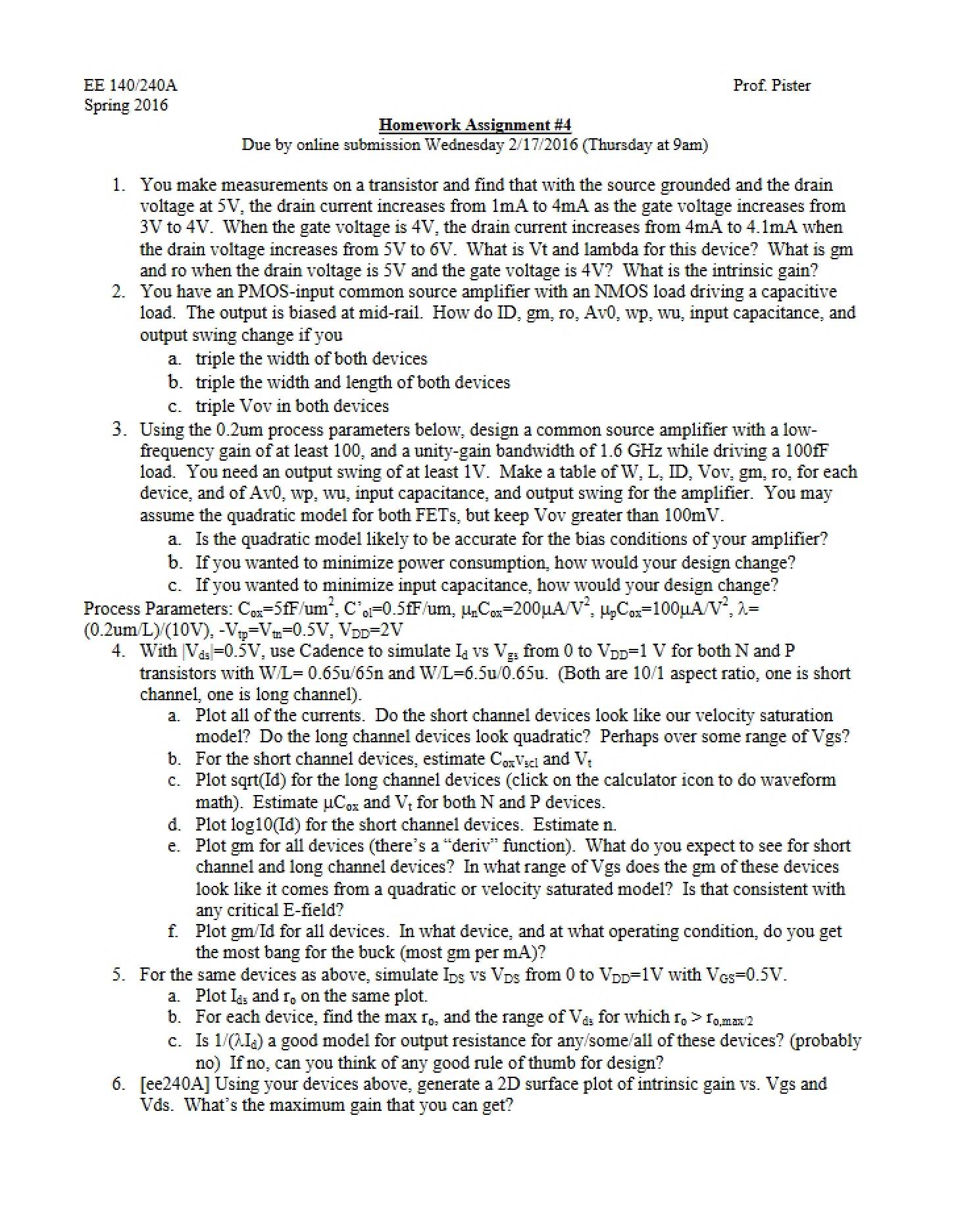
* Differential Amplifier Design and Analysis (CMOS and BJT)
* Output Resistance Calculation
* NMOS Input CMOS Op-Amp Design
* Common Mode Range and Output Swing Analysis
* Gain Calculation (Differential and Common Mode)
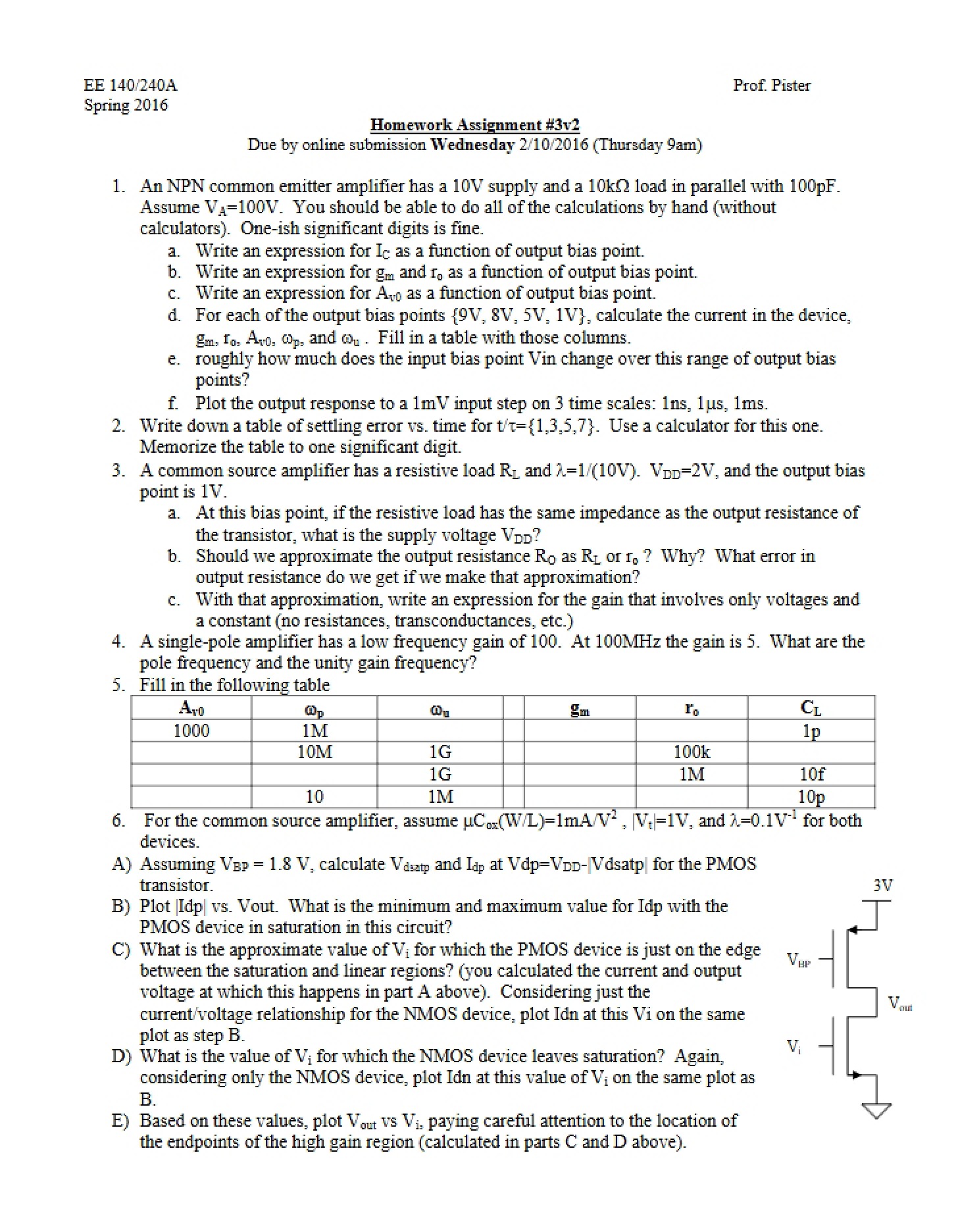
* Stability Analysis – pole frequency calculations
* Current Mirror Load Analysis
What This Document Provides
* Detailed problem statements requiring circuit analysis and design.
* Specific performance specifications for circuit designs.
* Process parameters for transistor-level calculations.
* Opportunities to apply theoretical knowledge to real-world circuit scenarios.
* A framework for developing problem-solving skills in analog circuit design.
* A challenging set of problems designed to deepen understanding of key concepts.