What This Document Is
This is a homework assignment for EE 140 (Analog Integrated Circuits) at the University of California, Berkeley. It’s designed to reinforce your understanding of fundamental concepts in analog circuit analysis and design, specifically focusing on transistor amplifiers and their performance characteristics. This assignment, version 2 of assignment three, challenges you to apply theoretical knowledge to practical circuit scenarios. It requires calculations and analysis to be completed and submitted online by a specified deadline.
Why This Document Matters
This assignment is crucial for students enrolled in EE 140 who are aiming to solidify their grasp of analog integrated circuit principles. Successfully completing this work will build a strong foundation for more advanced topics covered later in the course. It’s particularly beneficial for those preparing for exams or future coursework involving circuit design and analysis. Working through these problems will enhance your problem-solving skills and ability to predict circuit behavior.
Topics Covered
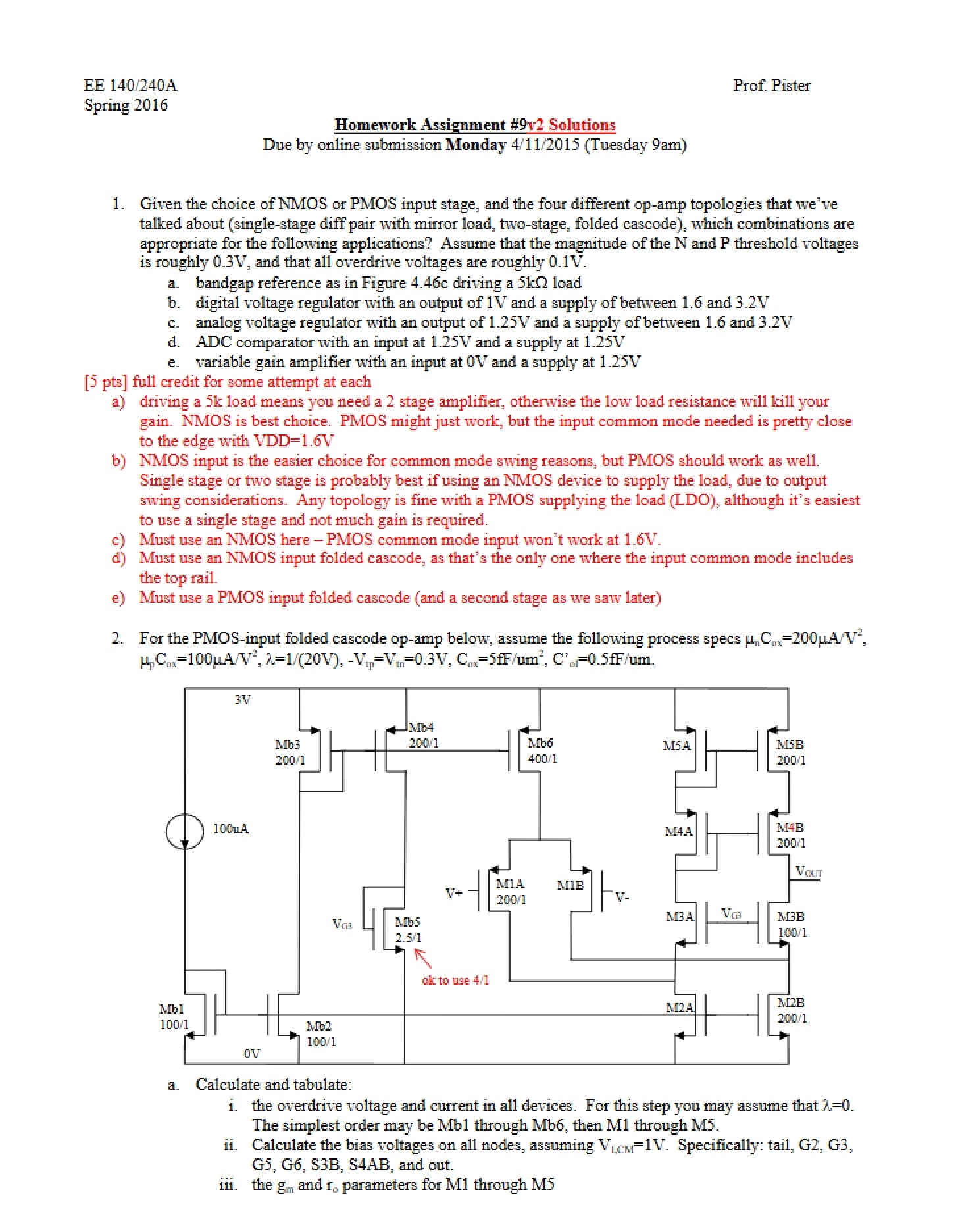
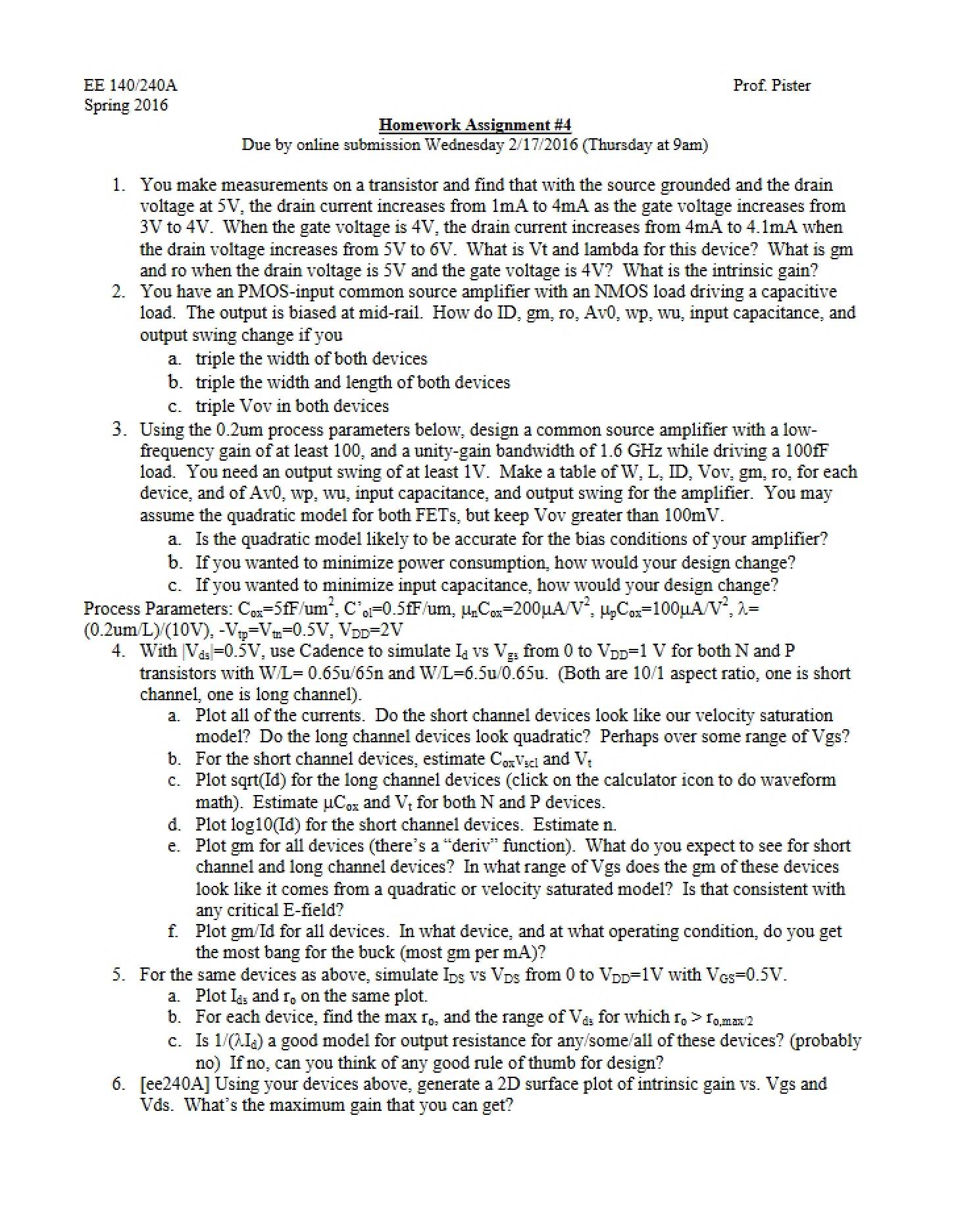
* Common-emitter and Common-source Amplifier Analysis
* Transistor Biasing and Small-Signal Models
* Gain Calculations and Frequency Response
* Settling Time and Transient Response
* Single-Pole Amplifier Characteristics
* MOSFET Amplifier Design and Analysis
* Saturation and Linear Region Operation of MOSFETs
What This Document Provides
* A series of analytical problems requiring calculations related to amplifier circuits.
* Opportunities to practice determining key amplifier parameters like current, transconductance, and gain.
* Exercises focused on analyzing the impact of bias points on circuit performance.
* Tasks involving the evaluation of settling errors and time-domain responses.
* Problems requiring the application of small-signal models to predict amplifier behavior.
* A framework for understanding the trade-offs involved in amplifier design choices.