What This Document Is
This document presents lecture notes from ELENG 244: Fundamental Algorithms for Systems Modeling and Analysis at UC Berkeley, focusing on the critical processes of Behavioral and RTL Synthesis. It delves into the methodologies used to translate high-level design descriptions into hardware implementations, bridging the gap between abstract concepts and concrete digital circuits. The material explores the nuances of different synthesis approaches and their impact on final circuit characteristics.
Why This Document Matters
This resource is invaluable for students and engineers involved in digital system design. It’s particularly beneficial for those seeking a deeper understanding of how hardware is created from software-like specifications. It’s most useful during coursework on digital design, VLSI, or computer architecture, and serves as a strong foundation for practical hardware development projects. Understanding these synthesis techniques is crucial for optimizing designs for performance, area, and power consumption.
Topics Covered
* The fundamental differences between Behavioral and RTL (Register-Transfer Level) design descriptions.
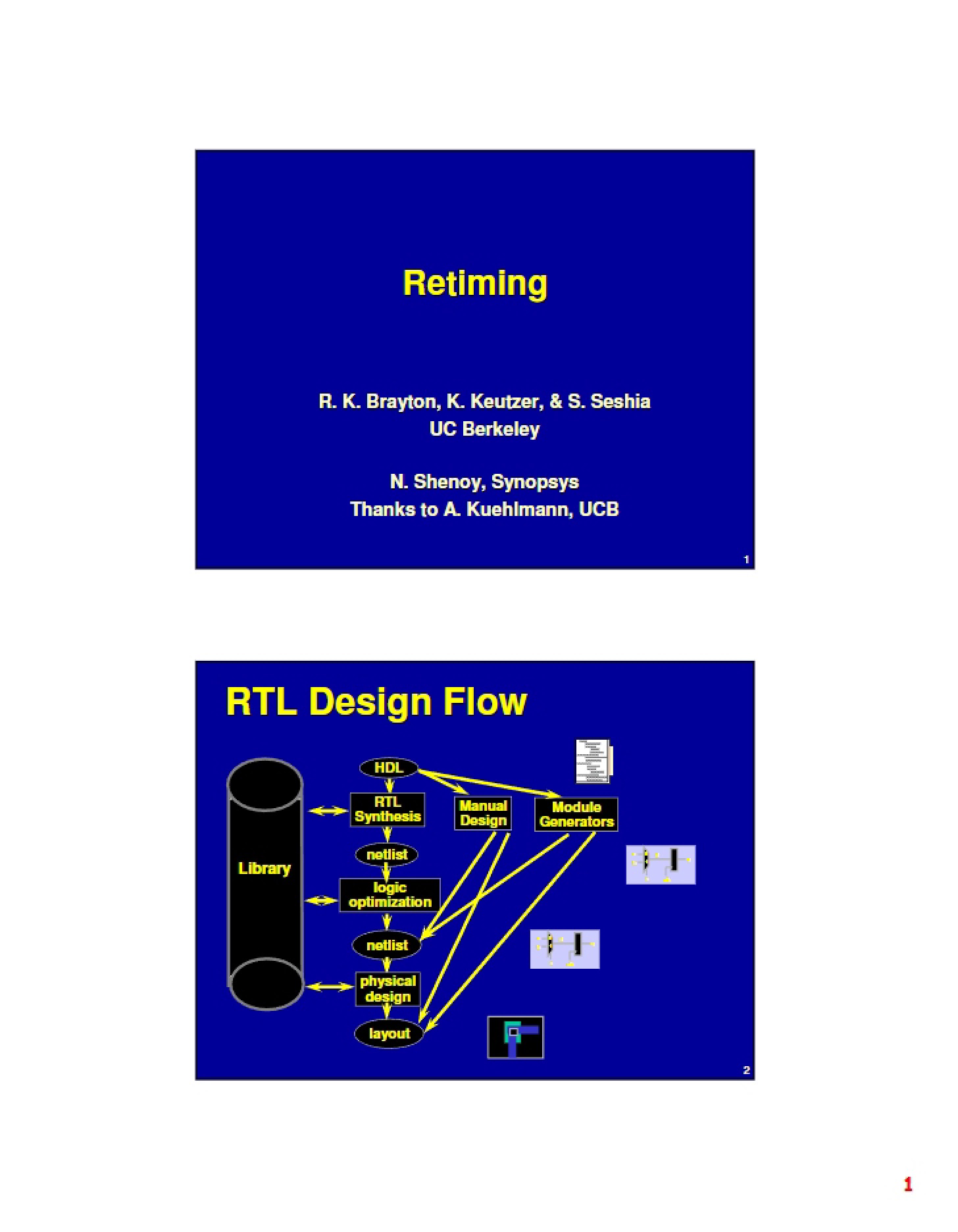
* The stages and considerations within the RTL Synthesis flow.
* Techniques for writing effective RTL code to achieve desired hardware results.
* The role of optimization in the synthesis process and its impact on design quality.
* An overview of Behavioral Synthesis features, including scheduling and resource allocation.
* Tradeoffs involved in different synthesis approaches and their effect on design characteristics.
* Practical examples illustrating the complexity of real-world hardware designs (e.g., Echo Canceler).
What This Document Provides
* Detailed explanations of key concepts in Behavioral and RTL Synthesis.
* Illustrative examples of VHDL code snippets demonstrating design principles.
* Discussions on the challenges and best practices in writing synthesizable code.
* Insights into the relationship between design descriptions and resulting hardware complexity.
* An exploration of the levels of acceptance and speed associated with various synthesis techniques.
* A comparative analysis of different scheduling strategies and their impact on design tradeoffs.