What This Document Is
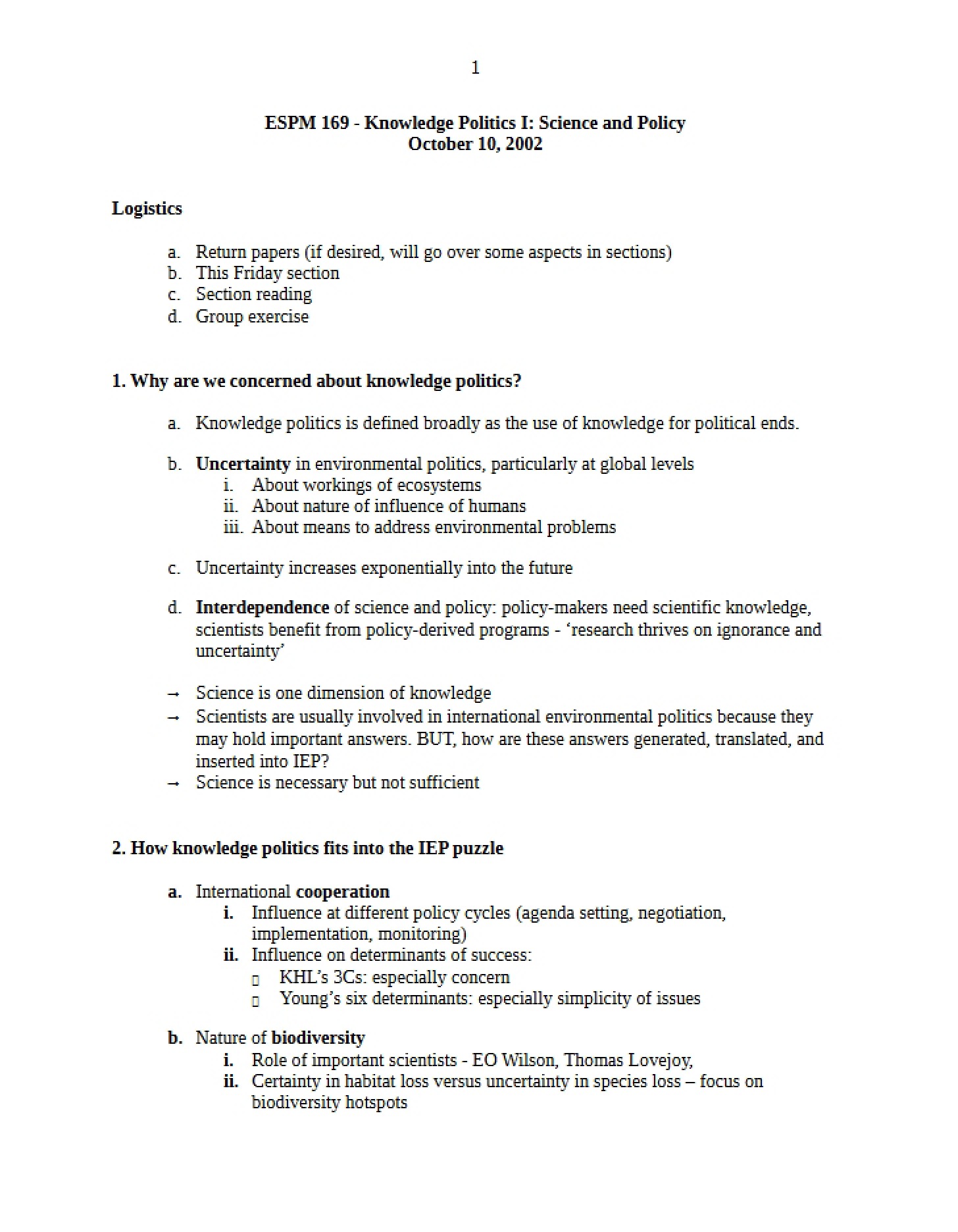
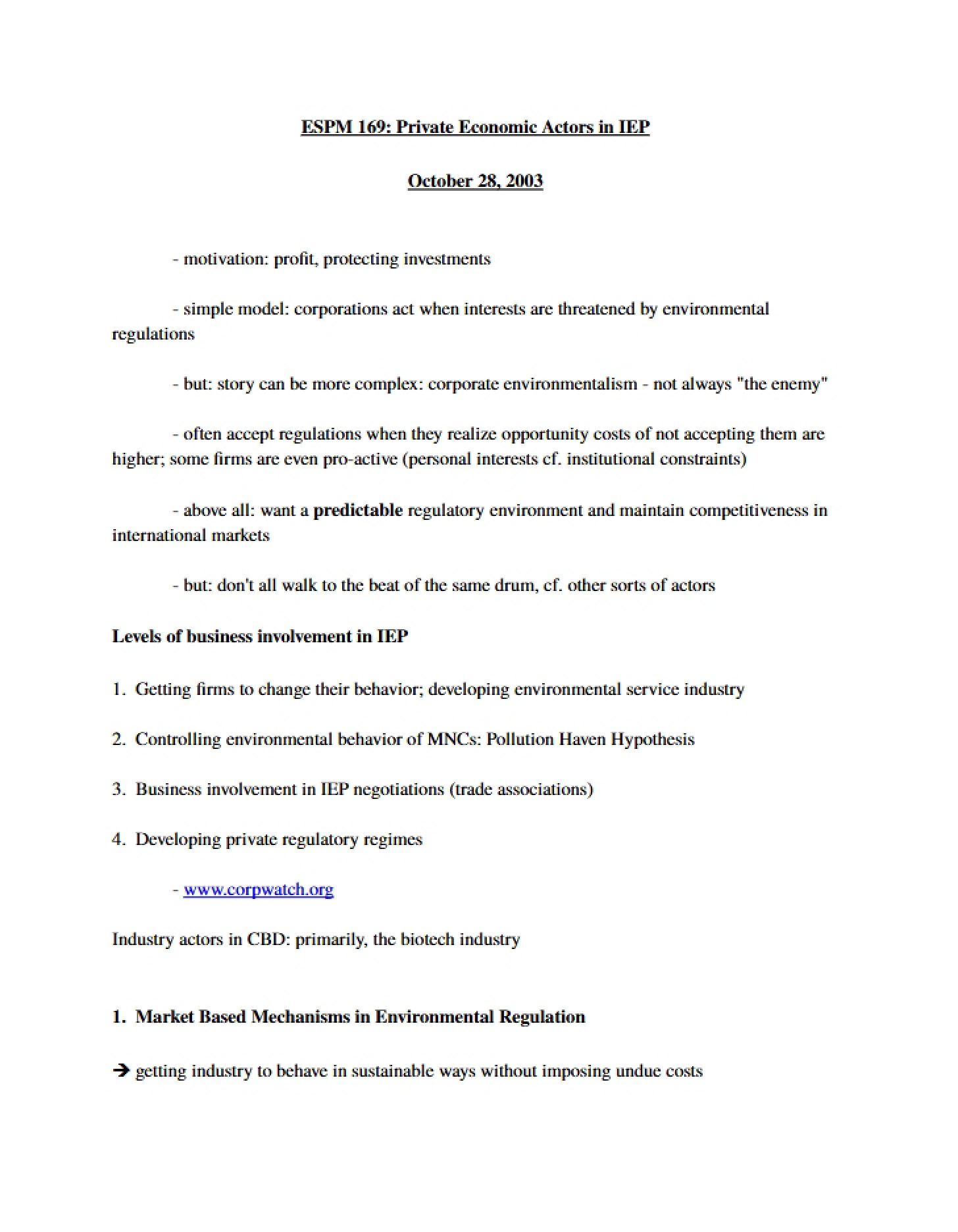
This material comprises lecture notes and discussion points from ESPM 169: International Environmental Politics at UC Berkeley, specifically focusing on the intersection of the Convention on Biological Diversity (CBD) and diverse forms of knowledge – local, traditional, and indigenous. It explores the evolving role of different knowledge systems within international environmental policy and governance. The notes detail a class session from October 2002, including logistical updates and a deep dive into the complexities surrounding knowledge recognition and utilization.
Why This Document Matters
Students enrolled in courses related to environmental policy, international relations, political ecology, or environmental anthropology will find this resource particularly valuable. It’s ideal for those seeking to understand the theoretical underpinnings of incorporating non-scientific knowledge into global environmental agreements. Individuals preparing for class discussions, working on research projects related to the CBD, or interested in the politics of knowledge production will benefit from exploring the concepts presented. This material offers a foundational understanding of a critical debate within the field.
Topics Covered
* The evolving relationship between scientific knowledge and international environmental policy.
* Distinctions between local, traditional, indigenous, and lay knowledge.
* The political implications of recognizing and utilizing diverse knowledge systems.
* Case studies illustrating the impact of knowledge discrepancies on policy outcomes.
* The role of traditional knowledge within the framework of the Convention on Biological Diversity (CBD).
* The challenges and opportunities associated with integrating local expertise into environmental governance.
What This Document Provides
* A detailed overview of key concepts related to knowledge politics in the context of international environmental agreements.
* Discussion of the historical context and development of approaches to local and indigenous knowledge.
* Examination of the potential benefits and drawbacks of incorporating diverse knowledge systems into policy-making.
* Insights into the practical challenges of defining and validating different forms of knowledge.
* References to relevant academic literature and resources related to the CBD and traditional knowledge.