What This Document Is
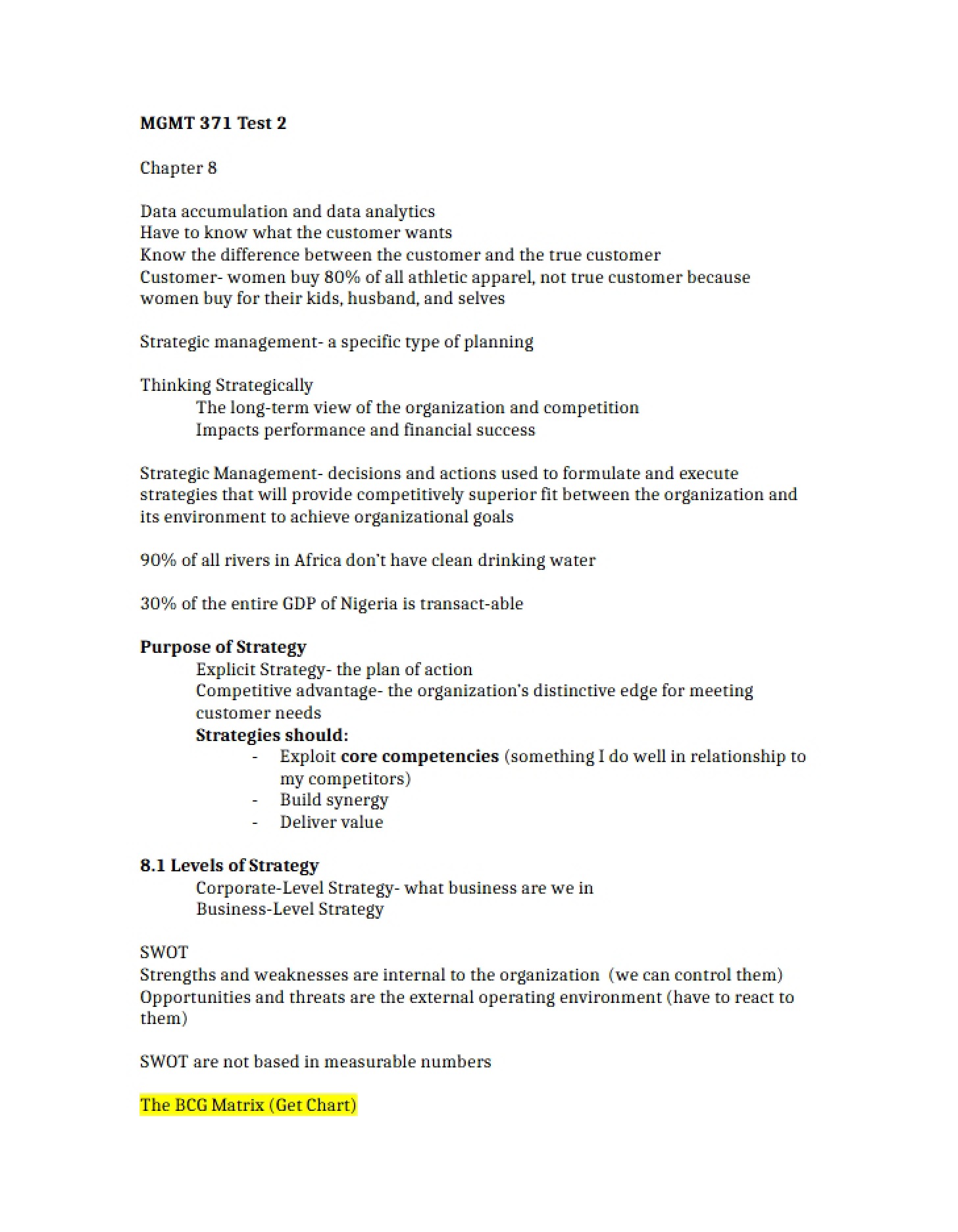
These are class notes covering material from Chapter 7 of Principles of Management (MGMT 371) at the University of South Carolina. The core focus is on the critical management function of planning – specifically, how organizations define their objectives and develop strategies to achieve them. It delves into the nuances of goal setting within diverse cultural contexts and explores different types of plans organizations utilize, from broad strategic visions to detailed operational procedures. The notes also address planning in dynamic and unpredictable environments.
Why This Document Matters
This resource is ideal for students enrolled in Principles of Management courses seeking to solidify their understanding of planning concepts. It’s particularly helpful when preparing for quizzes, exams, or class discussions related to organizational strategy, goal formulation, and the implementation of plans. Students who find themselves struggling to differentiate between various planning levels or understand the importance of adaptable planning strategies will find this a valuable study aid. It’s best used *in conjunction* with assigned readings and lectures to enhance comprehension.
Common Limitations or Challenges
These notes represent a summarized interpretation of the chapter’s key ideas. They do not substitute for a thorough reading of the textbook or active participation in class. The notes do not offer complete definitions of all terms, nor do they provide detailed case studies or practical applications of the concepts discussed. They are designed to be a supportive learning tool, not a comprehensive replacement for course materials. Access to the full notes will reveal the specific frameworks and details discussed in class.
What This Document Provides
* An overview of the relationship between organizational mission, strategic goals, and operational goals.
* Discussion of different approaches to goal setting and their effectiveness.
* Exploration of various types of organizational plans (single-use vs. standing).
* Insights into planning for uncertain and rapidly changing business environments.
* Consideration of the role of cultural intelligence in effective planning and execution.
* Key concepts related to performance measurement and tracking.