What This Document Is
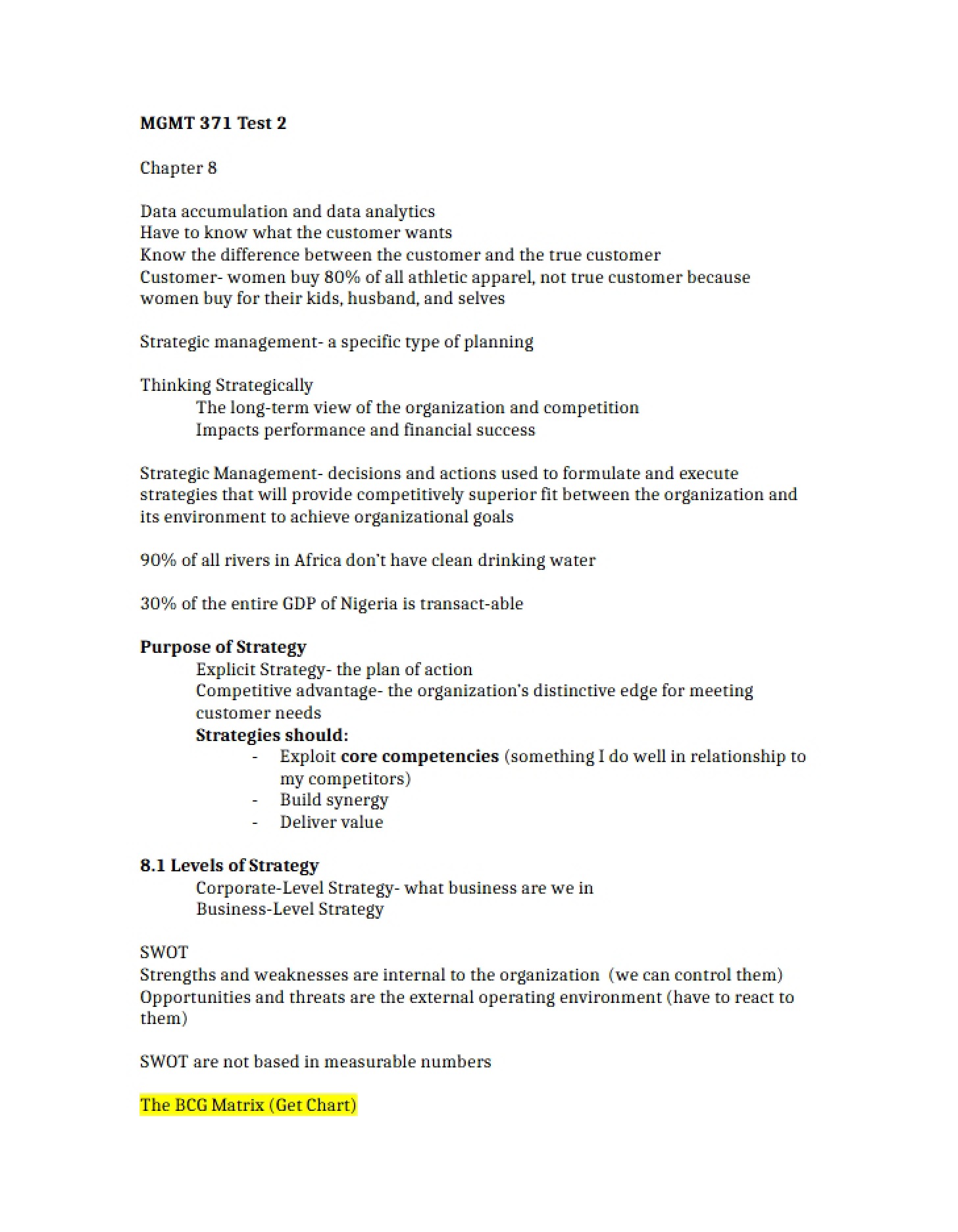
This study guide provides a focused review of core principles covered in MGMT 371, Principles of Management, at the University of South Carolina. Specifically, it consolidates key concepts from Chapters 1, 2, 4, 7, 8, and 10 of the course textbook. It’s designed to help students reinforce their understanding of foundational management theories and their practical application within organizational settings. The material is presented in a note-style format, ideal for efficient review and test preparation.
Why This Document Matters
Students enrolled in Principles of Management will find this resource particularly valuable when preparing for exams, quizzes, or larger course projects. It’s especially helpful for those seeking a condensed overview of essential topics, a quick refresher before class discussions, or a tool to identify areas needing further study. Individuals aiming to solidify their grasp of fundamental management functions, external environmental influences, organizational structure, and leadership approaches will benefit most from this guide. It’s best used *in conjunction with* course lectures and assigned readings – not as a replacement for them.
Common Limitations or Challenges
This study guide is a *summary* of the course material and does not include the full depth of analysis or detailed examples presented in the textbook or during lectures. It does not offer new interpretations or expanded research beyond the core course content. It will not provide step-by-step instructions for applying management principles to specific case studies, nor does it contain practice exam questions or solutions. Access to the full resource is required for a complete understanding of the subject matter.
What This Document Provides
* Definitions of core management concepts and terminology.
* An overview of the four primary management functions and their interrelationships.
* Explanations of different types of management skills and how they vary by organizational level.
* Categorization and descriptions of key managerial roles.
* Identification of external forces impacting organizations.
* A review of organizational structure and design considerations.
* Key concepts related to leadership styles and effectiveness.
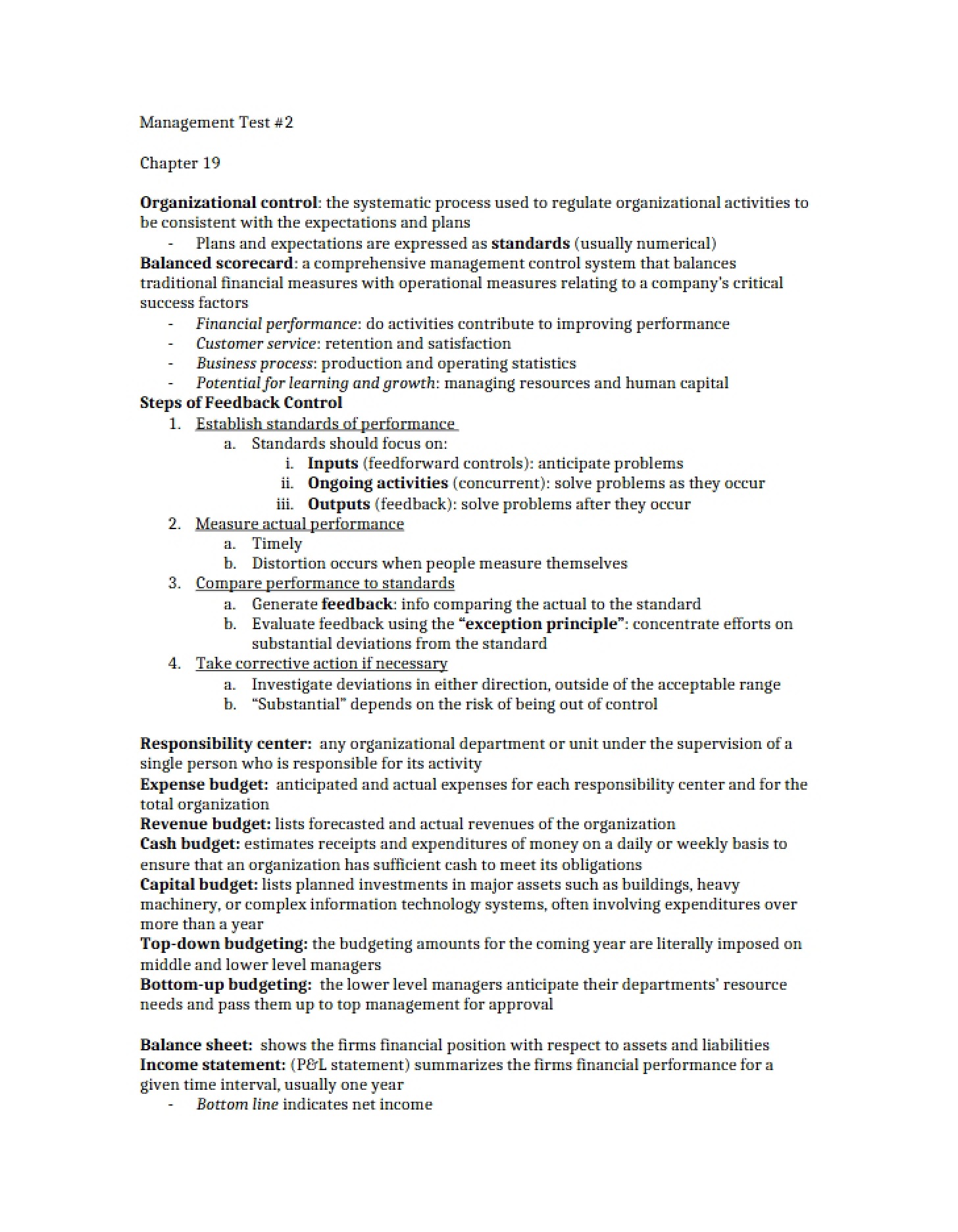
* An overview of the controlling process and performance measurement.