What This Document Is
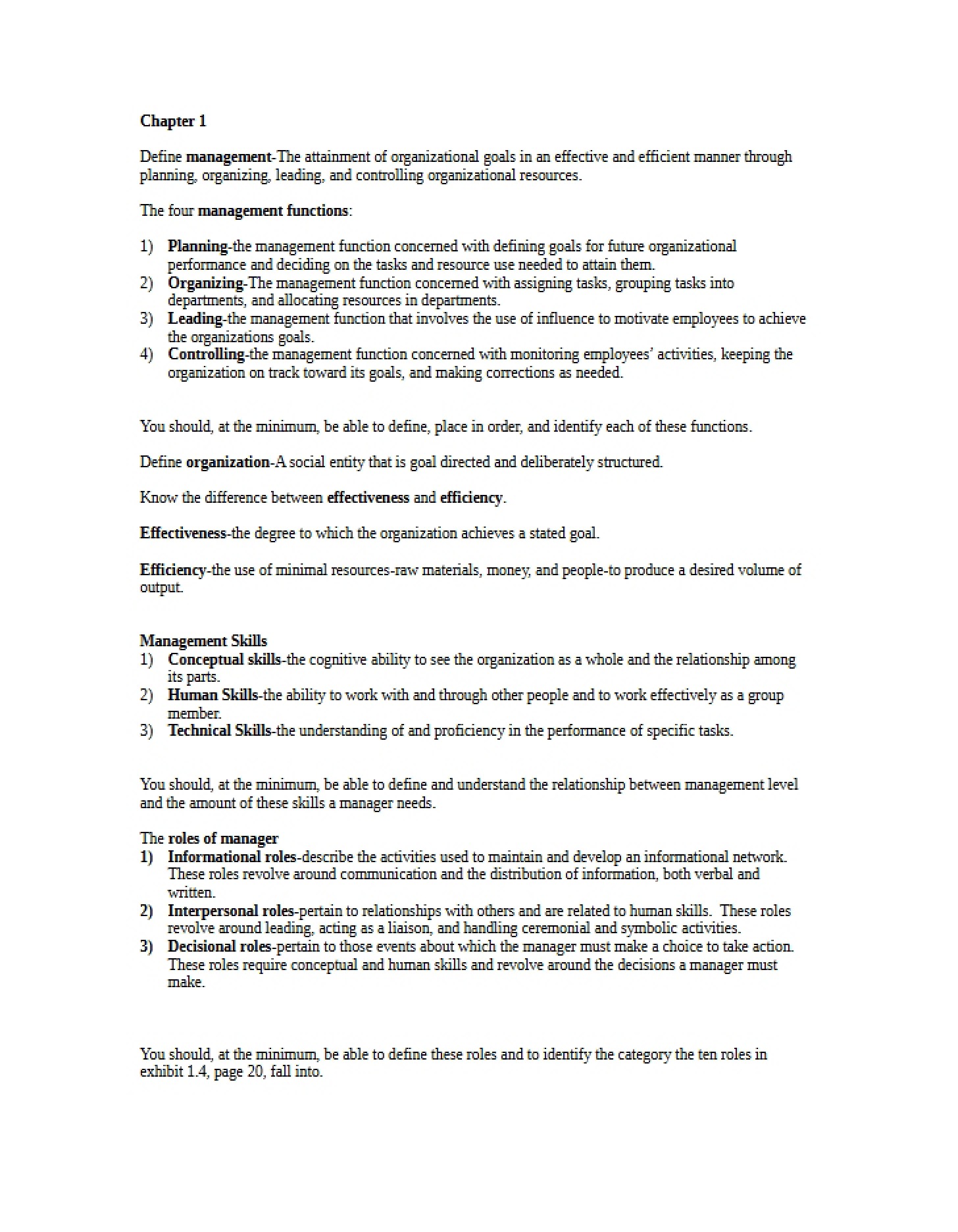
This document presents detailed in-class notes covering foundational concepts from Chapter 1 of Principles of Management (MGMT 371) at the University of South Carolina – “Innovative Management in a Changed World.” It’s designed to supplement core course materials and provide a deeper understanding of the evolving landscape of modern management practices. The notes delve into the core functions of management, the skills required for effective leadership, and emerging trends impacting the workplace.
Why This Document Matters
This resource is ideal for students enrolled in introductory management courses, particularly those seeking to solidify their grasp of fundamental principles. It’s most beneficial when used *alongside* assigned readings and lectures, offering a focused review of key ideas. Students preparing for discussions, quizzes, or exams on the basics of management will find this a valuable study aid. It’s particularly helpful for those wanting to understand how traditional management approaches are being reshaped by technological advancements and global shifts.
Common Limitations or Challenges
This document provides a focused set of notes and does not substitute for comprehensive course materials like the textbook or professor’s lectures. It doesn’t offer complete definitions of all management terms, nor does it provide detailed case studies or practical application exercises. It’s a concentrated overview, and a full understanding requires engagement with the broader course curriculum. It also specifically notes certain content will *not* be on the first exam.
What This Document Provides
* An overview of the four major principles of management and their interconnectedness.
* A breakdown of the three core management skill categories and how their importance shifts with organizational hierarchy.
* Discussion of emerging workplace trends like telecommuting, social media’s impact, and the rise of outsourcing and crowdsourcing.
* An exploration of organizational performance, differentiating between effectiveness and efficiency.
* An introduction to different types of managers (top, middle, first-line, functional, general) and their respective responsibilities.
* An outline of ten key managerial roles, categorized as informational and interpersonal.
* A mention of a commonly cited management principle – the Pareto Rule – and its implications.
* Information regarding the specific chapters covered on the first exam.