What This Document Is
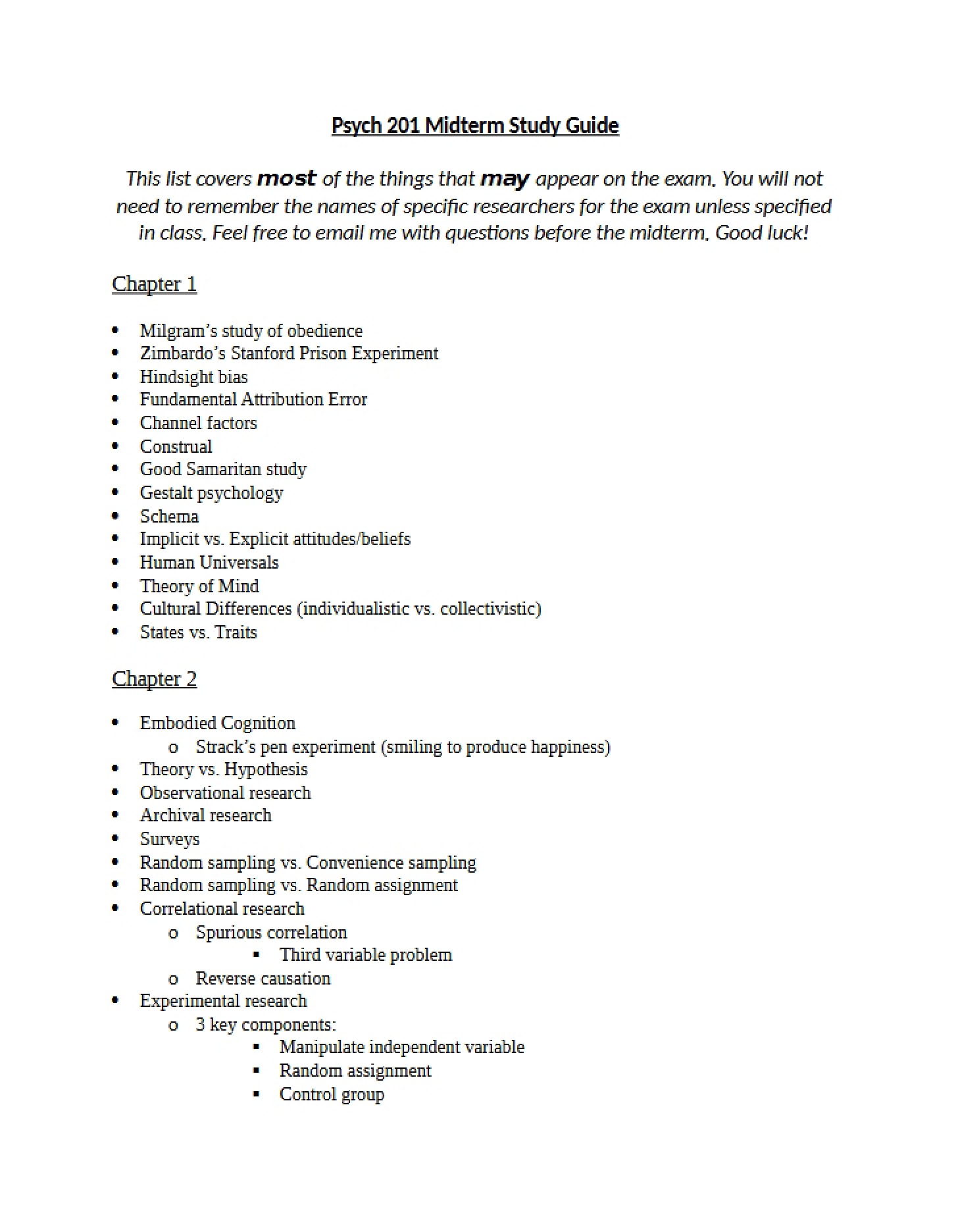
This study guide delves into the fascinating field of social cognition – how people process, interpret, and remember information about the social world. Created for students in PSYC 201 at the University of Illinois at Urbana-Champaign, it explores the cognitive processes underlying our judgments and decisions when interacting with others. It examines the ways in which our thinking isn’t always rational, and how systematic errors can occur in social perception. The material builds a foundation for understanding complex social behaviors and interactions.
Why This Document Matters
This guide is invaluable for any psychology student seeking a deeper understanding of social thinking. It’s particularly helpful when preparing for exams, completing assignments, or simply wanting to enhance comprehension of core concepts in social psychology. Students who struggle with applying cognitive principles to social situations will find this resource particularly beneficial. It’s designed to supplement lectures and textbook readings, offering a focused exploration of key theories and research areas.
Common Limitations or Challenges
This guide focuses on theoretical frameworks and research findings within social cognition. It does *not* provide complete coverage of all related topics in social psychology, nor does it offer practice questions or detailed case studies. It’s intended as a focused resource, and won’t replace the need for comprehensive textbook study or active participation in course discussions. It also doesn’t offer personalized study strategies or direct application to real-world scenarios beyond illustrating core principles.
What This Document Provides
* An overview of core concepts in social cognition, including schemas and their influence on perception.
* Exploration of how the presentation of information (framing) impacts judgment.
* Discussion of common biases in how we seek and interpret information.
* Introduction to cognitive shortcuts (heuristics) and their potential pitfalls.
* Examination of the role of top-down versus bottom-up processing in social perception.
* Insights into how initial impressions (snap judgments) are formed.
* Consideration of the impact of priming on social judgments and behavior.