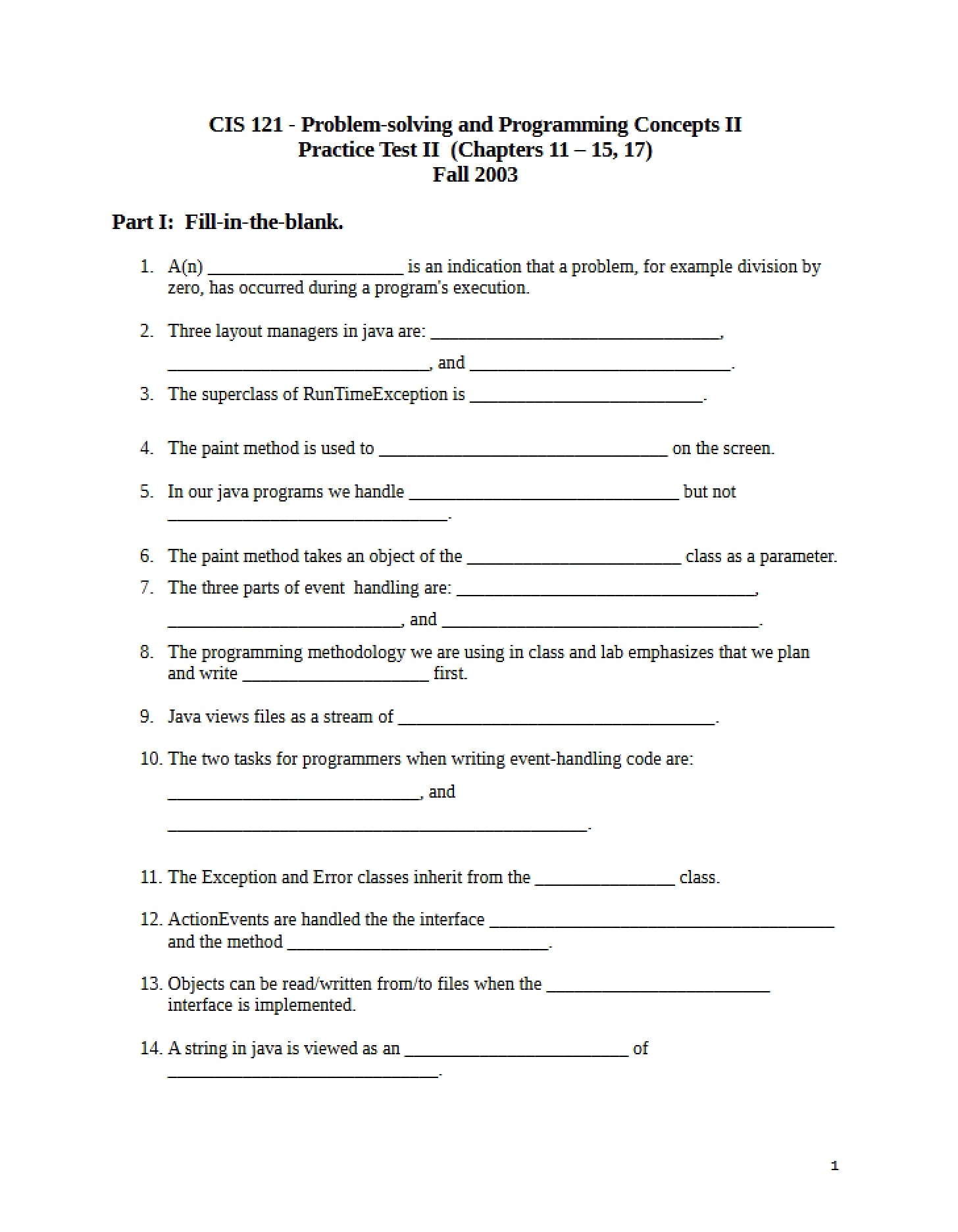
What This Document Is
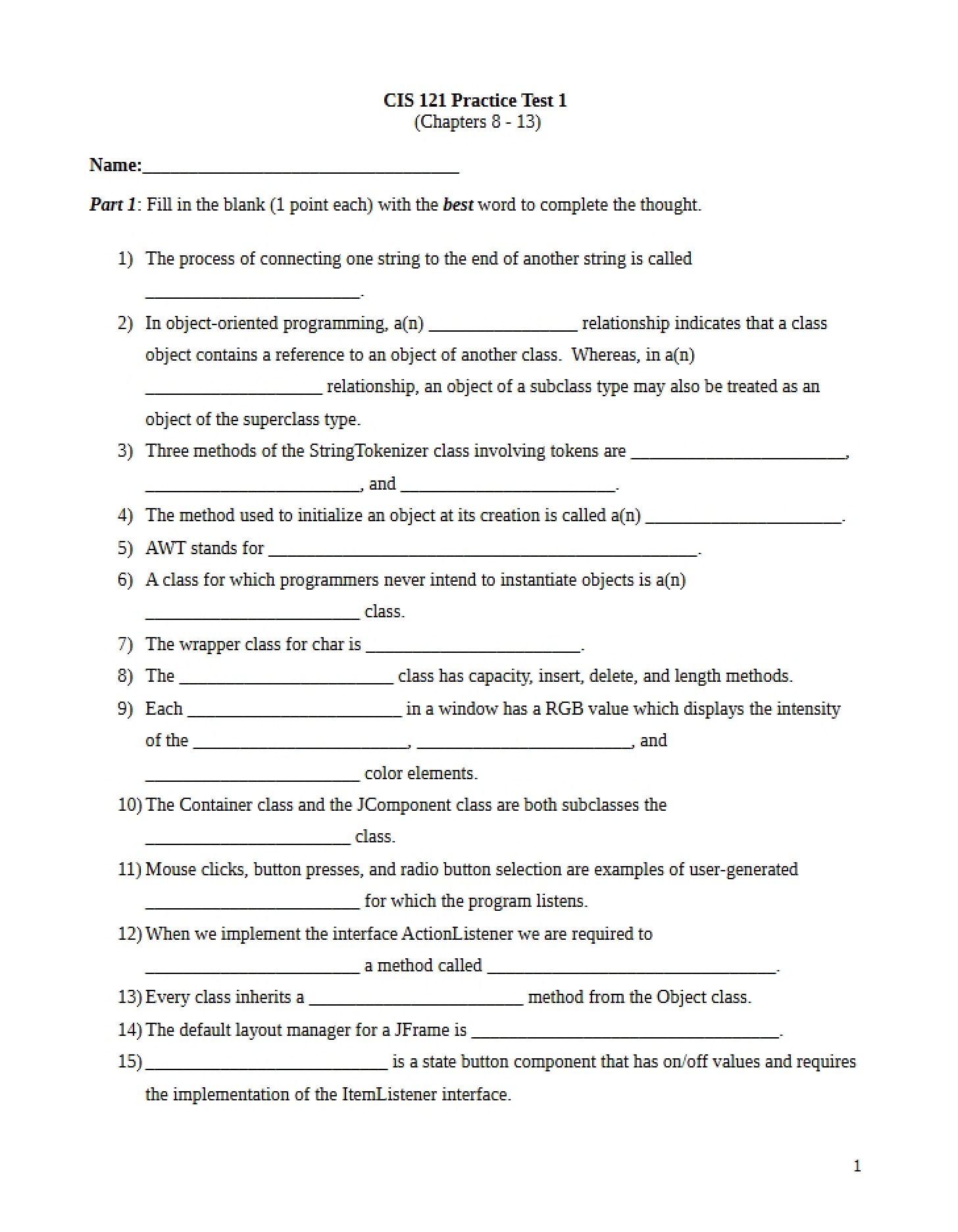
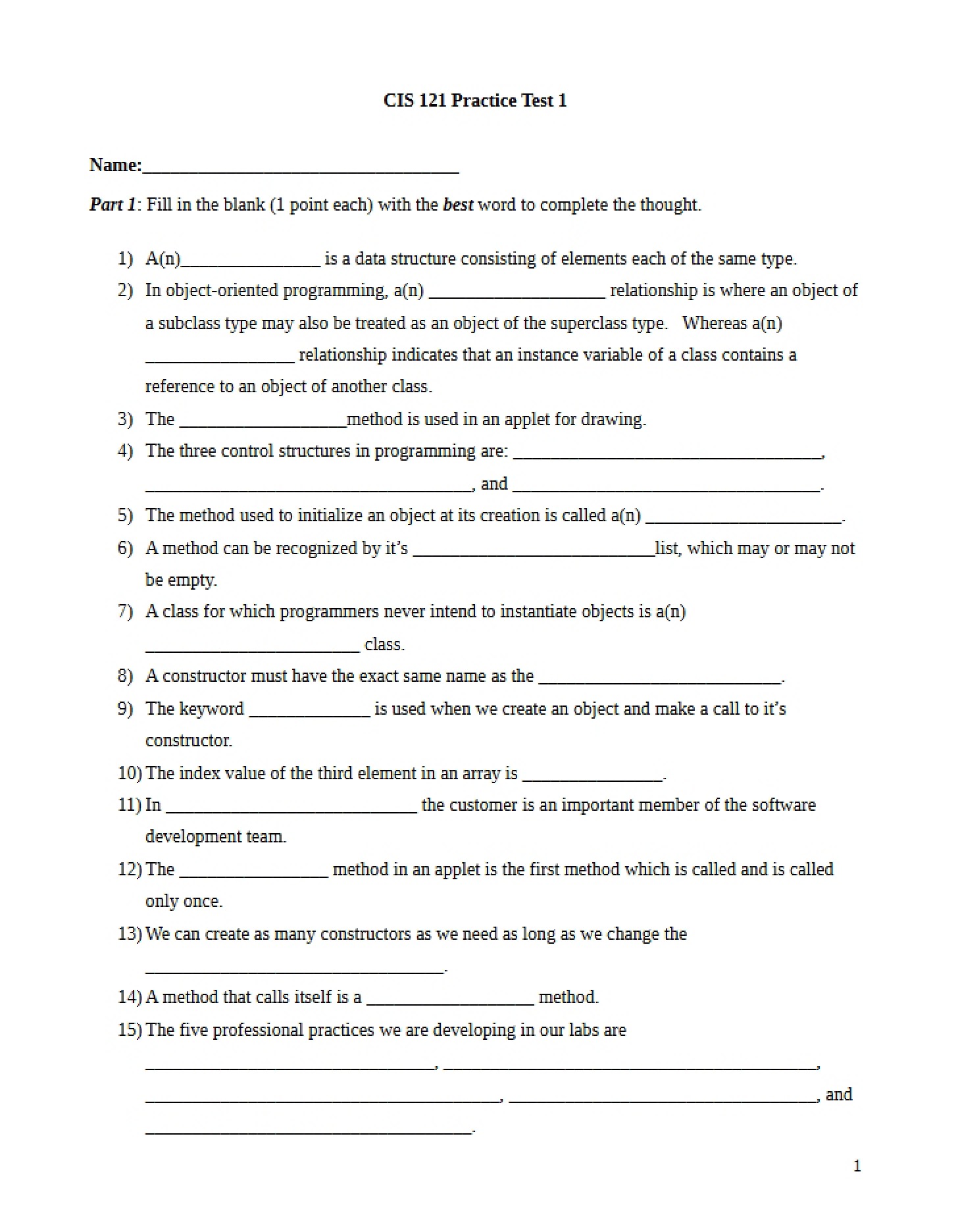
This document is a practice test designed to assess your understanding of core programming concepts, specifically building upon foundational knowledge in computer science. It focuses on the principles taught in a Problem Solving and Programming Concepts II course (CIS 121) at the University of South Alabama. The test is structured to evaluate your grasp of intermediate-level programming techniques and problem-solving methodologies. It covers topics related to error handling, multithreading, and file management within a Java programming context.
Why This Document Matters
This practice test is an invaluable resource for students currently enrolled in CIS 121 or those reviewing similar material. It’s particularly helpful for identifying knowledge gaps *before* a high-stakes exam. Working through these types of questions will strengthen your ability to apply theoretical concepts to practical programming scenarios. It’s ideal for self-assessment, group study, and reinforcing key ideas related to robust and efficient code development. Students aiming for a strong understanding of exception handling and concurrent programming will find this especially beneficial.
Common Limitations or Challenges
This document is a practice test and does not provide comprehensive explanations of the underlying concepts. It assumes you have already been exposed to the material in lectures, readings, or other course resources. It will test your recall and application of knowledge, but won’t *teach* you the fundamentals. Furthermore, it represents a specific instructor’s approach to evaluating these concepts and may not perfectly align with all possible exam formats or question styles.
What This Document Provides
* A variety of question formats, including fill-in-the-blank and short answer.
* Focus on key areas like exception handling (including different exception types).
* Exploration of multithreading concepts, including thread lifecycle and synchronization.
* Questions relating to file input/output operations and data structures.
* Programming challenges designed to test practical application of learned concepts.
* Discussion prompts to encourage deeper understanding of complex topics.