What This Document Is
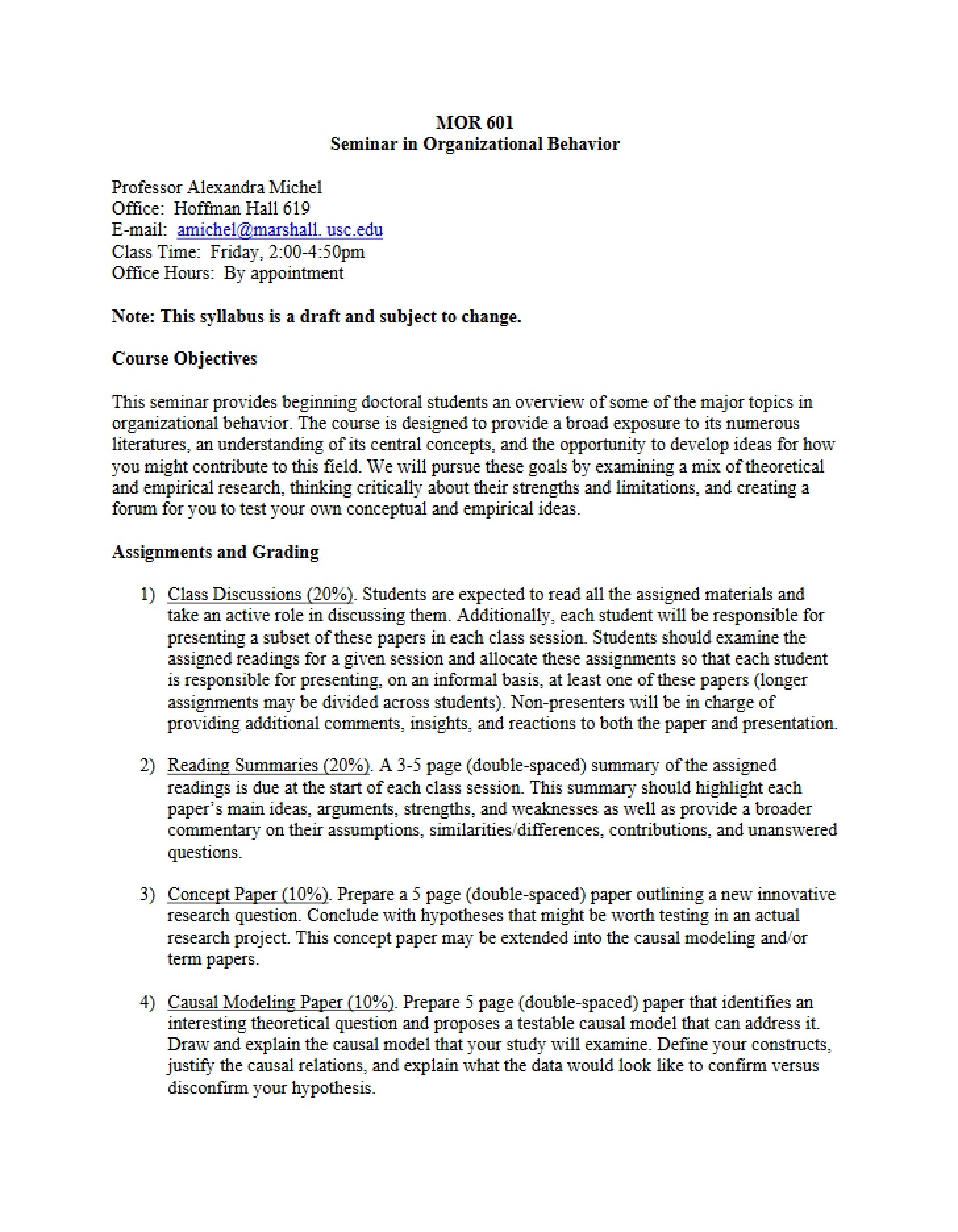
This document is a comprehensive syllabus for MOR 601, a Seminar in Organizational Behavior at the University of Southern California. It outlines the course structure, expectations, and assessment methods for doctoral students delving into the complexities of organizational dynamics. It serves as a foundational guide for navigating the core concepts and research methodologies within the field.
Why This Document Matters
This syllabus is essential for any student enrolled in, or considering enrolling in, this advanced seminar. It clarifies the instructor’s approach to the subject, the workload involved, and the skills students are expected to develop. Prospective students can use this to gauge the course’s suitability for their academic goals, while current students will find it invaluable for staying on track with assignments and understanding grading criteria. It’s particularly useful for those seeking a rigorous academic exploration of organizational behavior at the doctoral level.
Common Limitations or Challenges
This syllabus provides an overview of the course; it does *not* contain the actual course readings, lecture notes, or detailed assignment instructions. It outlines the *types* of assignments expected, but doesn’t provide examples of successful submissions. It also doesn’t offer specific insights into the instructor’s interpretations of key theories or anticipated class discussions – those are experienced *within* the course itself.
What This Document Provides
* A clear articulation of the course objectives and learning outcomes.
* A detailed breakdown of the grading components, including their respective weights.
* Descriptions of the major assignments, including concept papers, causal modeling exercises, and a substantial term paper proposal.
* An overview of the weekly reading schedule, listing key authors and publications.
* Important logistical information, such as the instructor’s contact details and office hours.
* Insight into the course’s emphasis on both theoretical understanding and empirical research.