What This Document Is
This document is a focused exploration of effective width-to-length ratios within the context of CMOS (Complementary Metal-Oxide-Semiconductor) circuit design. It delves into the fundamental concepts governing transistor behavior and how manipulating these ratios impacts circuit performance. The material centers around analyzing the characteristics of both NMOS and PMOS transistors, specifically as they relate to driving capability and overall circuit characteristics. It’s geared towards students seeking a deeper understanding of the core principles behind modern digital logic.
Why This Document Matters
This resource is invaluable for Electrical and Computer Engineering students, particularly those enrolled in courses covering VLSI design, digital electronics, or semiconductor device physics. It’s most beneficial when you’re grappling with understanding how transistor sizing affects circuit speed, power consumption, and noise margins. Students preparing to design and analyze integrated circuits will find this a crucial foundation. It’s designed to clarify the ‘why’ behind transistor sizing choices, rather than simply providing formulas. This material will be particularly helpful when you need to optimize circuit performance based on specific design constraints.
Common Limitations or Challenges
This document focuses specifically on the *concepts* of width-to-length ratios and doesn’t provide a comprehensive treatment of CMOS fabrication processes or detailed circuit simulations. It does not include step-by-step design procedures or solved examples. While it touches upon CMOS inverter characteristics, it doesn’t cover advanced circuit topologies or layout considerations. It assumes a foundational understanding of semiconductor physics and basic circuit analysis. Access to this material will not substitute for hands-on lab experience or the use of specialized circuit design software.
What This Document Provides
* A comparative analysis of effective width-to-length ratios in NMOS and PMOS transistors.
* Discussion of the relationship between aspect ratios and transistor characteristics.
* Examination of key CMOS properties, including rail-to-rail swing and input/output impedance.
* An overview of the operational differences between enhancement and depletion mode MOSFETs.
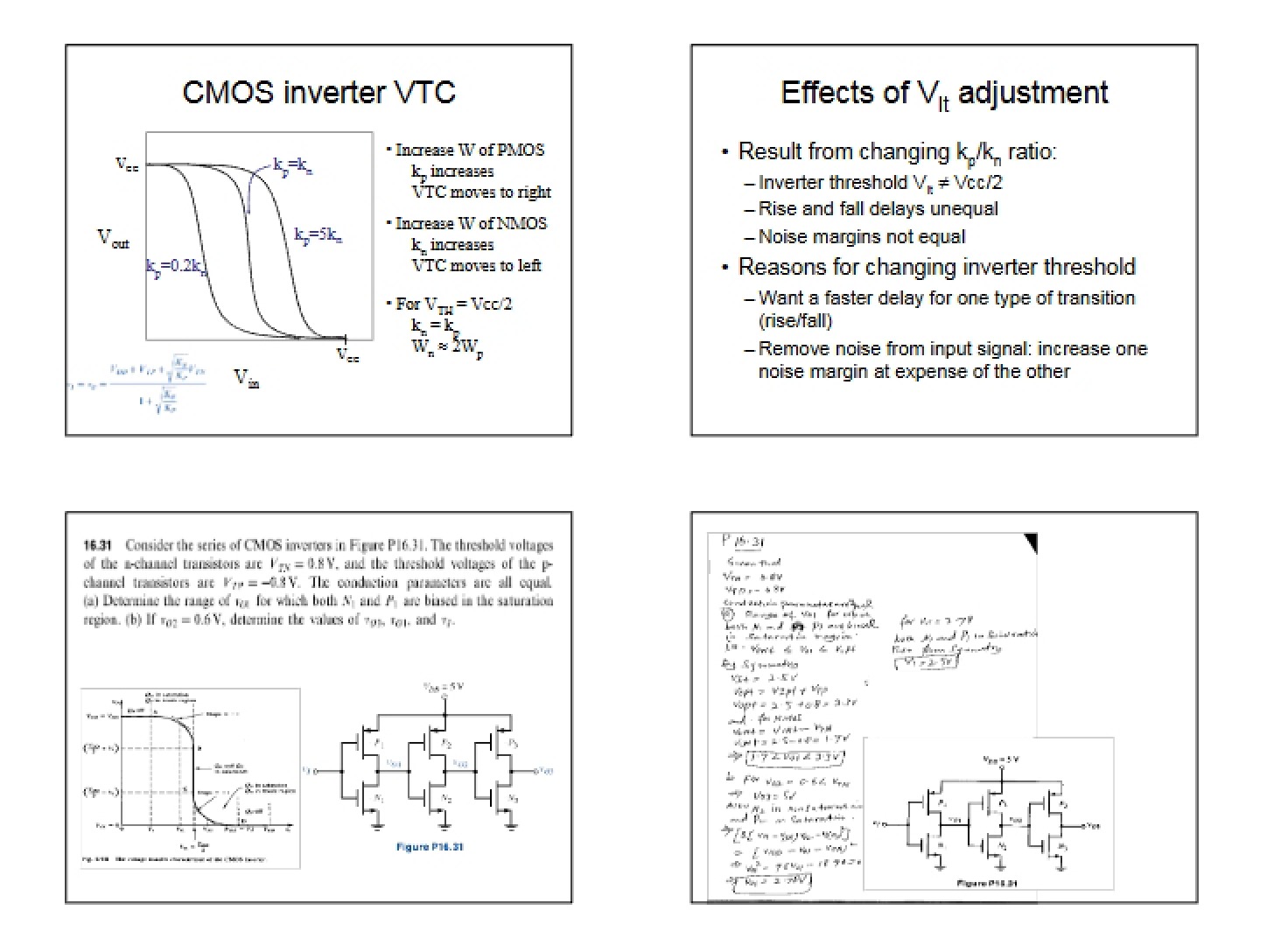
* Conceptual explanation of the CMOS inverter and its voltage transfer curve.
* Insight into the roles of “pull-up” and “pull-down” devices within a CMOS inverter.