What This Document Is
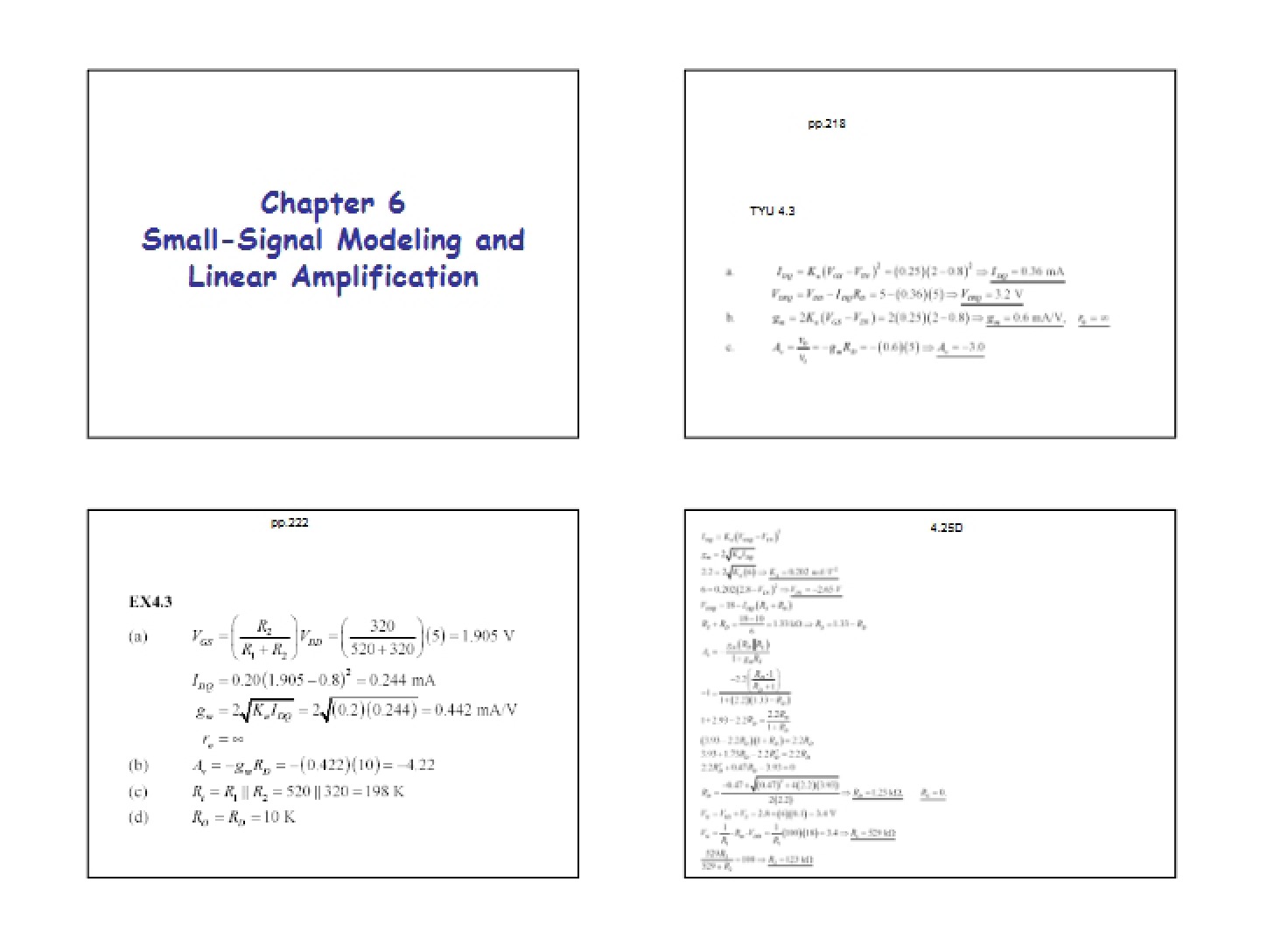
This document is a detailed exploration of linear amplification and small-signal modeling, specifically within the context of Electronic Circuit Engineering (ECE 334) at the University of South Alabama. It delves into the theoretical foundations and practical applications of using transistors as amplifiers, focusing on how to analyze and design circuits for optimal performance. The material centers around understanding transistor behavior under specific conditions and developing equivalent circuit models for accurate analysis. It builds upon core concepts in circuit analysis and introduces techniques for examining signal behavior in amplified systems.
Why This Document Matters
This resource is invaluable for undergraduate electrical engineering students tackling amplifier design and analysis. It’s particularly helpful when you need a deeper understanding of how transistors function as amplifying devices, going beyond basic operational principles. Students preparing for exams, working on circuit projects, or seeking to solidify their grasp of small-signal analysis will find this material beneficial. It’s designed to bridge the gap between theoretical concepts and practical circuit implementation, providing a strong foundation for more advanced coursework in analog circuit design.
Common Limitations or Challenges
This document focuses on the *principles* of linear amplification and modeling. It does not provide step-by-step instructions for building specific amplifier circuits, nor does it offer pre-solved problems or lab exercises. It assumes a foundational understanding of basic circuit analysis techniques (Ohm’s Law, Kirchhoff’s Laws, etc.) and transistor fundamentals. While it discusses common amplifier configurations, it doesn’t cover every possible circuit topology or advanced design optimization strategies. It is a focused study of core concepts, not a comprehensive “cookbook” for amplifier design.
What This Document Provides
* A detailed examination of transistor behavior in the active region for amplification.
* Methods for creating and utilizing de and ac equivalent circuits for transistor analysis.
* Discussions on the impact of coupling and bypass components on circuit performance.
* Explanations of key amplifier characteristics, including voltage gain, input/output resistance, and signal range.
* An introduction to hybrid-pi models for BJT transistors and their application in small-signal analysis.
* Insights into the relationship between transistor parameters and amplifier performance.
* Exploration of transconductance and its role in amplifier operation.