What This Document Is
This document provides a focused exploration of implementation verification techniques within the context of digital systems design. Specifically, it delves into the critical process of ensuring that a design’s intended functionality is accurately realized throughout various stages of the development lifecycle – from the initial Register Transfer Level (RTL) code to the final physical layout. It’s part of the course “Fundamental Algorithms for Systems Modeling, Analysis” (ELENG 244) at UC Berkeley.
Why This Document Matters
This material is essential for students and professionals involved in hardware design, verification, and testing. It’s particularly valuable when you need a deeper understanding of the challenges associated with maintaining design integrity as a project moves through synthesis, gate-level implementation, and physical design. Understanding these verification methods is crucial for building reliable and correctly functioning systems. It’s most helpful when you’re tackling complex digital designs and need to systematically validate each implementation step.
Topics Covered
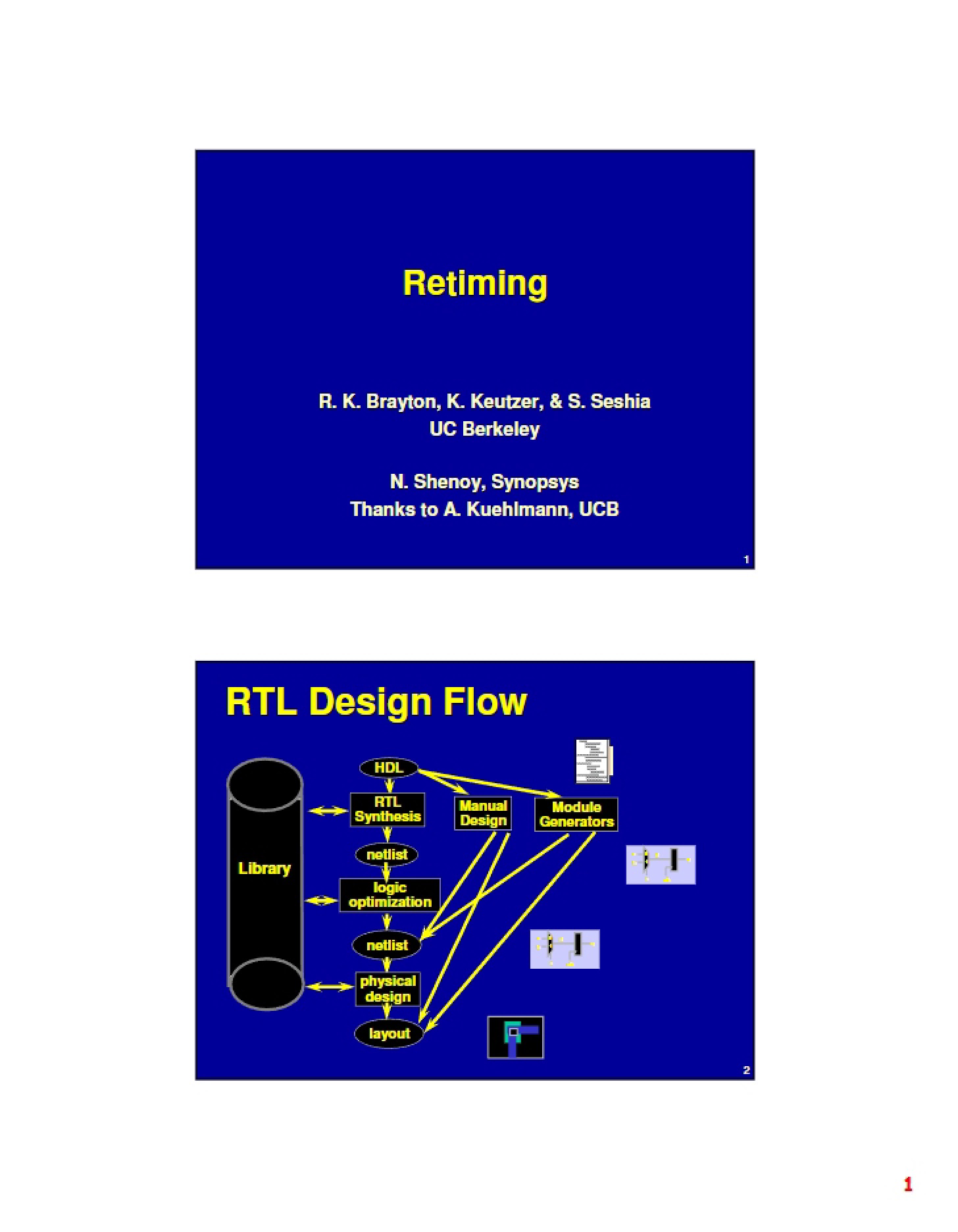
* The overall design and verification flow in digital systems.
* Different levels of verification – RTL to RTL, RTL to gates, and gate to gate.
* The role of static analysis and simulation in the verification process.
* Challenges related to modifications made during implementation (synthesis, layout).
* Techniques for verifying consistency between different representations of a design.
* An introduction to combinational equivalence checking.
* The concept of Layout Versus Schematic (LVS) verification.
What This Document Provides
* A structured overview of the verification landscape in digital design.
* A discussion of the advantages and disadvantages of various verification approaches.
* An examination of the problems that can arise during implementation and how to address them.
* A conceptual framework for understanding equivalence checking methodologies.
* Insights into the importance of thorough verification at each stage of the design process.