What This Document Is
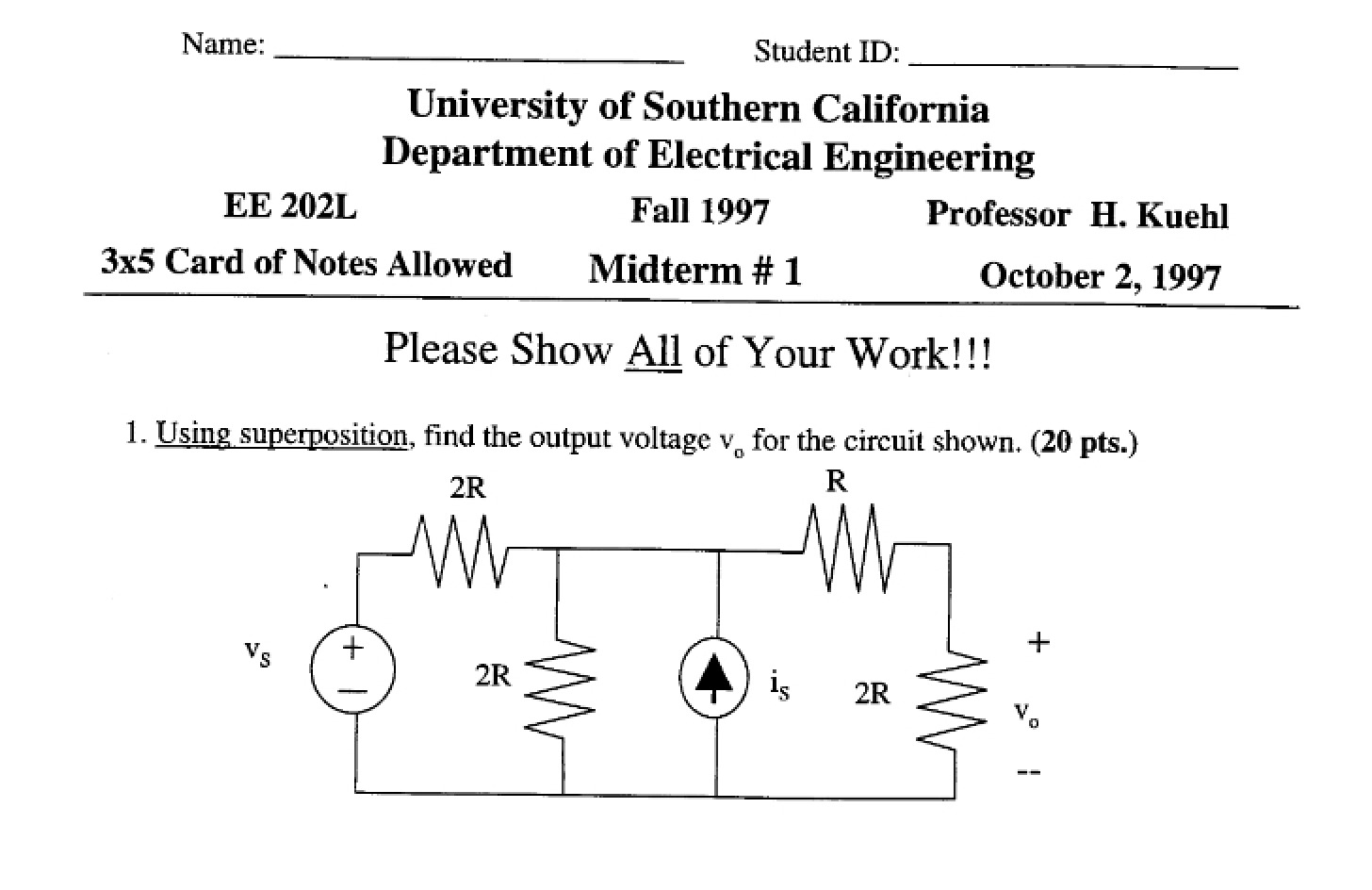
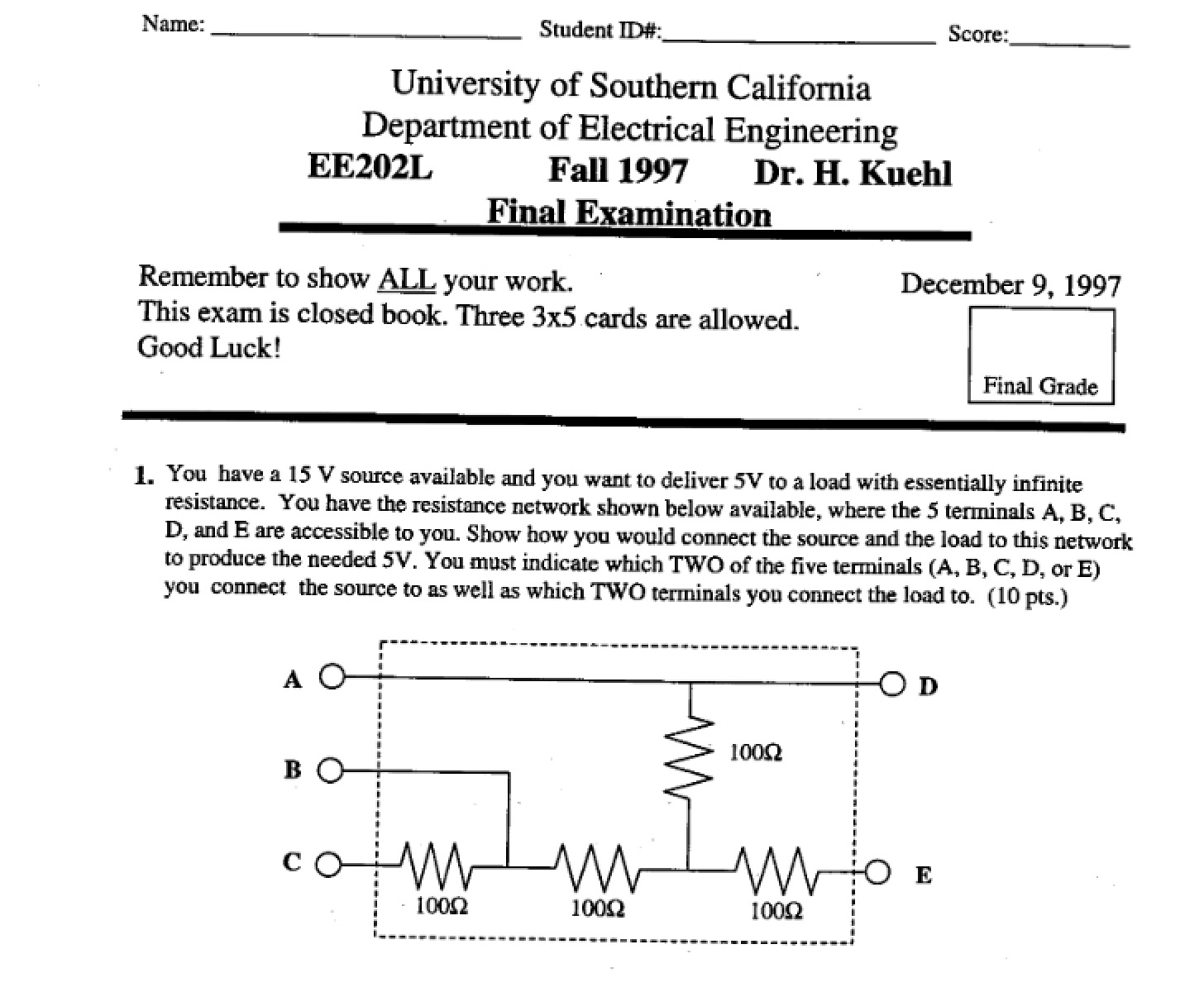
This is a comprehensive final examination for an undergraduate Linear Circuits course (EE 202L) at the University of Southern California, administered in Fall 1998. It’s designed to assess a student’s understanding of core concepts within circuit analysis, focusing on both theoretical knowledge and problem-solving abilities. The exam is closed-book, allowing students to utilize a limited number of notes.
Why This Document Matters
This resource is invaluable for students currently enrolled in a similar linear circuits course, or those preparing for related examinations like the Fundamentals of Engineering (FE) exam. It’s particularly useful for self-assessment, identifying knowledge gaps, and practicing application of circuit analysis techniques under timed conditions. Studying past exams helps familiarize students with the typical question formats, difficulty level, and scope of topics covered by the instructor. It’s best used *after* completing coursework and seeking clarification on challenging areas.
Common Limitations or Challenges
This document presents a past exam and does not include solutions or detailed explanations. It serves as a practice tool, requiring the user to independently apply their knowledge to solve the problems presented. The specific topics emphasized may vary between instructors and courses, so it should be used as a supplement to, not a replacement for, current course materials. Furthermore, the context of the course (specific tools or approaches favored by the professor) is not provided.
What This Document Provides
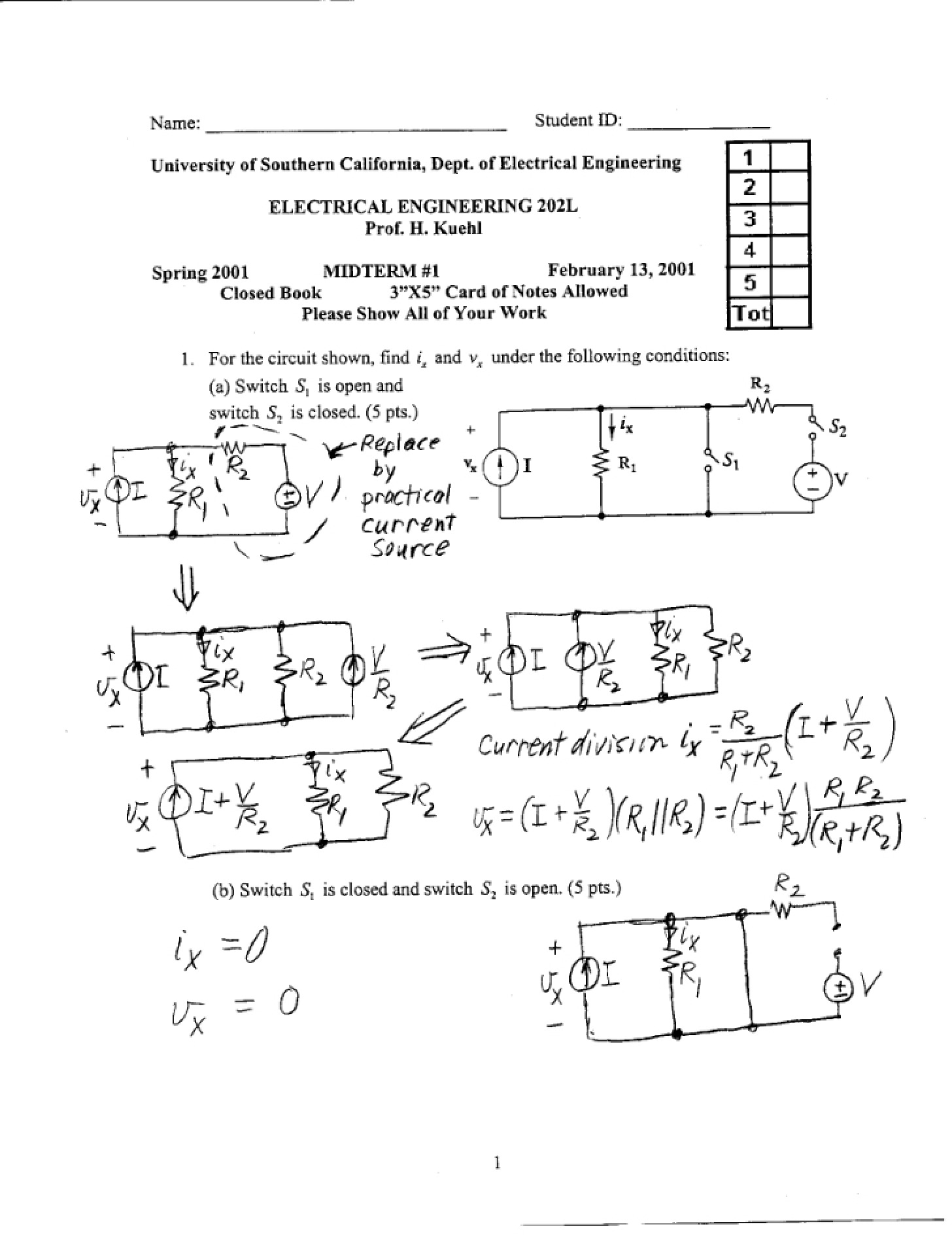
* A range of problems covering fundamental circuit analysis topics.
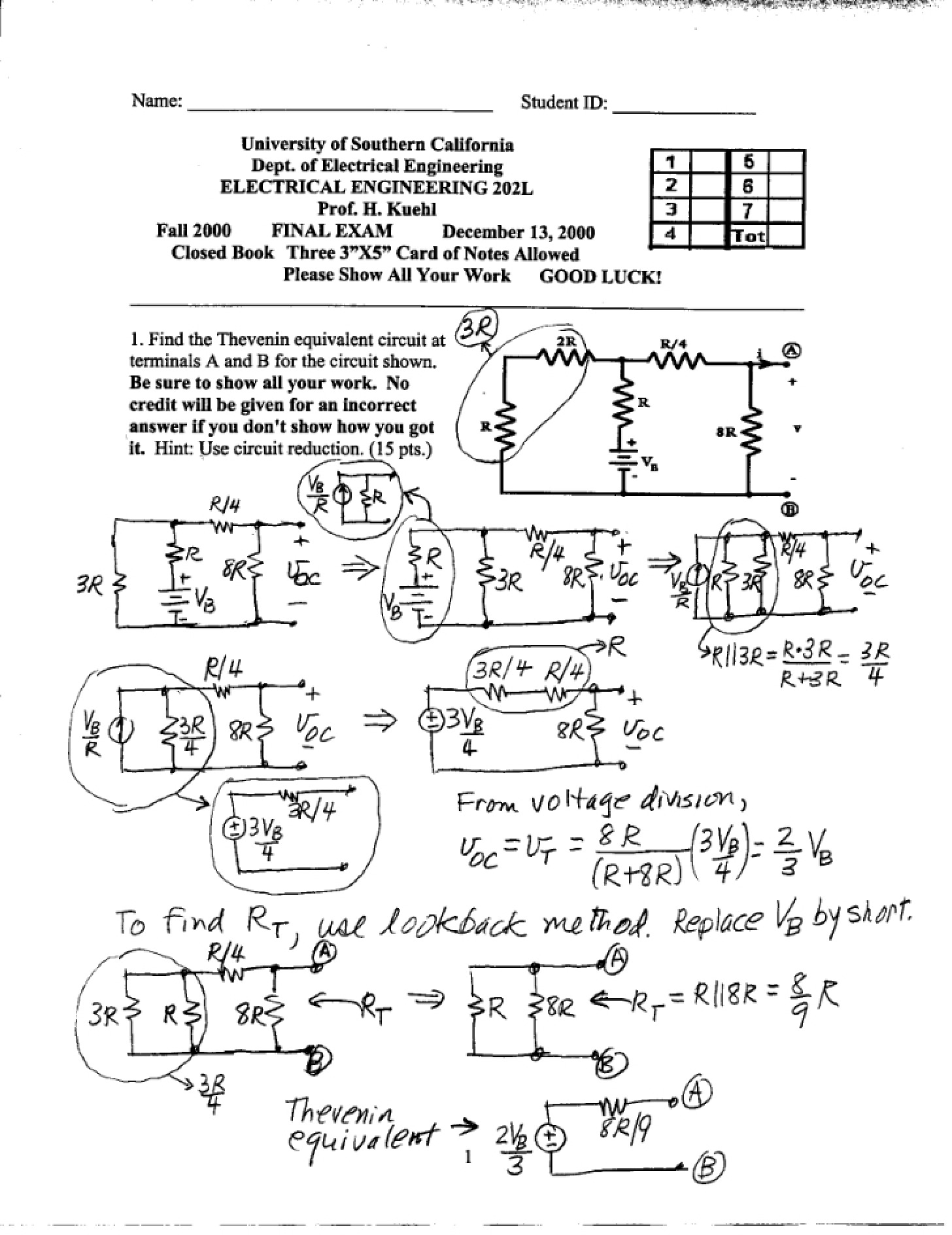
* Questions involving Thevenin equivalent circuits and RLC circuit analysis.
* Problems requiring application of node-voltage methods for circuit analysis.
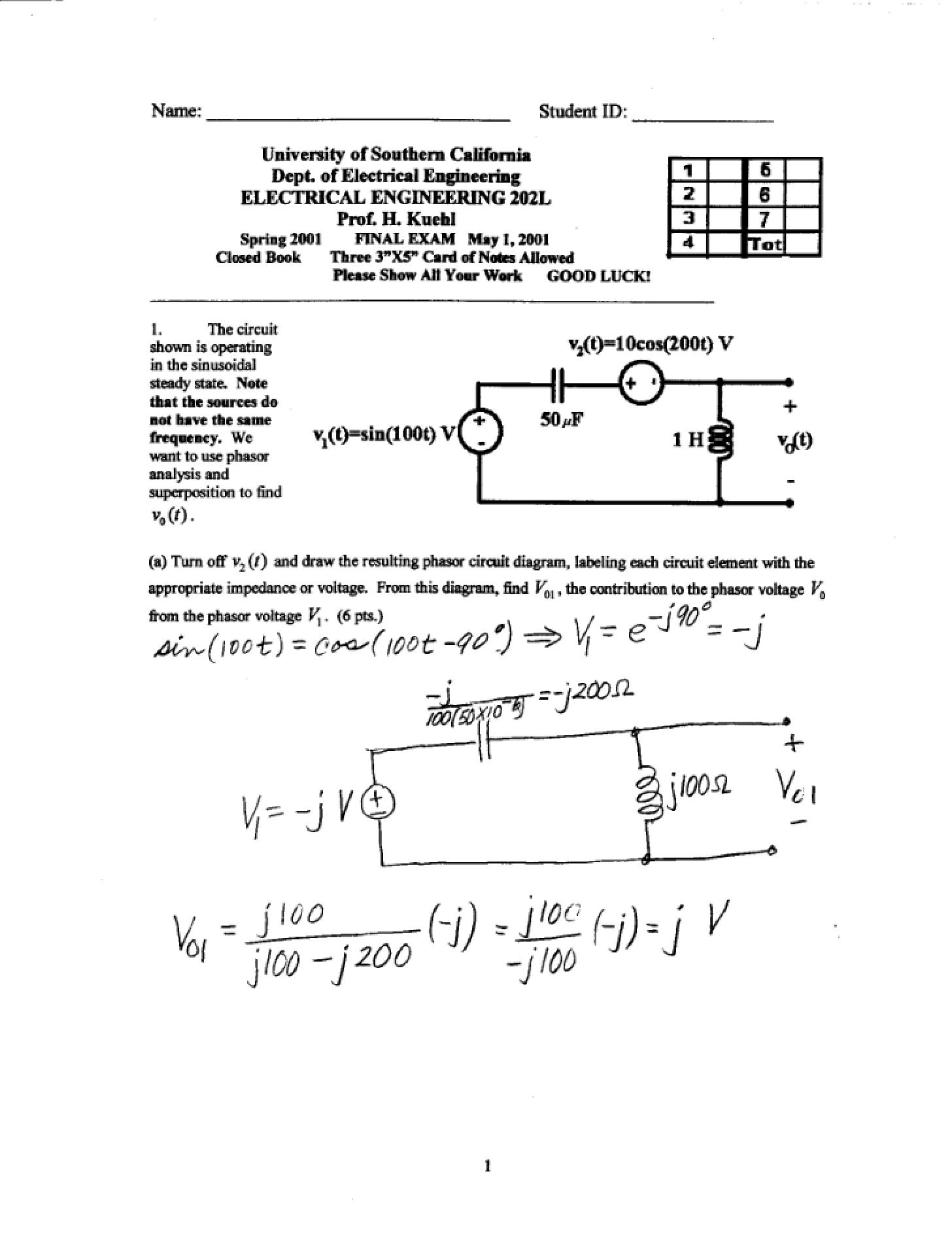
* Exercises focused on phasor analysis of sinusoidal signals.
* Practice with Laplace transforms and inverse Laplace transforms.
* Questions relating to time-domain and s-domain circuit representations.
* A matching section to test conceptual understanding of key circuit parameters and properties.
* A representative example of the exam format and length for a rigorous linear circuits course at a leading engineering university.