What This Document Is
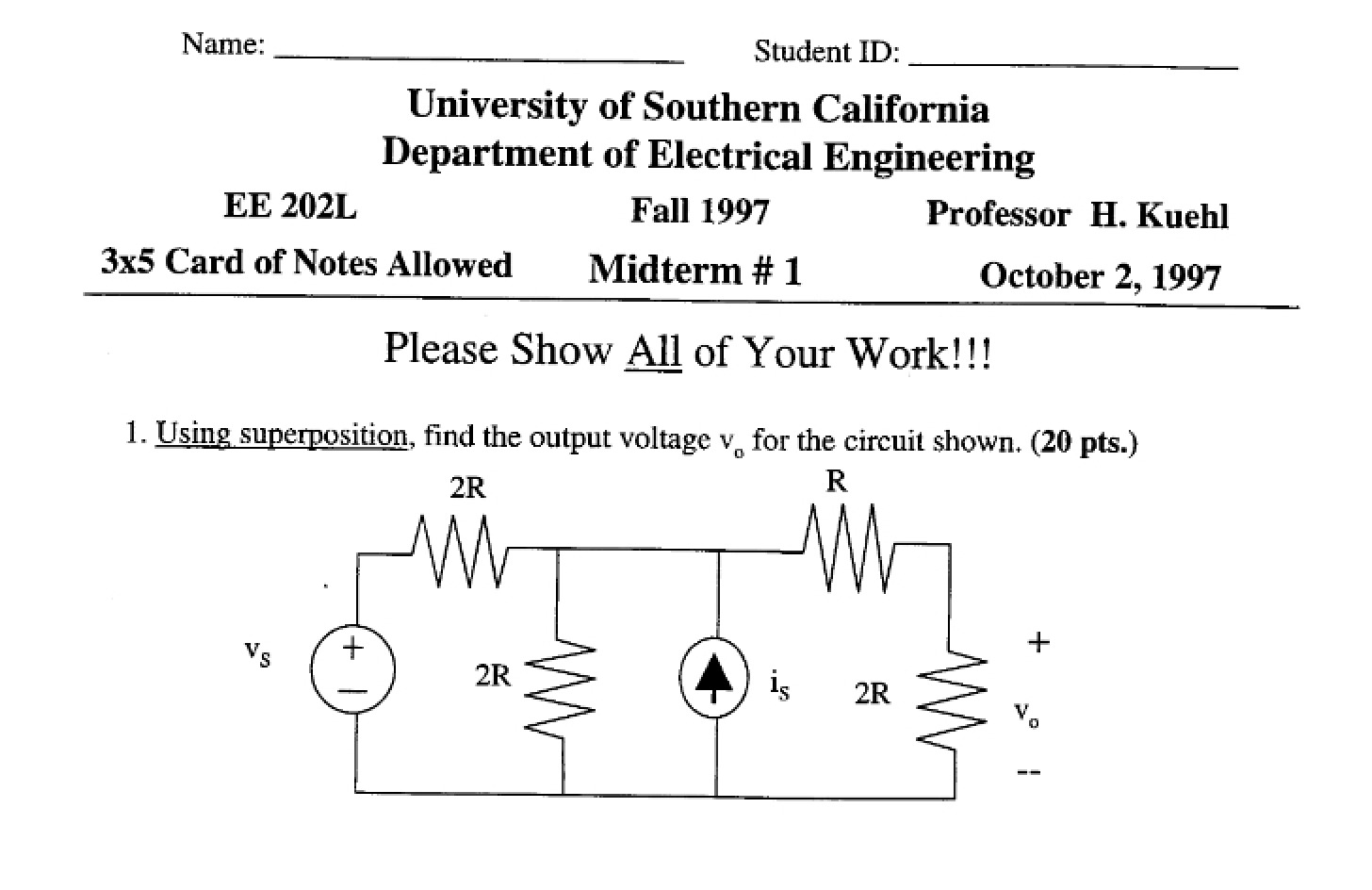
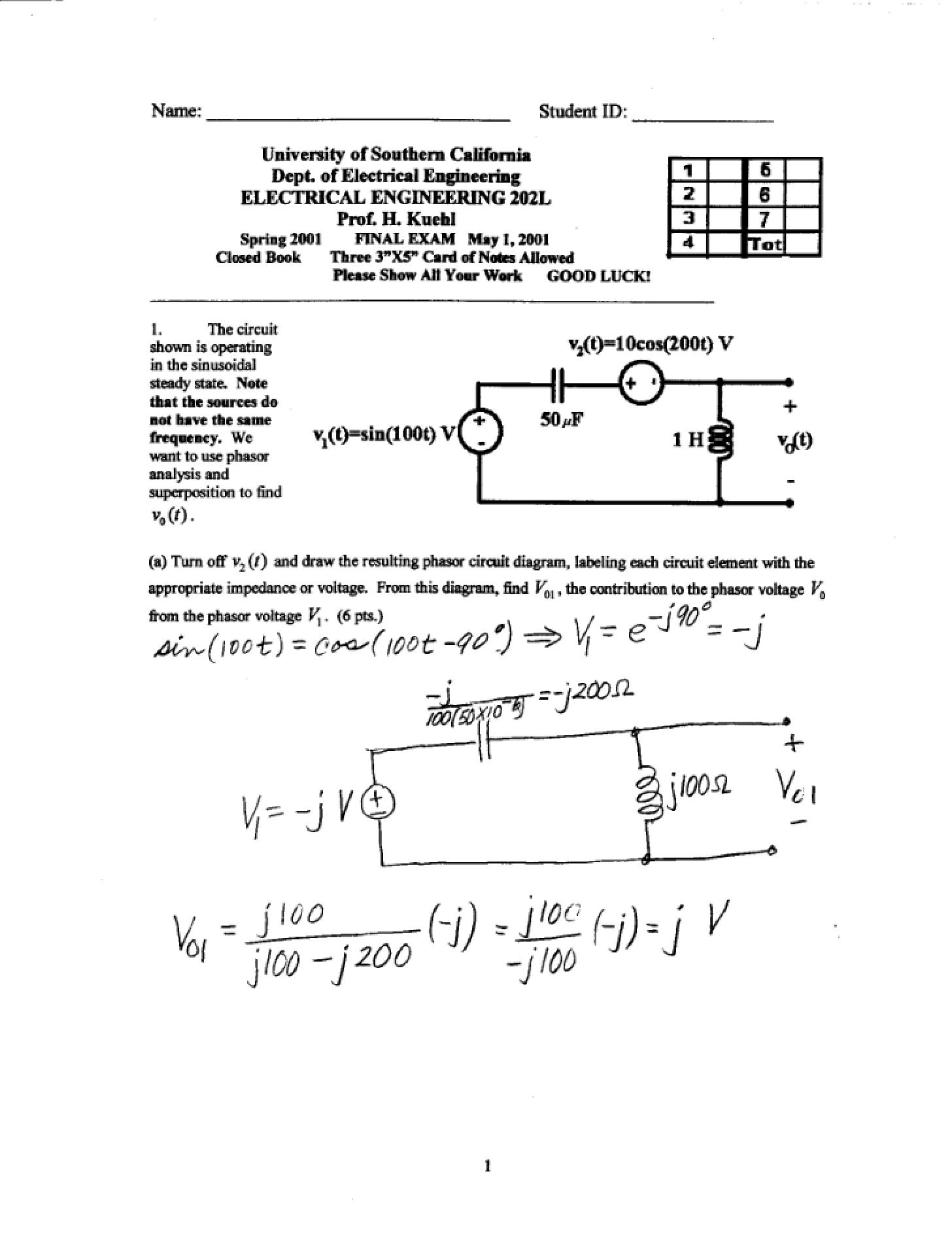
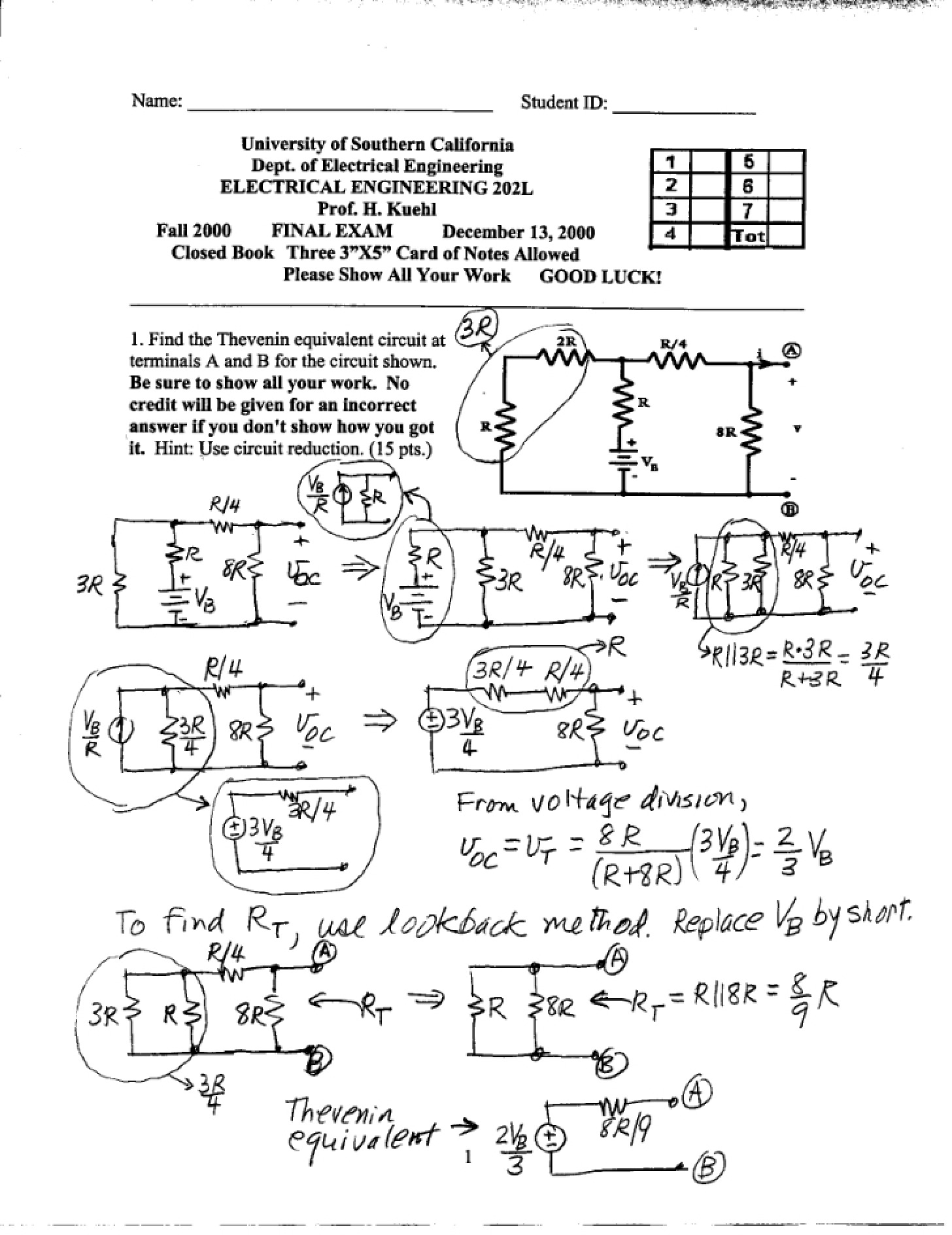
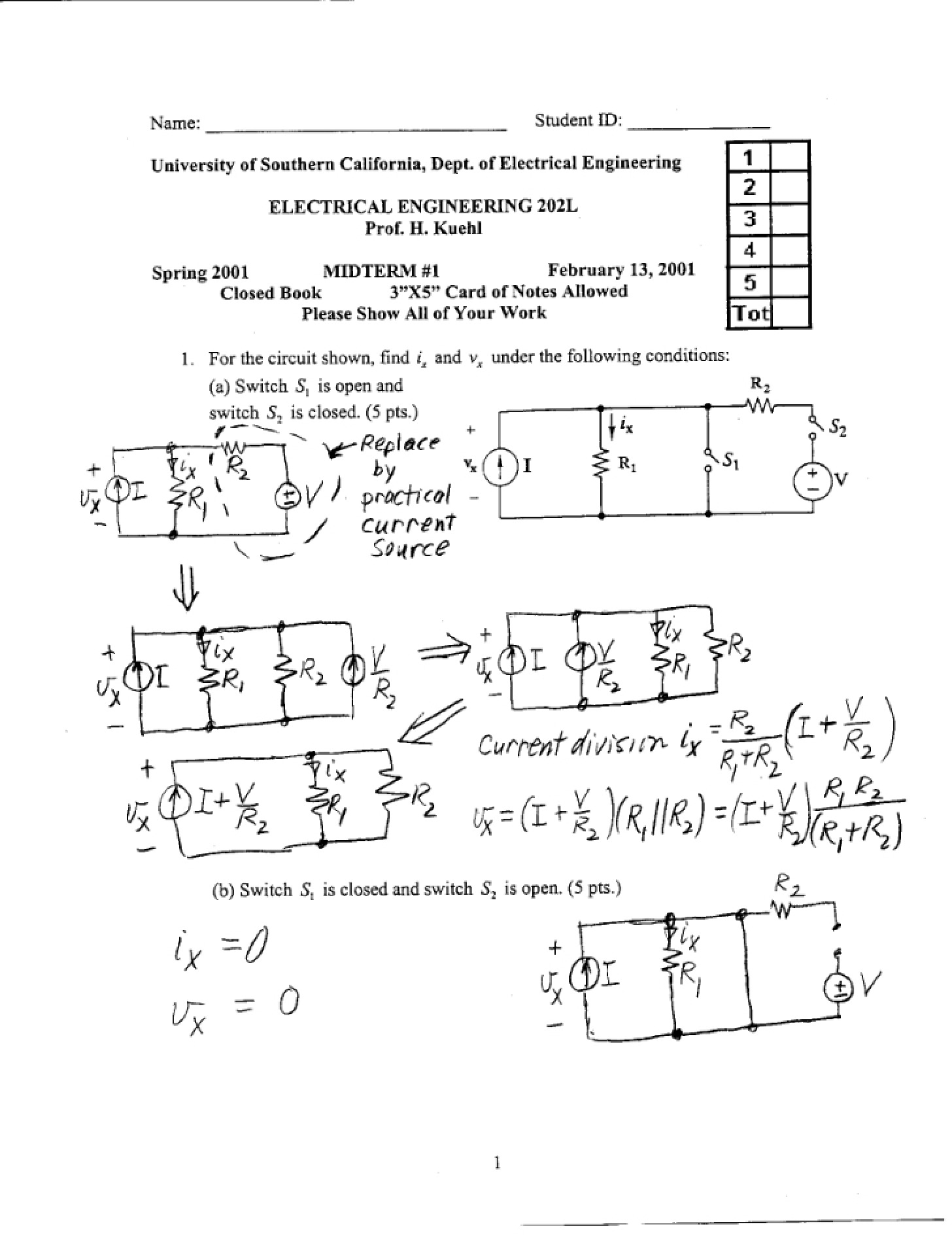
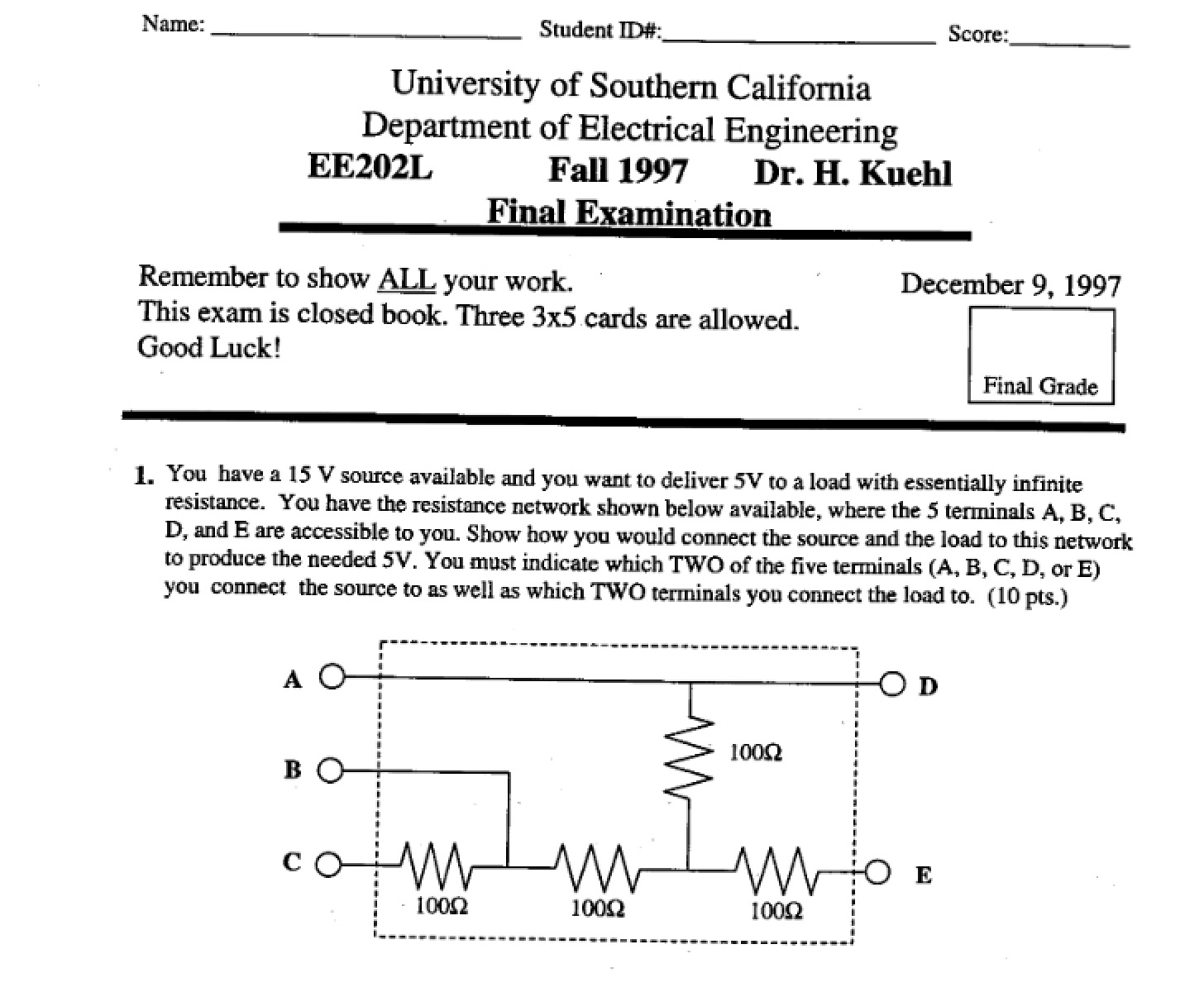
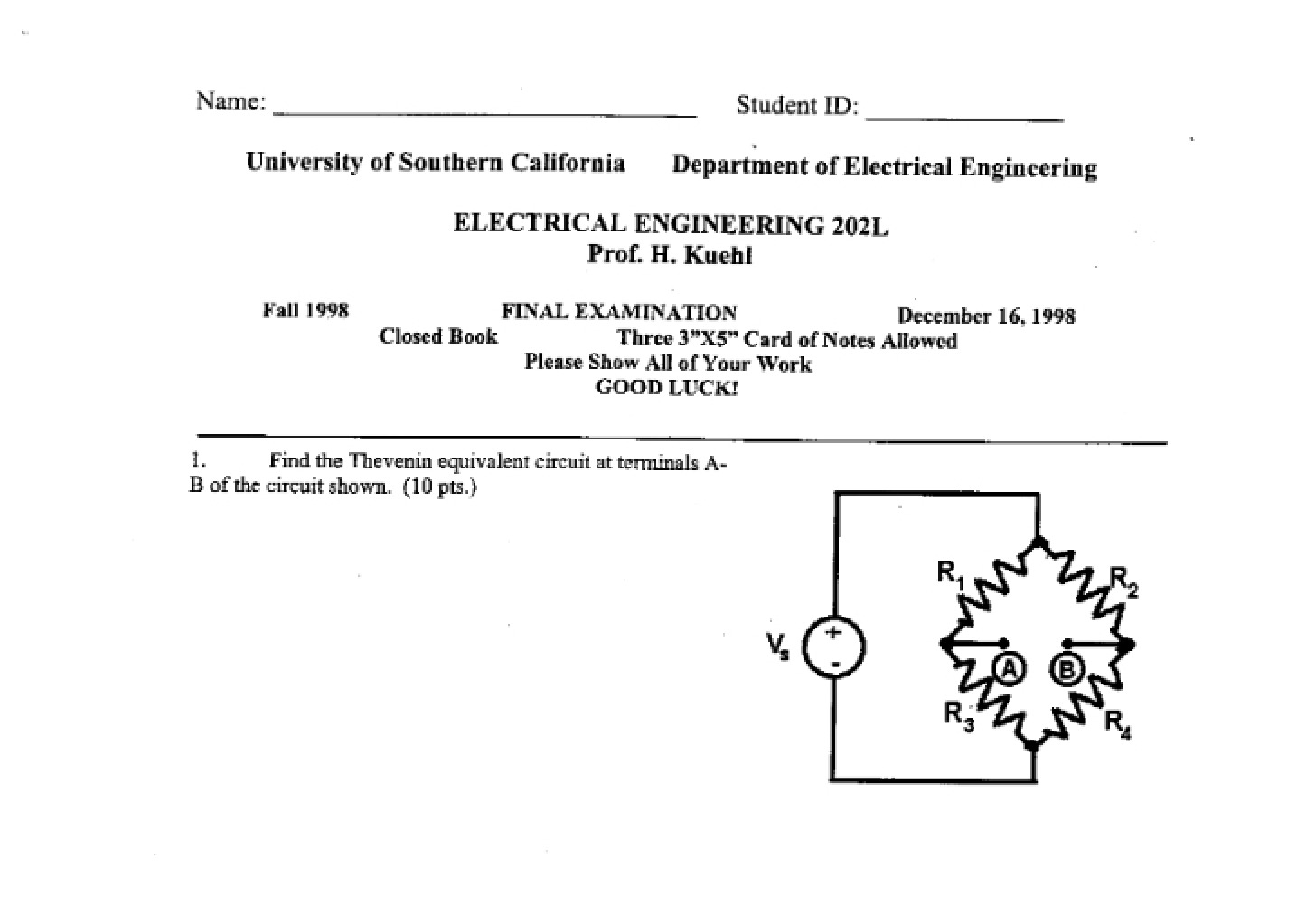
This is a practice midterm examination for EE 202L, Linear Circuits, offered at the University of Southern California. Specifically, it represents the second midterm assessment from the Spring 2001 semester. It’s designed to evaluate a student’s understanding of core concepts covered in the course up to that point in the term. The exam is closed-book, allowing students to utilize a limited note card for reference.
Why This Document Matters
This resource is invaluable for students currently enrolled in or preparing for a linear circuits course, particularly one following a similar curriculum to USC’s EE 202L. It’s best used as a self-assessment tool to gauge your preparedness for a midterm exam. Working through problems similar to those presented here can help identify areas where further study is needed and build confidence in your problem-solving abilities. It’s particularly useful for solidifying understanding after completing coursework on topics like transient analysis, operational amplifiers, and AC circuit analysis.
Common Limitations or Challenges
This document presents a specific assessment from a past semester. While the core principles of circuit analysis remain constant, the exact problems and their phrasing will likely differ from any current or future exams. It does not include detailed explanations or step-by-step solutions; it’s intended to test your existing knowledge, not teach new concepts. Furthermore, it reflects the course content and emphasis as it existed in Spring 2001, and some minor differences may exist in more recent iterations of the course.
What This Document Provides
* A range of problems covering fundamental linear circuit analysis techniques.
* Questions assessing understanding of energy storage elements (capacitors and inductors).
* Problems related to operational amplifier (OP AMP) circuits and analysis.
* Exercises involving waveforms, including sawtooth and triangular waves, and calculations of their key characteristics.
* Application of circuit theorems and concepts to analyze RC circuits and determine time constants.
* Problems focused on analyzing circuits with switches and determining initial and final conditions.
* Questions designed to test understanding of damping and natural frequency in circuits.