What This Document Is
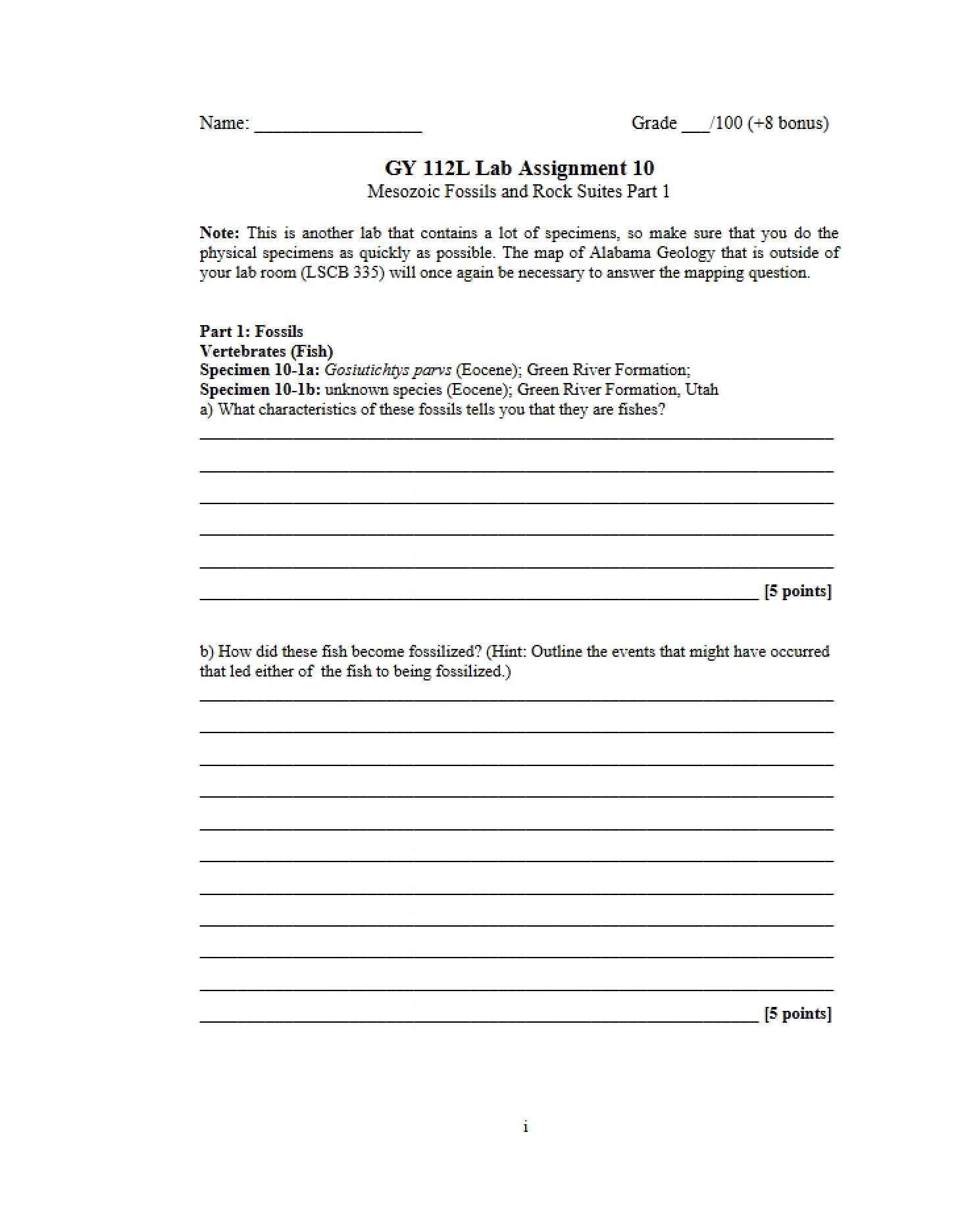
This is a lab assignment designed for students in an introductory Earth History course (GY 112L) at the University of South Alabama. The assignment focuses on the fascinating world of fossils and, specifically, the diverse ways in which organisms can become preserved in the rock record. It’s a hands-on exercise requiring observation and analysis of actual fossil specimens. The core theme revolves around understanding how environmental conditions and geological processes influence the likelihood and type of fossilization.
Why This Document Matters
This assignment is crucial for any student seeking to build a strong foundation in paleontology and sedimentary geology. It’s particularly helpful for those enrolled in Earth History, Geology, or Paleontology courses. Successfully completing this assignment will enhance your ability to identify different preservation modes, interpret ancient environments, and understand the biases inherent in the fossil record. It’s best utilized *during* a lab session, alongside direct examination of the provided specimens, and *after* relevant lectures on fossilization processes.
Common Limitations or Challenges
This assignment is designed to be completed with physical specimens available in a designated lab space. It does not provide a comprehensive overview of all possible fossilization processes, but rather focuses on a curated set of examples. The assignment requires careful observation and critical thinking; it won’t simply *tell* you the answers. It also assumes a basic understanding of sedimentary rocks and common invertebrate anatomy. Access to the specimens is required to complete the assignment.
What This Document Provides
* A series of specimen-based questions designed to test your understanding of fossil preservation.
* A structured approach to analyzing fossil specimens, prompting you to consider factors influencing preservation.
* Opportunities to differentiate between various modes of fossilization, such as impressions, casts, molds, and replacement.
* Questions that encourage you to connect fossil preservation to the broader geological context.
* Distinction between different fossil types – body fossils versus trace fossils – and their implications.
* A framework for interpreting the environmental conditions under which fossilization occurred.