What This Document Is
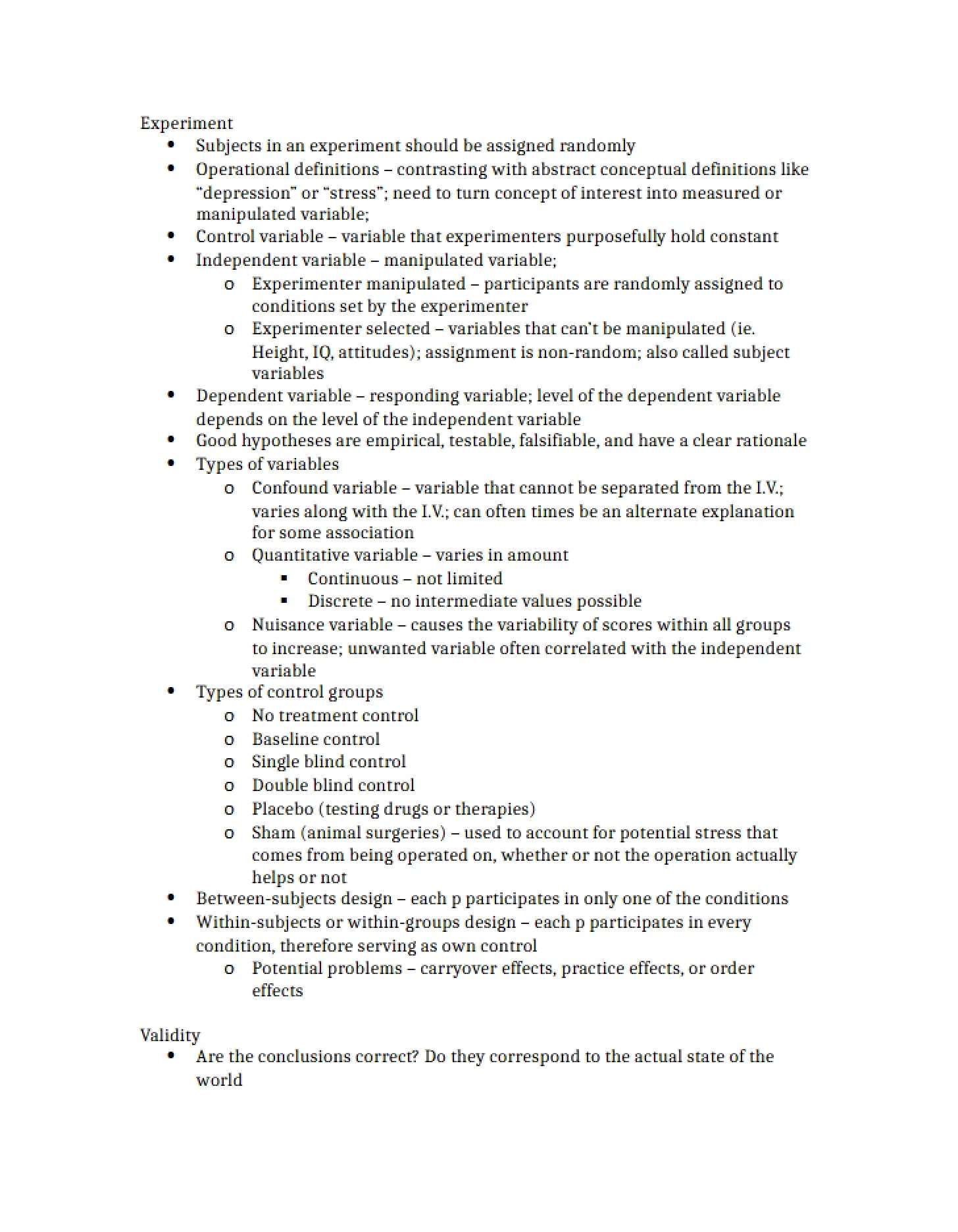
This study guide delves into crucial aspects of research methodology within the field of psychology, specifically focusing on measurement and experimental design. It represents the fourth chapter of a comprehensive course on Research Methods (PSYC 226) at the University of South Carolina. The material explores how researchers quantify psychological constructs, ensuring the validity and reliability of their findings, and how to design experiments that allow for causal inferences. It also introduces foundational ethical considerations in psychological research.
Why This Document Matters
This resource is invaluable for psychology students seeking a strong grasp of the core principles underpinning empirical research. It’s particularly helpful when preparing for exams, completing research projects, or critically evaluating published studies. Students who are struggling to understand how to translate abstract psychological concepts into measurable variables, or those needing a refresher on threats to research validity, will find this guide particularly beneficial. It’s designed to solidify understanding *before* applying these concepts in practice.
Common Limitations or Challenges
This guide provides a foundational overview of key concepts. It does not offer step-by-step instructions for conducting specific statistical analyses, nor does it provide complete, ready-made research designs. It focuses on the *principles* behind good research practice, and assumes a basic understanding of statistical terminology. It also doesn’t include practice problems or detailed case studies – those are typically found in supplementary materials.
What This Document Provides
* An exploration of different scales of measurement and their implications for data analysis.
* Discussion of factors influencing the validity and reliability of psychological measurements.
* An overview of various types of experimental manipulations.
* Examination of threats to internal validity and strategies for mitigating bias in research.
* Introduction to the historical context and core principles of research ethics in psychology.
* Consideration of the importance of careful experimental control for establishing causal relationships.