What This Document Is
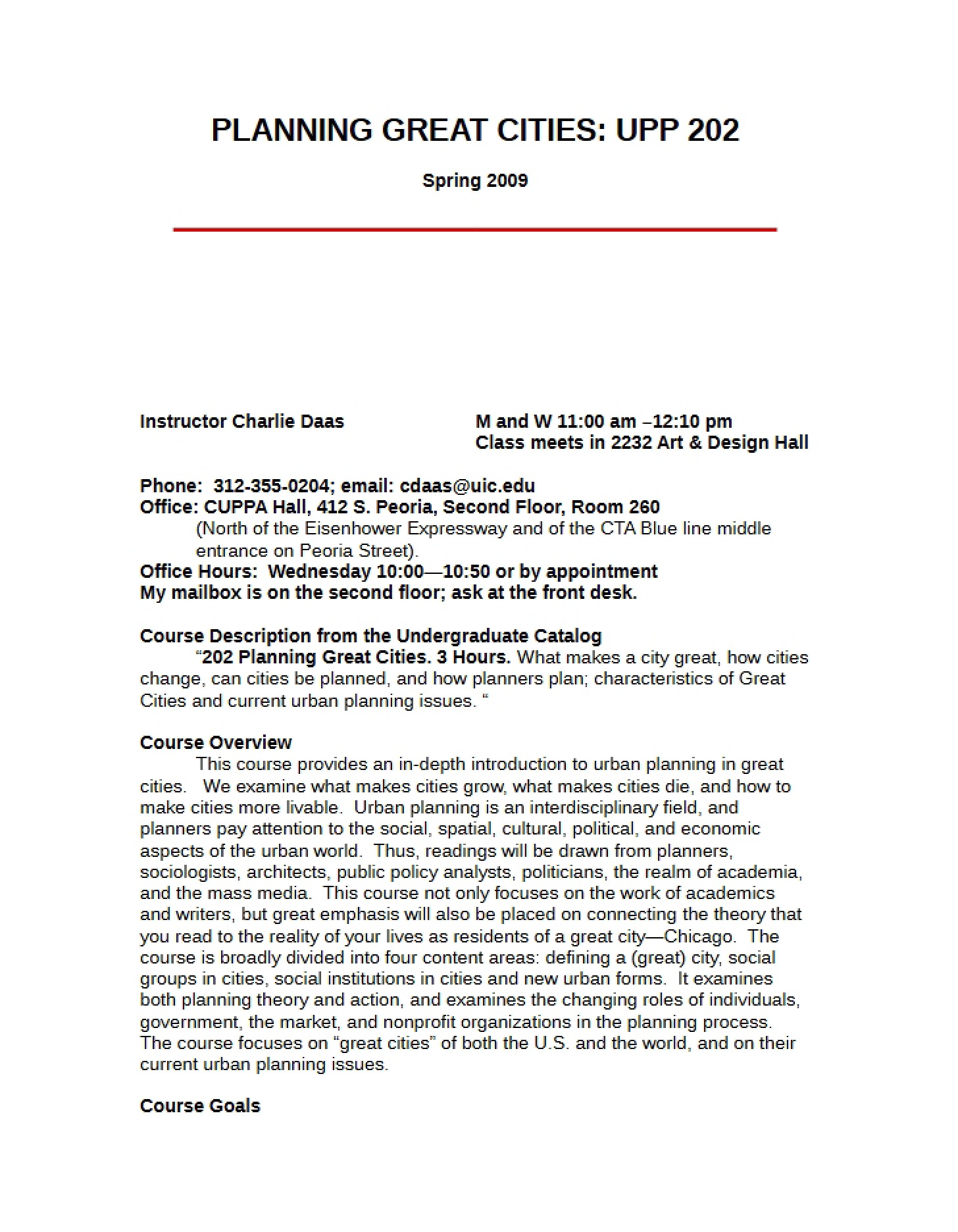
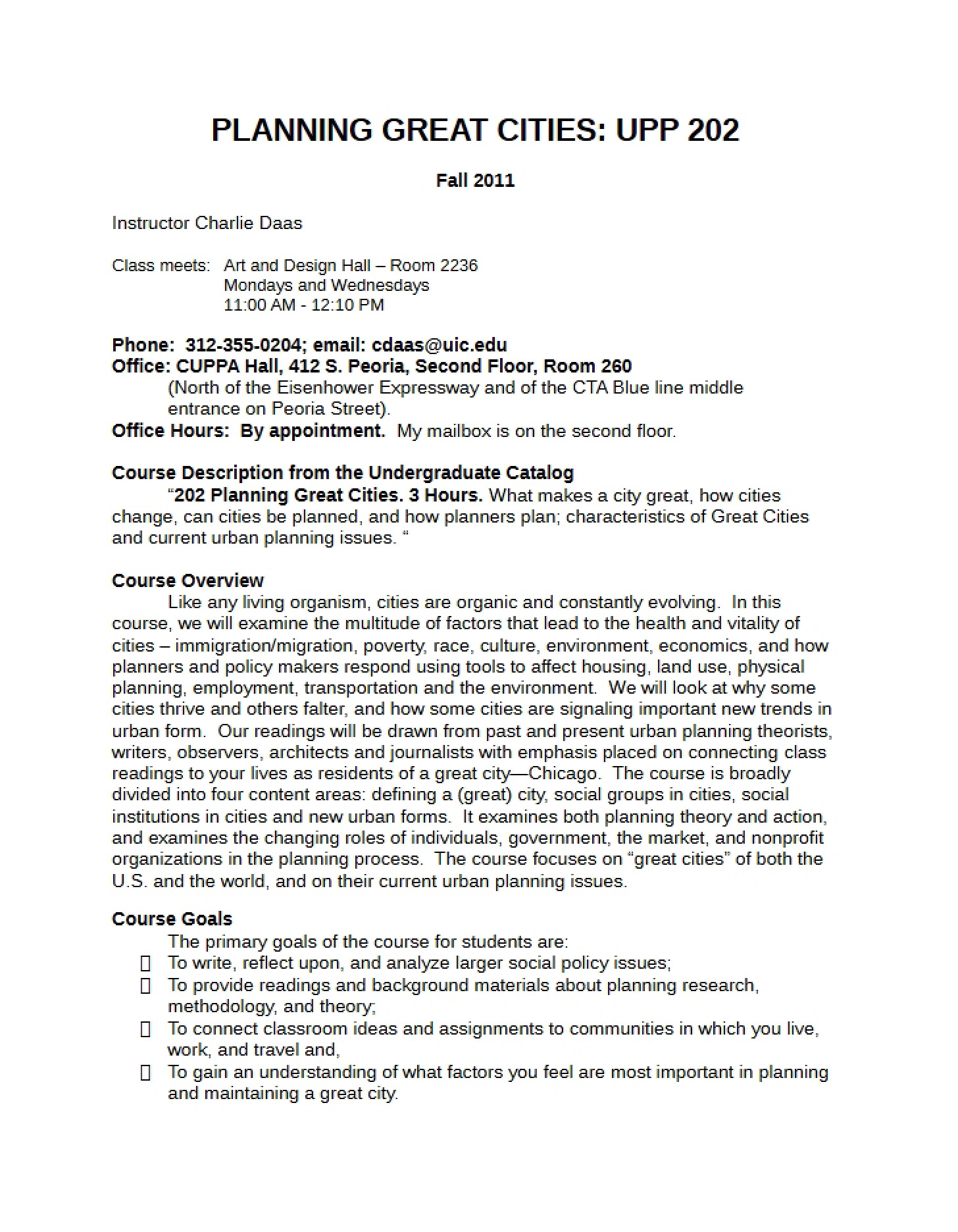
This is a comprehensive course outline for UPP 202: Planning Great Cities, offered at the University of Illinois at Chicago. It serves as a foundational resource for students delving into the complexities of urban development and the principles guiding effective city planning. The document details the course structure, expectations, and core themes explored throughout the semester. It’s designed to provide a clear understanding of the academic journey ahead for anyone enrolled in, or considering enrolling in, this urban planning course.
Why This Document Matters
This resource is invaluable for prospective students wanting to understand the scope of the course before registration. Current students will find it essential for navigating the syllabus, understanding assignment expectations, and staying informed about course logistics. Anyone interested in the field of urban planning, even without formal enrollment, can benefit from gaining insight into the key concepts and approaches taught in a leading university program. It’s particularly useful at the beginning of the semester to ensure preparedness and maximize learning.
Topics Covered
* The defining characteristics of “great” cities throughout history and across the globe.
* The interplay between social, spatial, cultural, political, and economic forces in urban environments.
* The roles of various actors – individuals, government, the market, and non-profit organizations – in the planning process.
* Contemporary urban planning issues and challenges facing cities today.
* The theoretical underpinnings of urban planning and their practical applications.
* The factors contributing to urban growth, decline, and revitalization.
* Examination of specific case studies, including the impact of significant events on urban landscapes.
What This Document Provides
* A detailed course description as outlined in the university catalog.
* Instructor contact information and office hours.
* A clear articulation of the course goals and learning objectives.
* Expectations for student performance and participation.
* A comprehensive list of required readings, including textbook information.
* An overview of the course’s broad content areas and thematic organization.
* Insight into how theoretical concepts connect to real-world urban experiences.