What This Document Is
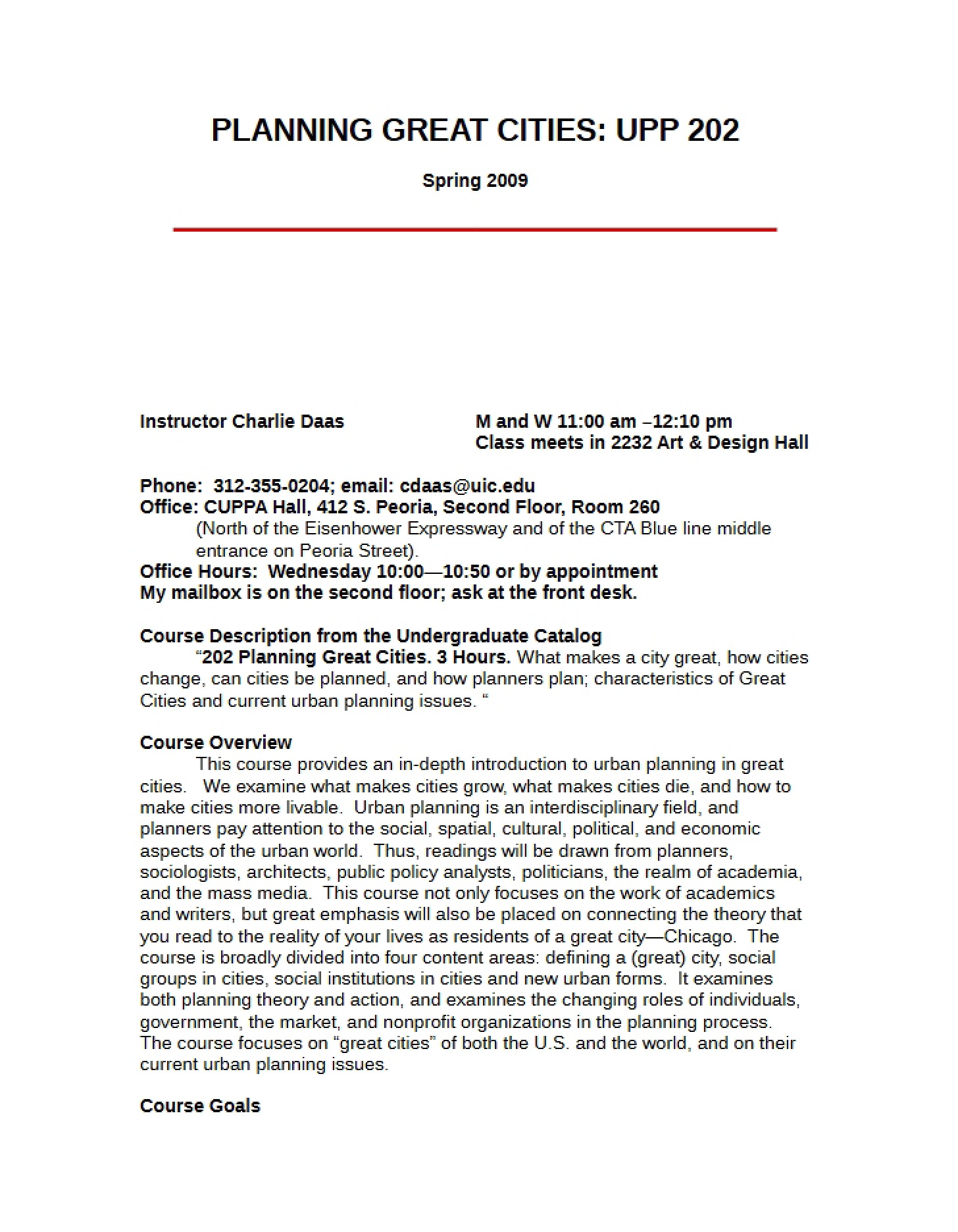
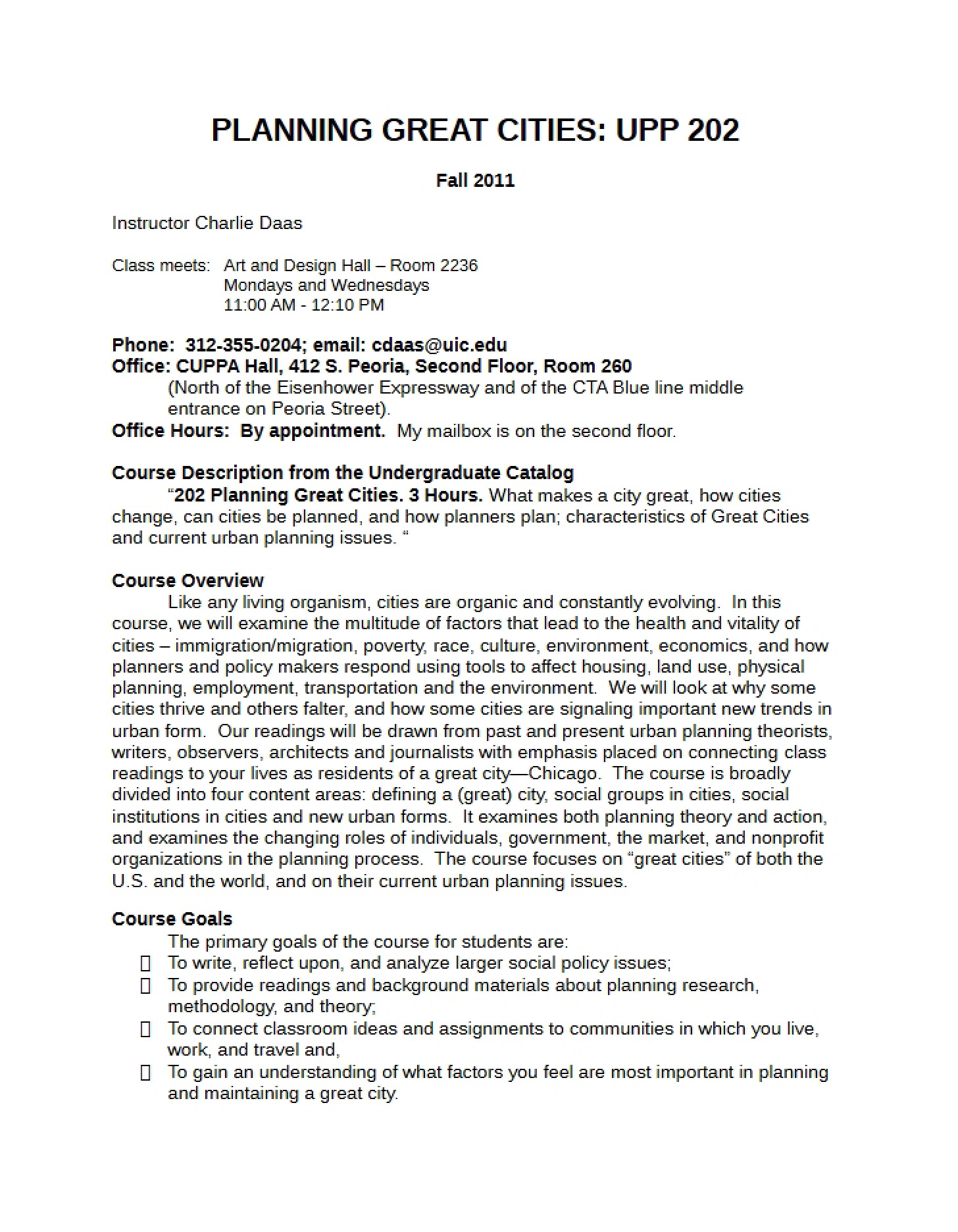
This is a university-level course syllabus for “Planning Great Cities” (UPP 202) at the University of Illinois at Chicago, offered in Spring 2008. It outlines the structure, expectations, and content for a semester-long exploration of urban planning principles and their application to understanding what constitutes a successful city. The syllabus serves as a foundational guide for students intending to delve into the complexities of urban environments and the processes that shape them.
Why This Document Matters
This syllabus is essential for anyone considering enrolling in or currently taking UPP 202. It provides a clear overview of the course’s objectives, allowing prospective students to determine if the subject matter aligns with their academic interests. Current students will find it invaluable for understanding assignment expectations, key dates, and the overall flow of the course. Individuals interested in the field of urban planning, even outside of a formal academic setting, may benefit from understanding the core concepts introduced within this course framework.
Topics Covered
* The historical evolution and defining characteristics of great cities.
* Interdisciplinary approaches to urban planning, incorporating perspectives from sociology, architecture, and political science.
* The interplay between social, spatial, cultural, economic, and political factors in urban development.
* Theories and practical applications of urban planning methodologies.
* The roles of various stakeholders – individuals, government, the market, and non-profit organizations – in the planning process.
* Examination of contemporary urban planning issues and challenges.
* Factors contributing to urban growth, decline, and revitalization.
What This Document Provides
* A detailed course description as outlined in the undergraduate catalog.
* Instructor contact information and office hours.
* A comprehensive list of course goals and student expectations.
* Information regarding required readings, including a primary textbook and supplementary materials.
* A schedule of important dates, including class start and end dates, holidays, and assignment deadlines.
* An overview of the course’s three main content areas.