What This Document Is
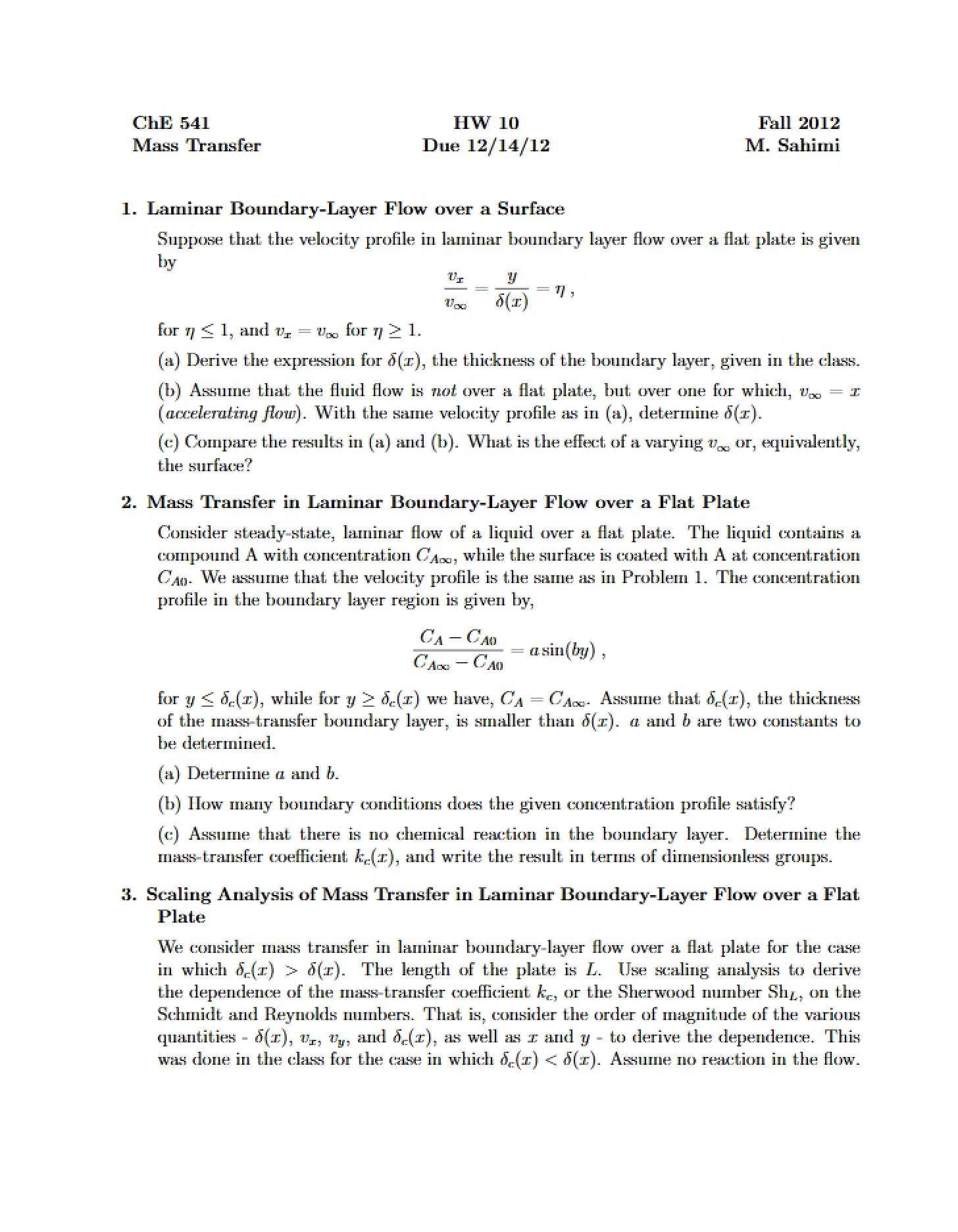
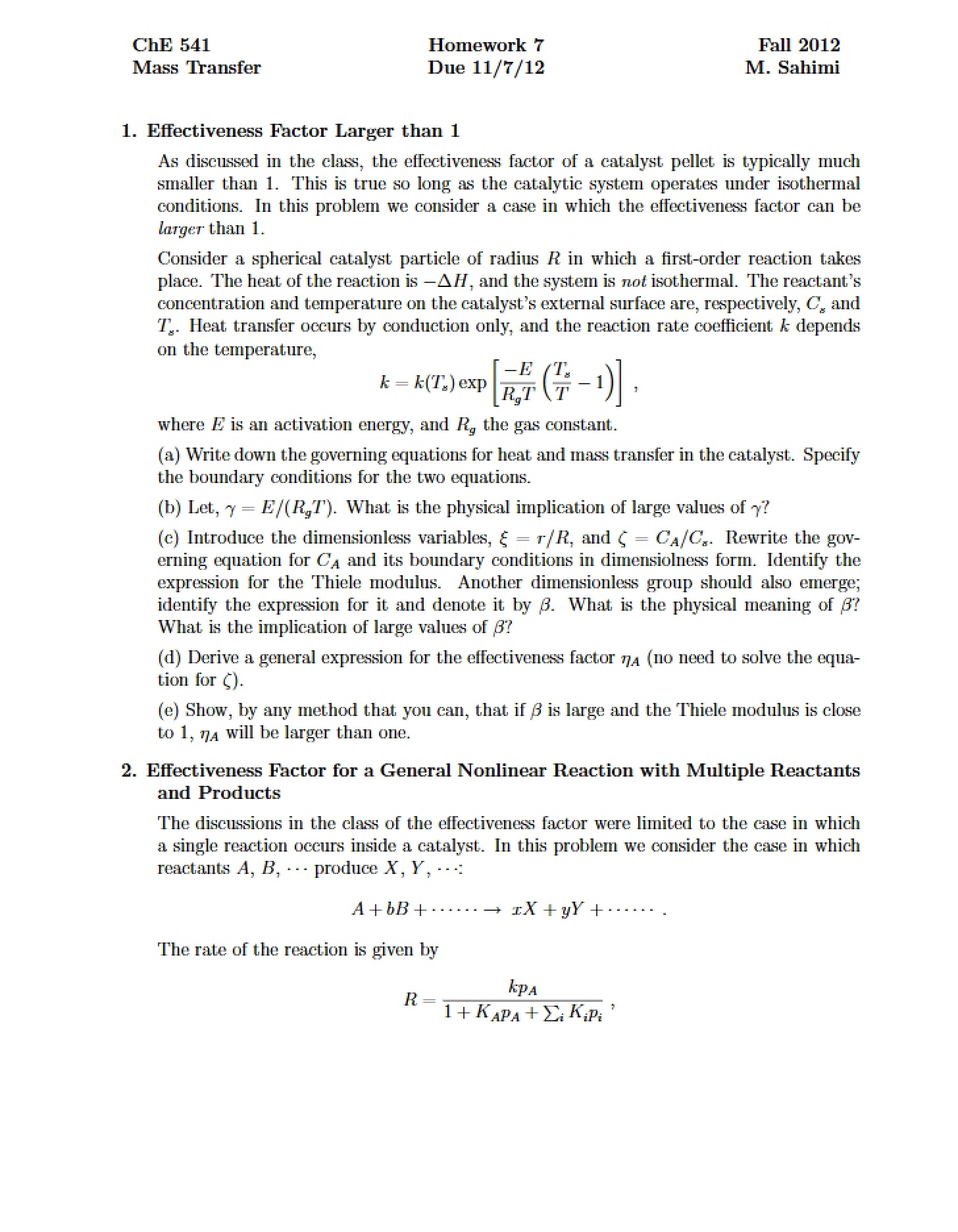
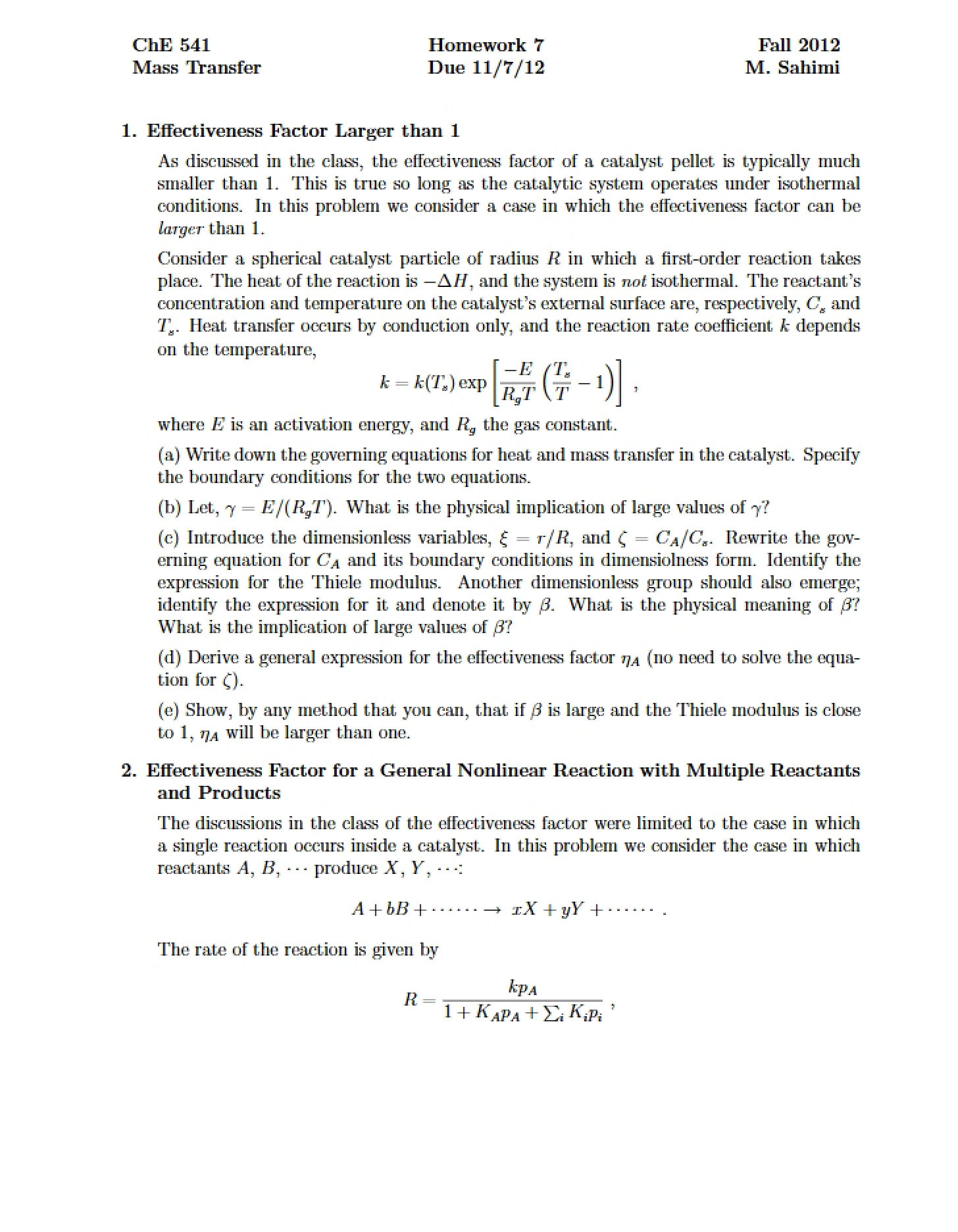
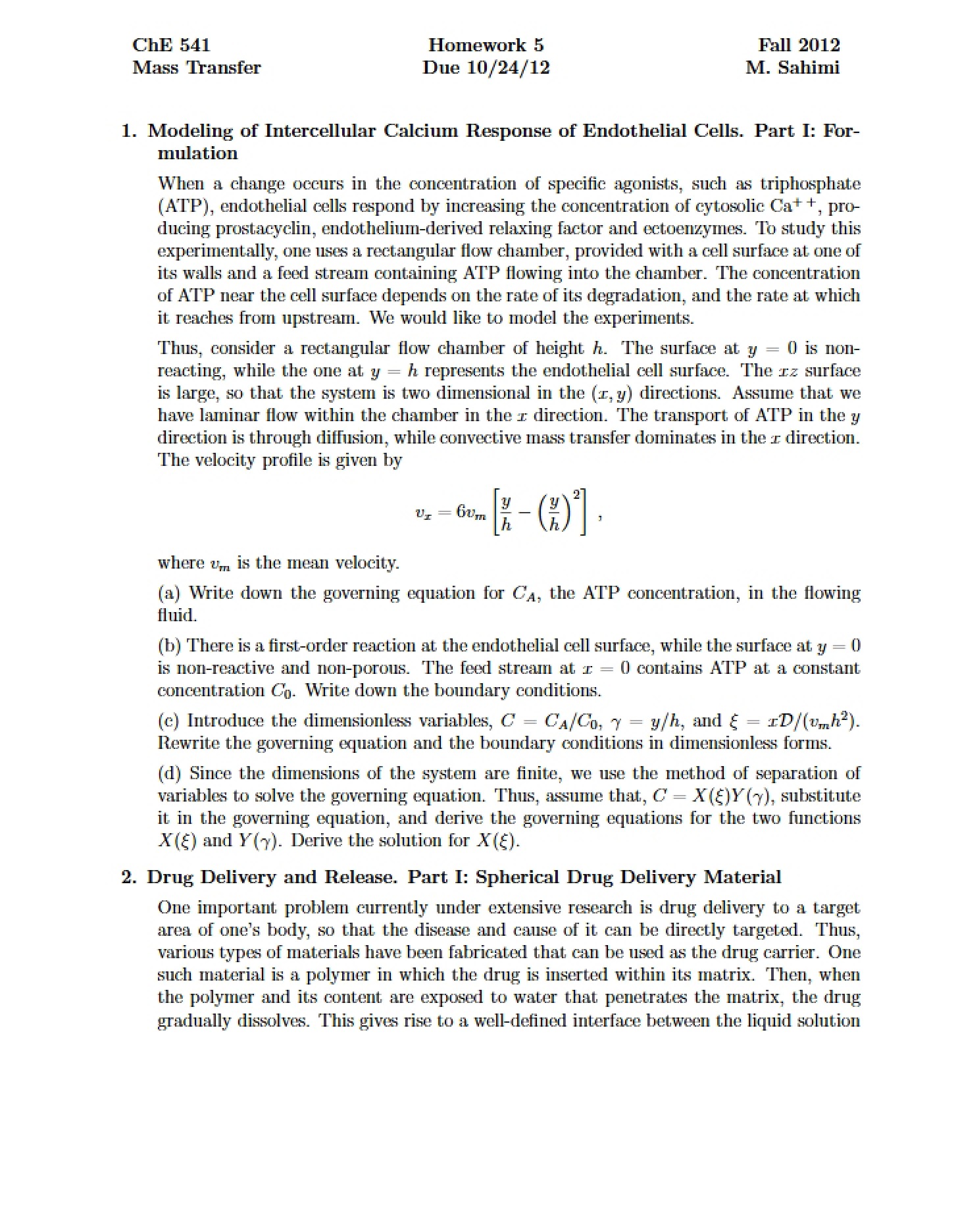
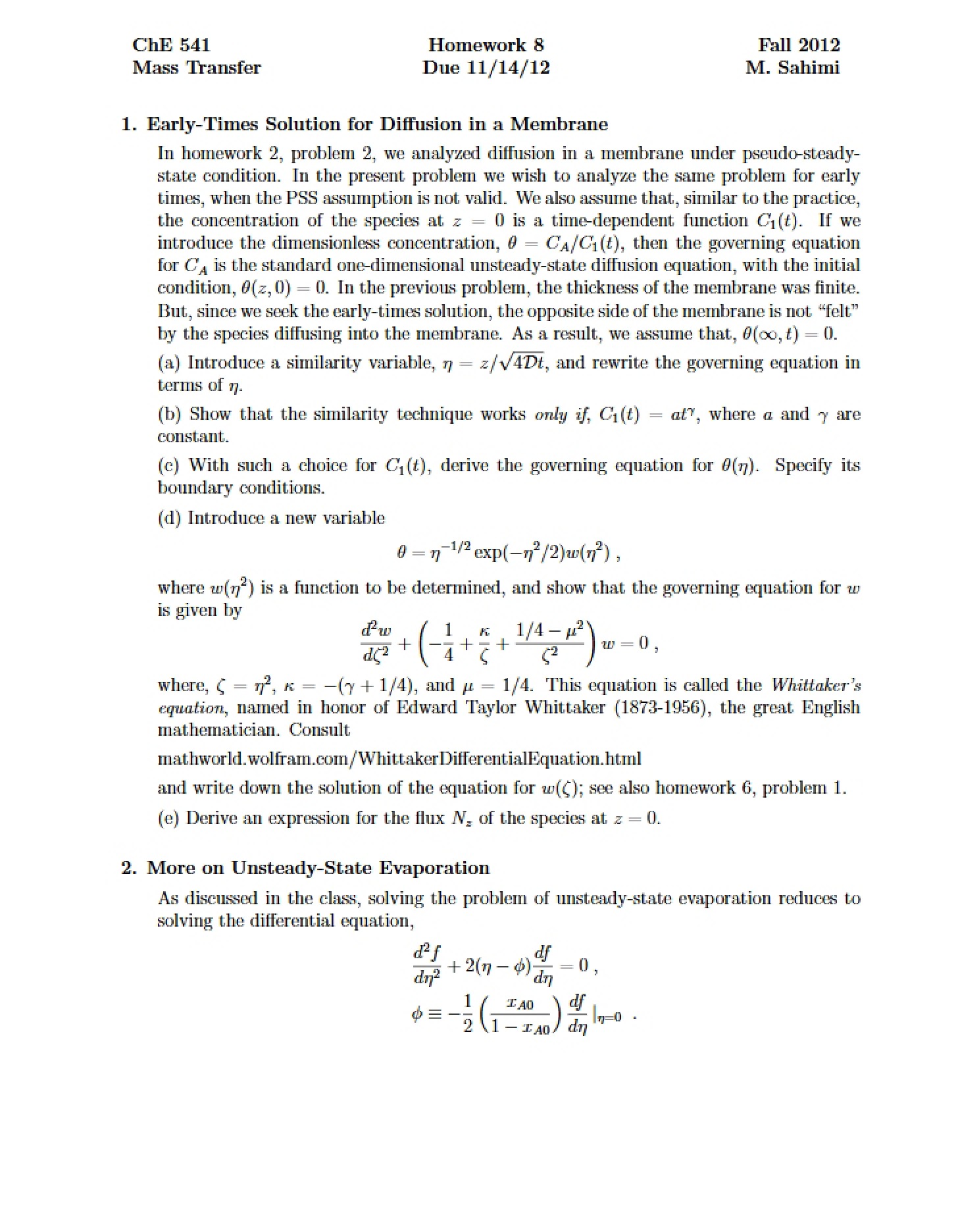
This is a homework assignment for CHE 541: Mass Transfer, offered at the University of Southern California. It focuses on applying fundamental mass transfer principles to complex, real-world scenarios. The assignment challenges students to analyze systems involving diffusion, reaction kinetics, and membrane separations, utilizing both analytical and pseudo-steady-state approaches. It builds upon core concepts taught in the course and requires a strong understanding of governing equations and boundary conditions.
Why This Document Matters
This assignment is crucial for students enrolled in an advanced mass transfer course. Successfully completing it demonstrates an ability to model and solve practical problems encountered in chemical engineering, biotechnology, and related fields. It’s particularly valuable for those preparing for further study or careers involving process design, separation technologies, or reaction engineering. Working through these problems will solidify your understanding of how to translate theoretical knowledge into practical applications. It’s best used *after* a thorough review of lecture notes and textbook material on diffusion, reaction engineering, and membrane transport.
Common Limitations or Challenges
This assignment does not provide step-by-step solutions or fully worked examples. It presents problems that require independent thought, application of learned principles, and potentially, the use of numerical methods. It assumes a foundational understanding of differential equations, calculus, and transport phenomena. The assignment focuses on problem *formulation* and analytical approaches; it does not offer guidance on specific software packages for simulation.
What This Document Provides
* Problem statements involving diffusion with enzymatic reactions (Michaelis-Menten kinetics).
* Scenarios requiring the analysis of diffusion within membranes and the application of pseudo-steady-state assumptions.
* Problems related to the evaporation of liquids, again utilizing a pseudo-steady-state approach.
* Opportunities to practice deriving governing equations and boundary conditions for mass transfer processes.
* Exercises designed to develop skills in dimensionless analysis and the interpretation of dimensionless numbers (like the Damkohler number).
* Challenges to determine the conditions under which simplifying assumptions (like neglecting slab thickness) are valid.