What This Document Is
This document serves as an introductory overview for EECS 219C: Computer-Aided Verification, a course offered at UC Berkeley. It’s designed to lay the foundational understanding for the course, setting the stage for more in-depth exploration of automated verification techniques. The material introduces the core concepts and historical context of the field, alongside a discussion of its relevance and feasibility in modern computing. It also provides insight into the instructor’s research areas and the course’s logistical structure.
Why This Document Matters
This overview is essential for anyone beginning the study of computer-aided verification, particularly students enrolled in or considering enrollment in EECS 219C. It’s most valuable at the very start of the course, helping to orient you to the subject matter and its importance. It’s also beneficial for professionals seeking a high-level understanding of the principles behind verifying the correctness of complex computer systems, and the challenges associated with doing so. Accessing the full content will provide a comprehensive starting point for your learning journey.
Topics Covered
* The historical development of model checking techniques.
* The fundamental question of verifying computer system correctness.
* The relationship between computational logic and computer science.
* The practical challenges and opportunities within the field of verification.
* An overview of the instructor’s research interests.
* The significance of verification in relation to real-world system failures.
What This Document Provides
* A historical timeline of key developments in model checking.
* Discussion of the feasibility of verification given computational limitations.
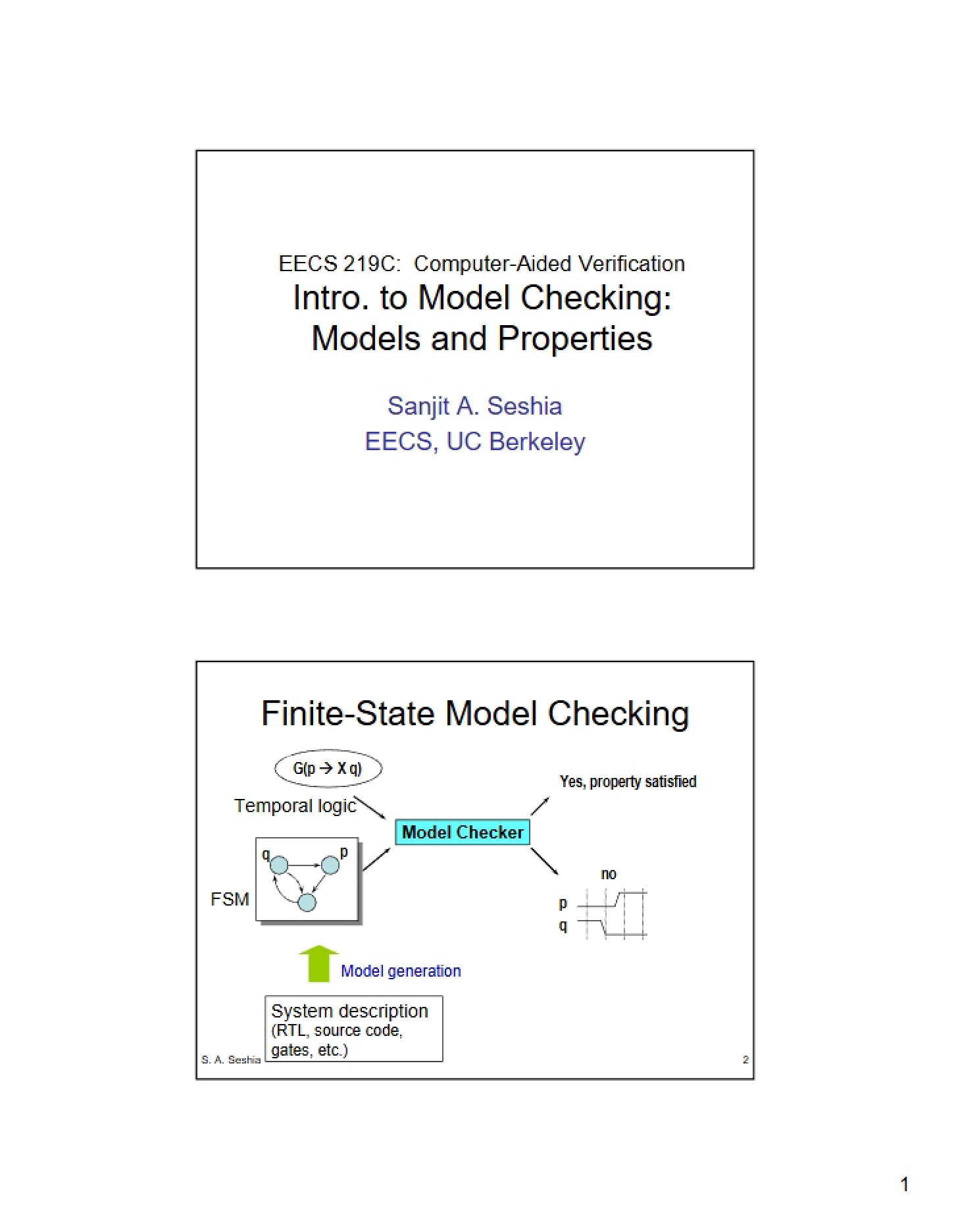
* An introduction to the core concepts of model checking and its relationship to graph traversal.
* Contextualization of the field through examples of costly software and hardware failures.
* A glimpse into the interdisciplinary nature of algorithmic verification.
* An outline of the course’s focus on model checking and computational logic.