What This Document Is
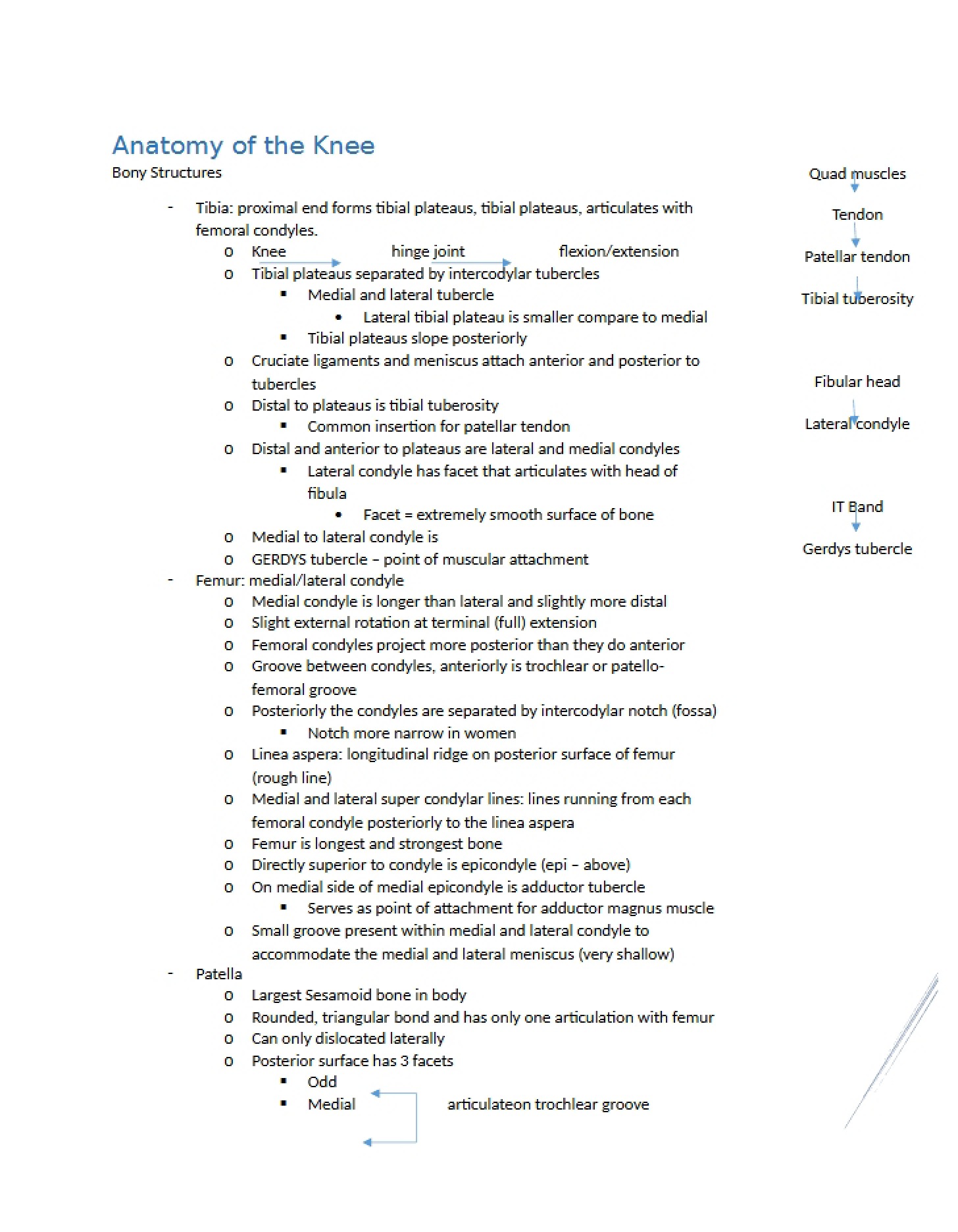
This is a comprehensive study guide focusing on the anatomy of the knee joint. It’s designed to provide a detailed overview of the structures that comprise this complex joint, including bony landmarks, ligamentous attachments, and neurovascular relationships. The guide delves into the specific features of the femur, tibia, fibula, and patella as they relate to knee function. It’s a resource intended for students seeking a robust understanding of the knee’s structural organization.
Why This Document Matters
This guide is invaluable for students in gross anatomy, kinesiology, physical therapy, and related health science programs. It’s particularly useful when preparing for labs, quizzes, or exams that require a thorough knowledge of knee anatomy. Understanding the precise relationships between the various components of the knee is foundational for diagnosing injuries, planning surgical interventions, and comprehending biomechanical principles. It’s best utilized *alongside* cadaver labs and other course materials to reinforce learning.
Common Limitations or Challenges
This guide focuses exclusively on anatomical structures. It does *not* include detailed explanations of biomechanics, pathological conditions, clinical examination techniques, or surgical procedures. While it identifies the nerve and vascular supply to the region, it does not provide exhaustive details on their branching patterns or clinical significance. It’s also important to note that this resource is a static representation of anatomy and doesn’t replace the dynamic learning experience of hands-on dissection.
What This Document Provides
* Detailed descriptions of the bony structures forming the knee joint (femur, tibia, fibula, and patella).
* Identification of key surface markings and their anatomical significance.
* An overview of the major articulations within the knee complex.
* Information regarding the general course of nervous innervation to the knee region.
* A foundational understanding of the origins, insertions, and actions of major muscles impacting knee function (hamstrings).
* Discussion of important anatomical relationships and points of attachment for ligaments and tendons.