What This Document Is
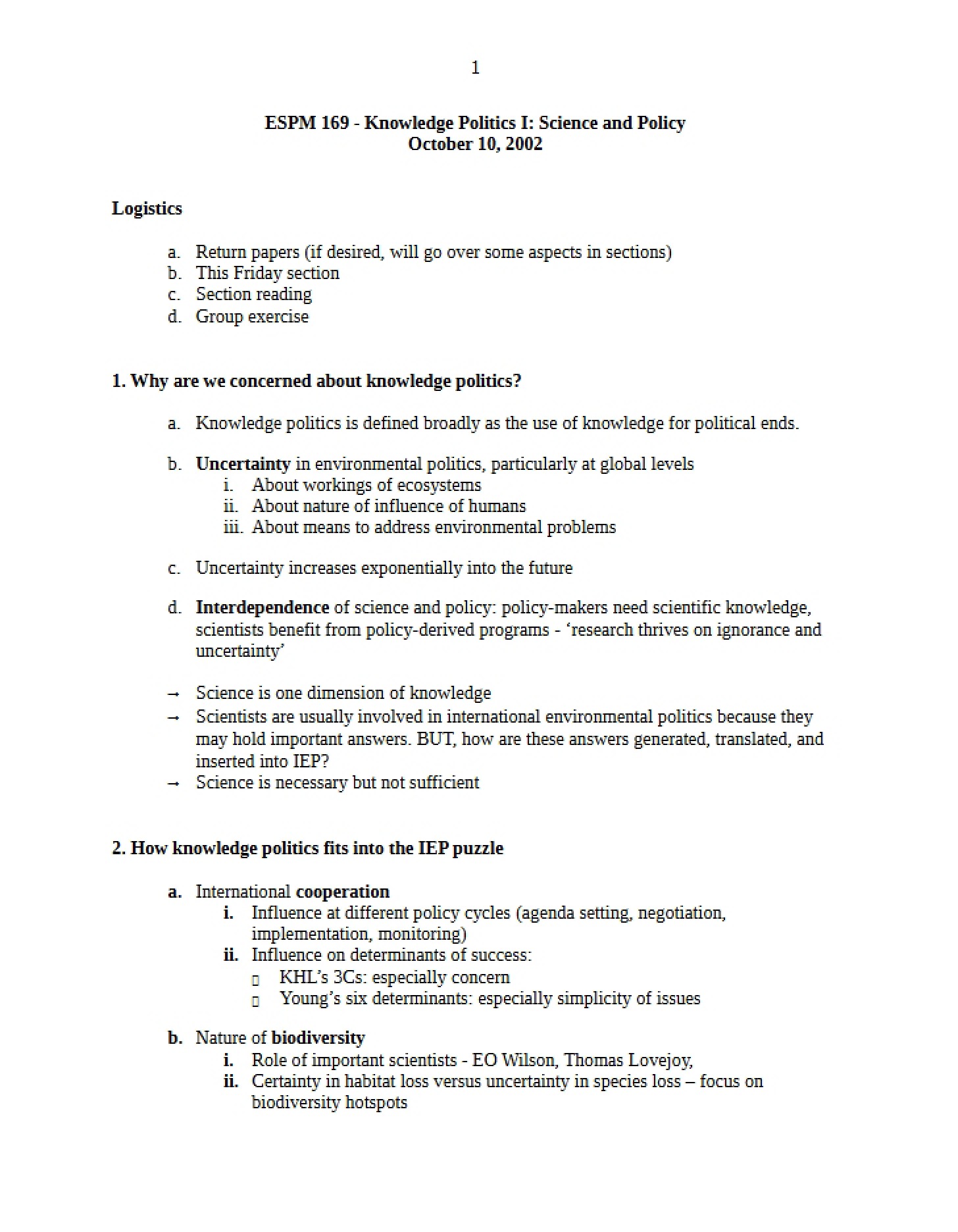
This document comprises lecture notes from ESPM 169: International Environmental Politics at UC Berkeley, specifically focusing on the intersection of local and scientific knowledge within the framework of the Convention on Biological Diversity (CBD). It delves into the complexities of knowledge politics in international environmental governance, examining how different forms of knowledge are valued, utilized, and sometimes contested in global policy-making processes. The material represents a focused exploration of “Knowledge Politics II,” building upon prior discussions of the role of science in international environmental policy.
Why This Document Matters
Students enrolled in courses on international environmental politics, environmental policy, or related fields will find this resource particularly valuable. It’s ideal for those seeking a deeper understanding of the challenges and nuances involved in integrating diverse knowledge systems – including local, traditional, and indigenous knowledge – into international environmental agreements. This material is most helpful when studying the CBD, the role of scientific bodies in international governance, and the broader debates surrounding knowledge legitimacy and power dynamics.
Topics Covered
* The role of scientific authority within the Convention on Biological Diversity (CBD).
* The function and criticisms of the Subsidiary Body on Scientific, Technical and Technological Advice (SBSTA).
* Distinctions between local, traditional, indigenous, and lay knowledge.
* Case studies illustrating the importance of incorporating local expertise.
* The political implications of recognizing and utilizing different knowledge systems.
* Contrasting approaches to knowledge: standardization versus situated understanding.
What This Document Provides
* An examination of the importance placed on “local knowledge” within international environmental conventions.
* A discussion of the potential benefits and challenges of incorporating non-scientific knowledge into policy.
* Insights into the dynamics of trust and expertise in environmental decision-making.
* A framework for analyzing the political dimensions of knowledge production and dissemination.
* References to key concepts and scholarly perspectives on knowledge politics.